
Traditional Kitchenware Ideas for Contemporary Homes
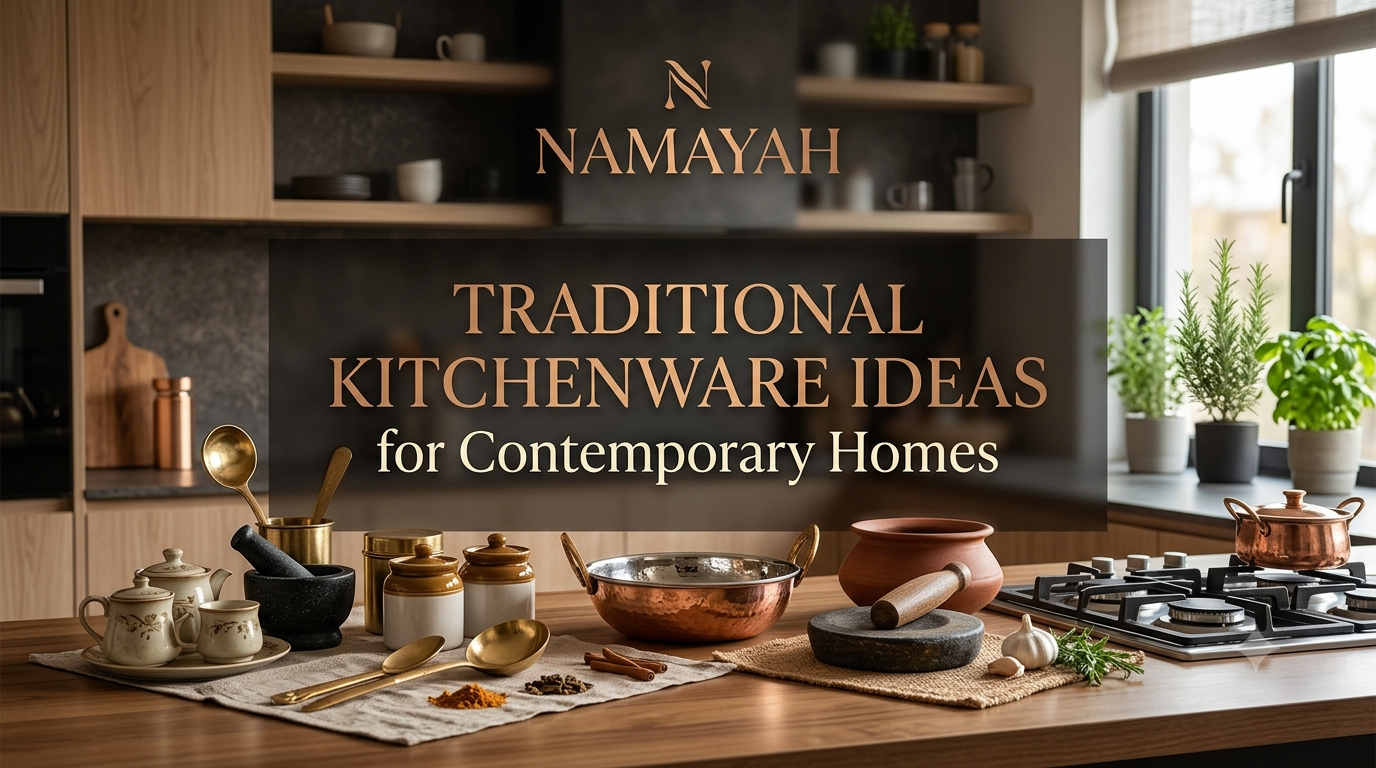
Traditional kitchenware can add warmth, craftsmanship, texture, and cultural character to a contemporary home. Brass and copper utensils, wooden tools, clay pots, cast-iron cookware, ceramic serving pieces, and traditional spice containers can work especially well when they are displayed selectively alongside modern cabinets, clean surfaces, and efficient storage.
The key is balance rather than imitation. You do not need to recreate an old-fashioned kitchen. Instead, choose a few meaningful traditional pieces and combine them with contemporary materials, lighting, appliances, and layouts.
Why Traditional Kitchenware Works in Modern Kitchens
Contemporary kitchens often rely on streamlined cabinetry, neutral colors, integrated appliances, and uncluttered surfaces. While practical, these features can sometimes make a space feel visually uniform.
Traditional kitchenware introduces contrast.
Natural wood, aged metal, terracotta, stone, and handcrafted ceramics can add tactile variation without requiring a major renovation. This approach also reflects a broader interest in warmer kitchens and natural materials. The 2026 NKBA Kitchen Trends Report, for example, identifies natural materials and wood grain as important kitchen design preferences.
Traditional kitchenware can therefore serve two purposes: it can remain useful for cooking and serving while also contributing to the character of the room.
1. Display Brass and Copper Utensils
Brass and copper are among the easiest ways to introduce traditional character into a contemporary kitchen.
Instead of filling every shelf with metal utensils, select a small group of visually distinctive pieces. Consider:
- Brass serving bowls
- Copper water vessels
- Traditional ladles
- Brass measuring cups
- Copper cookware
- Decorative but functional trays
Hang a few pieces from a simple rail, place them on an open shelf, or group them beside a modern cooktop.
Traditional Indian kitchens have long used materials such as brass, copper, clay, iron, and stone, and contemporary Indian designers continue to incorporate brass and copper vessels as visual accents.
Modern styling tip: Pair warm metals with simple white, cream, charcoal, natural wood, or stone surfaces. The contrast prevents the kitchen from becoming overly ornate.
2. Add Handcrafted Wooden Tools
Wooden kitchenware brings softness to kitchens dominated by stone, glass, stainless steel, or engineered surfaces.
Useful options include:
- Wooden chopping boards
- Rolling pins
- Serving spoons
- Spatulas
- Bowls
- Trays
- Roti boards and rolling tools
- Wooden storage containers
Choose pieces with simple silhouettes rather than excessive carving if your kitchen has a minimalist aesthetic.
A large wooden board leaning against a backsplash can become a decorative focal point while remaining practical. Smaller utensils can be stored in a ceramic or metal container near the preparation area.
3. Bring in Clay and Terracotta
Clay and terracotta can introduce an earthy quality that works particularly well with contemporary kitchens using natural colors.
Traditional clayware can include:
- Terracotta serving bowls
- Earthen pots
- Clay water vessels
- Curd-setting pots
- Handcrafted storage jars
- Terracotta planters for kitchen herbs
Contemporary Indian kitchenware collections have adapted traditional forms such as the matka into more modern products, showing how familiar materials can be reinterpreted for today’s homes.
For a clean contemporary look, choose a few pieces in related earthy tones rather than mixing too many patterns.
4. Use Cast-Iron Cookware as a Feature
Cast iron is both functional and visually distinctive.
A cast-iron skillet, tawa, kadai, or pan can be kept within easy reach instead of hidden in a cabinet. A dedicated hanging rail or open shelf can turn frequently used cookware into part of the kitchen’s visual identity.
Traditional Indian cookware collections have helped bring cast-iron tawas and kadhais back into modern kitchens alongside other heritage materials.
Because cast iron is heavy, however, make sure shelves and wall-mounted storage are appropriately designed for the load.
5. Choose Stone and Soapstone Cookware
Stone cookware can add an especially strong connection to traditional cooking practices.
Examples include:
- Soapstone vessels
- Granite mortar and pestles
- Stone grinding tools
- Traditional serving bowls
A mortar and pestle can be particularly effective in a contemporary kitchen because it is compact, useful, and sculptural.
Some traditional Indian cookware makers continue to offer soapstone vessels and stone kitchen tools based on regional craft traditions.
Use these pieces as functional objects rather than purely decorative accessories. Their strongest appeal comes from combining craftsmanship with everyday use.
6. Style Traditional Ceramic and Pottery
Ceramic kitchenware gives you more freedom to introduce color and pattern.
Try combining contemporary dinnerware with a few traditional-looking pieces such as:
- Hand-painted bowls
- Ceramic serving platters
- Stoneware mugs
- Patterned storage jars
- Handmade plates
- Decorative pitchers
The trick is to control the palette.
For example, a contemporary kitchen with cream cabinetry could use pottery in muted blue, earthy brown, olive, or terracotta tones. This creates personality without overwhelming the room.
Traditional kitchen design is also seeing renewed interest in vintage ceramics, classic lighting, stained wood, and other heritage-inspired features.
7. Create a Modern Spice-Storage Display
Traditional spice storage can become both practical organization and visual styling.
Instead of keeping every spice container hidden, create a small, coordinated display using:
- Brass spice boxes
- Ceramic jars
- Wooden containers
- Glass jars with simple labels
- A traditional masala dabba
For a contemporary finish, use consistent containers and labels.
This is particularly useful in smaller kitchens because the storage system serves a clear purpose instead of functioning only as decoration.
8. Pair Traditional Kitchenware With Modern Cabinets
The surrounding kitchen matters as much as the kitchenware itself.
Traditional pieces often look strongest against contemporary cabinetry because the two styles create deliberate contrast.
Good combinations include:
| Contemporary Element | Traditional Kitchenware Pairing |
|---|---|
| White cabinets | Brass or copper utensils |
| Natural wood cabinets | Clay and terracotta |
| Dark cabinets | Brass and light ceramics |
| Stone countertops | Wooden tools and boards |
| Minimalist cabinets | Handcrafted pottery |
| Stainless-steel appliances | Cast iron and aged metal |
Current kitchen design research also points toward warmer palettes, natural materials, and wood finishes, making traditional materials easier to integrate into contemporary interiors.
9. Use Open Shelving Carefully
Open shelves are an effective way to display traditional kitchenware, but they can quickly become cluttered.
A better approach is to create small visual groups.
For example, one shelf might contain:
- Three ceramic bowls
- One wooden serving board
- Two brass vessels
Leave some empty space around the collection.
You can also mix traditional pieces with modern glassware or plain white ceramics. This prevents the shelf from looking like a museum display.
If you prefer a more traditional atmosphere, freestanding cabinets, stained wood, aged hardware, and pot racks are among the heritage features currently being reinterpreted for contemporary kitchens.
10. Build a Contemporary Indian Kitchenware Collection
If you want to introduce traditional Indian kitchenware gradually, start with versatile pieces rather than buying an entire collection.
A practical starter set could include:
- One brass or copper serving bowl
- One cast-iron cooking vessel
- One wooden chopping or serving board
- One mortar and pestle
- One traditional spice container
- Two or three handmade ceramic pieces
- One clay or terracotta vessel
This gives you several different textures without creating unnecessary clutter.
Traditional Indian kitchenware encompasses a wide range of regional materials and forms, including clay, copper, brass, bronze, iron, stone, and wood.
Choose pieces according to how you actually cook and serve food rather than buying solely because an item looks traditional.
11. Choose Kitchenware by Material and Maintenance
Traditional kitchenware can require different care from modern mass-produced utensils.
Copper, for example, may require regular cleaning to maintain its appearance. Architectural Digest India notes that copper cookware and vessels need routine washing and drying to avoid visible watermarks.
Before purchasing, consider:
- How often you will use the item
- Whether it is intended for cooking or serving
- How it should be cleaned
- Whether it requires seasoning or polishing
- How much storage space it needs
- Whether the material is appropriate for the intended food or cooking method
A beautiful traditional vessel that is difficult to maintain may work better as an occasional serving piece than as everyday cookware.
12. Avoid the Most Common Styling Mistakes
The biggest mistake is trying to make every element traditional.
A contemporary kitchen usually benefits from restraint.
Avoid:
- Displaying too many metal utensils
- Mixing unrelated colors and patterns
- Filling every open shelf
- Using decorative objects that have no practical purpose
- Combining too many traditional styles at once
- Ignoring modern storage requirements
Instead, select a few hero pieces.
A single copper vessel, handmade ceramic collection, or wooden utensil group can often create more visual impact than a crowded display.
The principle is simple: let traditional kitchenware provide character while contemporary design provides structure.
13. Traditional Kitchenware Ideas for Small Kitchens
You do not need a large kitchen to introduce traditional elements.
In a compact apartment, try:
- A brass serving tray on the countertop
- A wooden cutting board displayed vertically
- A small ceramic jar collection
- One hanging copper vessel
- A compact spice box
- A wall-mounted rail for frequently used utensils
- A handcrafted mortar and pestle
Choose objects that perform more than one role whenever possible.
For example, a wooden board can be used for food preparation and displayed against the backsplash when not in use. A beautiful serving bowl can remain on the dining table rather than occupying valuable cabinet space.
This approach keeps a small kitchen functional while still giving it personality.
FAQs About Traditional Kitchenware for Contemporary Homes
1. What traditional kitchenware looks best in a modern kitchen?
Brass and copper vessels, wooden utensils, handmade ceramics, terracotta, cast iron, and stoneware generally work well because they introduce natural texture and contrast against modern surfaces.
2. How do I make traditional kitchenware look modern?
Use fewer pieces, choose simple shapes, coordinate colors, and combine traditional materials with contemporary cabinetry, lighting, countertops, and appliances.
3. Is brass kitchenware suitable for contemporary interiors?
Yes. Brass can provide a warm metallic accent against neutral or modern finishes. Use it selectively so the space feels curated rather than overly decorative.
4. Can clay cookware be used in a modern kitchen?
Yes, depending on the specific vessel and manufacturer’s instructions. Clayware can also be used as serving and storage pieces when its cooking limitations are understood.
5. How can I display traditional utensils without making my kitchen look cluttered?
Group similar pieces together, leave empty space between displays, and limit the number of objects on open shelves. Keep frequently used utensils accessible and store the rest.
6. What traditional kitchenware is best for a small apartment?
Compact pieces such as a mortar and pestle, spice box, wooden board, ceramic bowls, and one or two metal serving vessels can add traditional character without requiring much storage.
7. Should traditional kitchenware match my kitchen cabinets?
It does not need to match exactly. Contrast can be more effective. For example, warm brass can stand out against white cabinets, while terracotta can complement natural wood.
8. Is traditional kitchenware only decorative?
No. Many traditional kitchenware pieces are designed for practical cooking, preparation, serving, or storage. The best contemporary approach is to prioritize pieces that you can genuinely use.
9. How many traditional pieces should I display?
There is no fixed number. Start with three to five complementary pieces and add more only if the kitchen still feels organized. The goal is a curated collection rather than maximum display.
10. Can traditional Indian kitchenware work with minimalist interiors?
Absolutely. Minimalist interiors can actually make handcrafted brass, copper, wood, stone, and ceramic pieces more noticeable. Use one or two strong pieces against a simple background.
Conclusion
Traditional kitchenware can give a contemporary home a sense of warmth and individuality without requiring a complete traditional-style renovation.
The most effective approach is to mix heritage materials with modern simplicity. Use brass and copper for warm accents, wood for texture, clay and terracotta for earthy character, cast iron for functional authenticity, and handmade ceramics for color and personality.
Most importantly, choose pieces you will actually use. When traditional kitchenware is integrated thoughtfully into modern storage, clean cabinetry, practical layouts, and uncluttered displays, it becomes more than decoration—it becomes part of the way the kitchen is lived in.
The result is a kitchen that feels contemporary without feeling impersonal, and traditional without feeling dated.