
Functional Décor: When Kitchen Accessories Become Design Elements
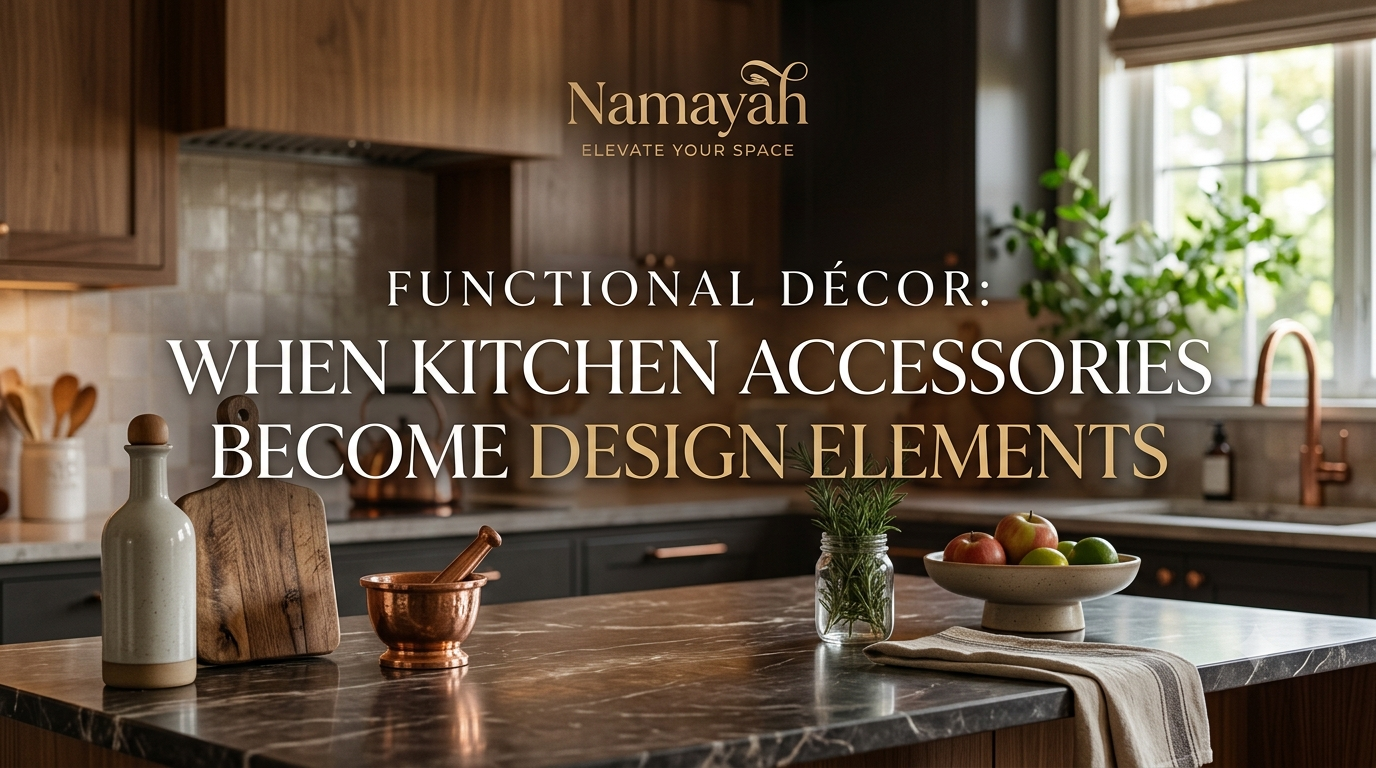
A well-designed kitchen does more than provide a place to prepare meals. It can also express personality, create visual interest, and make everyday routines feel more enjoyable. One of the easiest ways to achieve this balance is through functional décor—using practical kitchen accessories as intentional design elements.
Instead of hiding every useful object inside a cabinet, functional décor allows selected cookware, storage containers, trays, cutting boards, textiles, and serving pieces to contribute to the overall appearance of the room. The result is a kitchen that feels useful without looking purely utilitarian.
The key is intentionality. Not every kitchen accessory needs to be displayed. The most successful spaces combine attractive materials, useful objects, thoughtful organization, and enough visual breathing room to prevent clutter.
What Is Functional Décor?
Functional décor refers to items that serve a practical purpose while also contributing to a room’s visual character.
In a kitchen, this might include a wooden cutting board leaning against a backsplash, ceramic containers arranged on an open shelf, attractive cookware displayed on a rail, or a sculptural serving bowl placed on an island.
The idea is simple: choose practical objects that are attractive enough to become part of the design.
This approach can be particularly useful in kitchens where storage is limited. Rather than treating every visible item as clutter, you can carefully select accessories that make the space feel more personal and cohesive.
Why Kitchen Accessories Matter to Interior Design
Large elements such as cabinets, countertops, flooring, and appliances establish the foundation of a kitchen. Accessories provide the finishing layer.
They can introduce:
- Texture through wood, ceramic, glass, or metal
- Color through cookware, textiles, and containers
- Shape through bowls, trays, utensils, and decorative objects
- Contrast between smooth and natural surfaces
- Personality through objects that reflect the homeowner’s preferences
- Practical organization by keeping frequently used items accessible
This means accessories are not merely finishing touches. When selected carefully, they can reinforce the kitchen’s broader design language.
For example, a kitchen with natural wood cabinetry may feel more cohesive when paired with wooden boards, woven baskets, ceramic vessels, and other tactile materials. A contemporary kitchen, meanwhile, may benefit from streamlined metal accessories and simple geometric forms.
Choose Accessories That Deserve to Be Seen
The first step in creating functional décor is deciding which practical objects should remain visible.
A useful rule is to prioritize frequently used items with strong visual appeal. If an object is both useful and attractive, displaying it can make sense. If it is rarely used or visually distracting, storing it away may be better.
Think about:
- Cutting boards
- Serving trays
- Mixing bowls
- Cookware
- Glass storage containers
- Ceramic canisters
- Utensils
- Coffee and tea accessories
- Kitchen textiles
- Fruit bowls
- Spice containers
The goal is not to display everything. It is to create a curated collection of useful pieces.
Cookware and Serving Pieces
Cookware can become an important design feature when its shape and material complement the kitchen.
A carefully selected pan or collection of serving pieces can add visual depth to an otherwise simple wall or shelf. Similarly, attractive bowls and platters can be stacked or arranged where they are easy to reach.
However, restraint matters. Displaying too many items can make even a beautiful kitchen feel crowded.
Cutting Boards and Trays
Cutting boards are particularly effective as functional décor because their materials often introduce warmth and texture.
Wooden boards can soften kitchens dominated by stone, glass, or metal. Large boards can lean against a backsplash, while smaller boards can be grouped with trays or serving pieces.
Beyond appearance, these objects remain genuinely useful. That combination is at the heart of functional décor.
Containers and Storage Jars
Storage containers can turn everyday organization into a visual feature.
Matching or coordinated jars can create a more orderly appearance when displayed on open shelves or countertops. Clear containers can also make frequently used ingredients easy to identify.
For a cohesive look, consider consistency in:
- Shape
- Material
- Labeling
- Size
- Color
- Placement
A collection does not need to be perfectly uniform, but some visual relationship between pieces can help the arrangement feel intentional.
Use Materials to Create a Cohesive Look
Material selection can have a major influence on how kitchen accessories interact with the rest of the room.
Common materials include:
| Material | Design Effect | Suitable For |
| Wood | Warm, natural, tactile | Rustic, contemporary, Scandinavian-inspired kitchens |
| Ceramic | Handmade, soft, timeless | Traditional and modern spaces |
| Glass | Light, clean, transparent | Minimal and contemporary kitchens |
| Stainless steel | Sleek, professional | Modern and industrial interiors |
| Woven materials | Organic, relaxed | Natural and casual kitchens |
| Stone | Solid, substantial | Refined and earthy interiors |
The strongest arrangements usually combine a few complementary materials rather than introducing too many unrelated finishes.
For instance, wood and ceramic can create warmth, while glass and metal can reinforce a cleaner, more contemporary aesthetic.
Color Can Turn Practical Items Into Accents
Kitchen accessories are also an easy way to introduce color without committing to a major renovation.
A mostly neutral kitchen can gain personality from a few carefully chosen colored accessories. These might include bowls, textiles, cookware, storage containers, or small appliances.
Instead of adding many unrelated colors, consider creating a simple palette.
One approach is the 60-30-10 principle: use a dominant color or neutral foundation, a secondary color or material, and a smaller accent color. This is a styling guideline rather than a strict rule, but it can help maintain visual balance.
The important point is repetition. If one accent color appears in several carefully chosen places, the kitchen can feel more coordinated.
Open Storage: Display Without Creating Clutter
Open shelving can provide an ideal setting for functional décor, but it also requires discipline.
A common mistake is treating open shelves as extra storage for everything that does not fit elsewhere. The result can be visually overwhelming.
Instead, organize shelves around a combination of:
- Frequently used kitchenware
- Attractive storage containers
- A few decorative accents
- Different heights and shapes
- Areas of empty space
Grouping similar objects can create order. Varying heights can prevent the arrangement from appearing flat, while empty space gives individual pieces room to stand out.
Remember that open storage is part of the visual composition of the kitchen. What you place there becomes part of the room’s design.
Lighting and Small Accessories
Functional décor is not limited to objects that sit on shelves or countertops. Lighting and small accessories can also influence the character of a kitchen.
Pendant lights, under-cabinet lighting, lamps, hardware, textiles, and even everyday serving accessories can reinforce a chosen design direction.
For example, textured kitchen towels can add softness to a hard-surfaced room, while carefully selected hardware can connect cabinetry with other metal elements.
The key is to think of these details as a collection rather than isolated purchases.
How to Balance Beauty and Function
A kitchen should ultimately work well. Attractive accessories should never make essential tasks harder.
Before displaying an item, ask:
- Do I use it regularly?
- Is it easy to clean?
- Does it fit the kitchen’s design?
- Does displaying it improve accessibility?
- Does it contribute useful storage?
- Will it make the countertop feel crowded?
If an item looks beautiful but interferes with food preparation, it may belong somewhere else.
Functional décor works best when appearance follows usability rather than replacing it.
Common Mistakes to Avoid
Even well-intentioned styling can create problems. Avoid these common mistakes:
Displaying Everything
Not every useful item needs to be visible. Too many accessories can create visual noise.
Mixing Too Many Styles
A collection of unrelated colors, materials, and shapes can make the kitchen feel disconnected.
Sacrificing Counter Space
Countertops are valuable working surfaces. Decorative arrangements should not interfere with cooking, cleaning, or food preparation.
Ignoring Maintenance
Items exposed to cooking activity can collect dust, grease, or food residue. Choose display pieces that are practical to clean.
Buying Décor Without a Purpose
Functional décor should have a reason to exist. An accessory that contributes neither practical value nor meaningful visual interest may simply become clutter.
A Simple Formula for Styling Kitchen Accessories
You do not need a complete kitchen makeover to introduce functional décor. Start with a small area and build gradually.
Step 1: Clear the Surface
Remove unnecessary objects from a countertop, shelf, or island.
Step 2: Select Useful Favorites
Choose a few attractive items you actually use.
Step 3: Introduce Different Textures
Combine materials such as wood, ceramic, glass, or metal where they complement the existing finishes.
Step 4: Create Visual Groupings
Arrange related objects together instead of scattering individual pieces throughout the kitchen.
Step 5: Add One or Two Accents
Use a plant, textile, bowl, artwork, or other small element to introduce personality.
Step 6: Leave Breathing Room
Step back and look at the entire arrangement. If everything competes for attention, remove something.
This process turns everyday organization into intentional styling.
The Future of Kitchen Design: Practical Pieces With Personality
The distinction between kitchen equipment and décor does not always need to be strict. A thoughtfully designed kitchen can allow useful objects to contribute to its personality.
Functional décor works because it connects two priorities that are sometimes treated separately: how a kitchen looks and how it functions.
The most successful approach is not about filling shelves with attractive products. It is about selecting objects that are useful, visually compatible, easy to maintain, and meaningful to the people who use the space.
When kitchen accessories become design elements, organization can feel more intentional, everyday tools can become part of the room’s character, and a practical kitchen can feel distinctly personal.
FAQs About Functional Kitchen Décor
What is functional décor in a kitchen?
Functional décor is the use of practical kitchen items as intentional design elements. Examples include attractive cutting boards, cookware, storage jars, serving bowls, trays, textiles, and utensils that are useful while also complementing the kitchen’s visual style.
How can kitchen accessories improve interior design?
Kitchen accessories can introduce color, texture, contrast, and personality. When coordinated with cabinetry, countertops, lighting, and other finishes, they can help create a more cohesive and finished appearance.
What kitchen accessories can be displayed?
Frequently used and visually appealing items are good candidates for display. Cutting boards, cookware, ceramic bowls, storage containers, trays, serving pieces, and textiles can all work well when they suit the kitchen’s design.
How do I make open kitchen shelves look less cluttered?
Use a limited selection of coordinated objects, group similar items, vary heights and shapes, and leave empty space between arrangements. Avoid using open shelving as a place to store every available kitchen item.
Can functional décor work in a small kitchen?
Yes. In a small kitchen, attractive functional items can provide both storage and visual interest. Wall-mounted storage, vertical displays, stackable containers, and carefully selected countertop accessories can make limited space more useful.
What materials work best for functional kitchen décor?
Wood, ceramic, glass, metal, stone, and woven materials can all work effectively. The best choice depends on the kitchen’s existing finishes and the atmosphere you want to create.
How do I avoid making my kitchen look overdecorated?
Start with fewer items than you think you need. Prioritize objects that are useful or especially meaningful, repeat a small number of materials or colors, and preserve empty space.
Should everyday kitchen items be hidden?
Not necessarily. Items that are attractive and frequently used can remain visible if they are organized intentionally. Less attractive, rarely used, or difficult-to-clean items may be better stored away.
Conclusion
Functional décor offers a practical way to make a kitchen feel more considered without relying on purely decorative objects. By treating useful accessories as part of the interior design, homeowners can combine organization, accessibility, texture, color, and personality.
The best results come from choosing deliberately: display what you use, coordinate materials and colors, protect valuable working space, and leave enough room for the kitchen to breathe.
A beautiful kitchen does not have to hide its function. Sometimes, the things you use every day can be the elements that make the space feel most like home.