
How to Create an Artisan-Inspired Kitchen
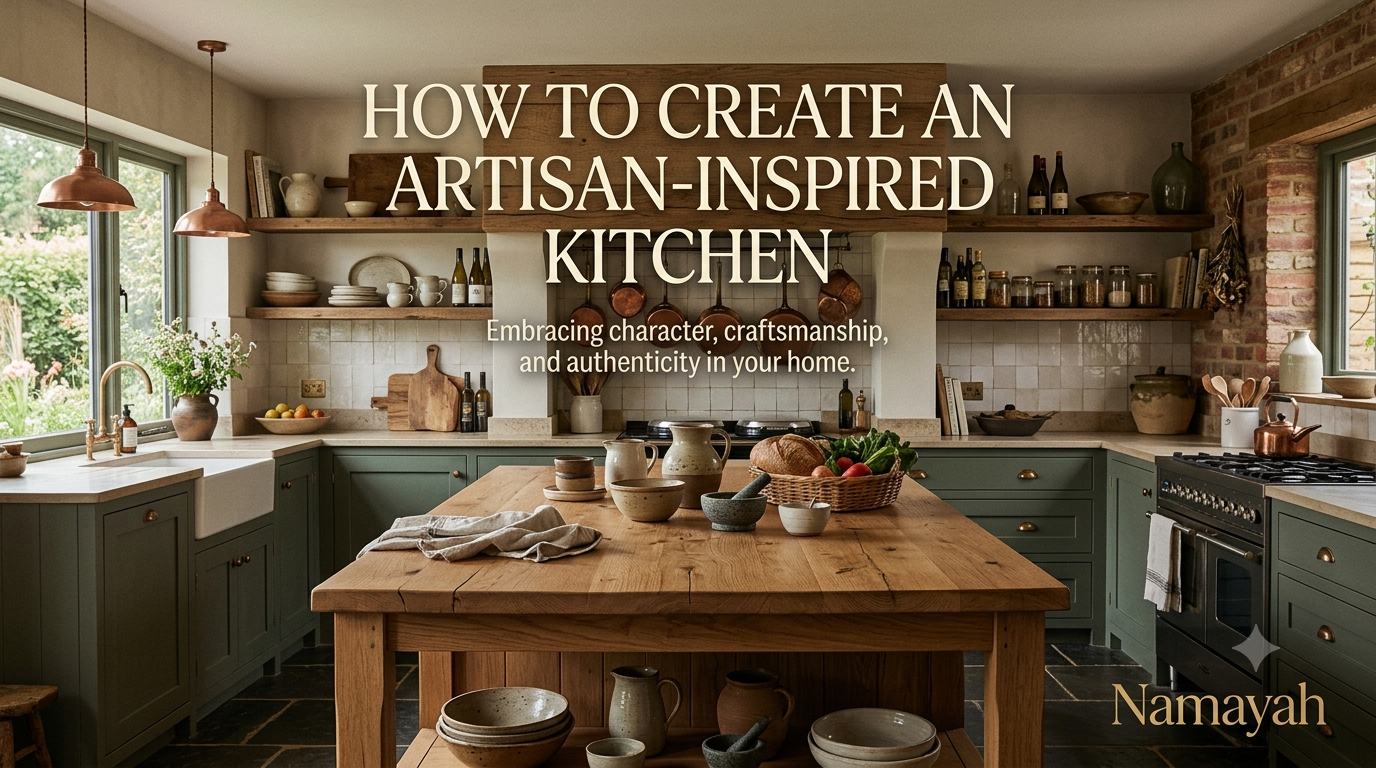
An artisan-inspired kitchen combines natural materials, visible craftsmanship, warm colors, tactile surfaces, and personal details to create a space that feels collected rather than mass-produced. The easiest way to achieve the look is to build a simple foundation with wood and stone, then add handmade tile, distinctive hardware, layered lighting, ceramics, and other meaningful objects.
The goal is not to make every element look rustic or handmade. Instead, combine modern kitchen functionality with materials and details that show character. Current kitchen design coverage increasingly emphasizes natural materials, handcrafted elements, layered textures, and spaces that feel personal and lived-in.
What Is an Artisan-Inspired Kitchen?
An artisan-inspired kitchen takes visual cues from traditional craftsmanship. Rather than relying on perfectly uniform finishes, it celebrates texture, natural variation, material quality, and individuality.
Common features include:
- Natural or wood-look cabinetry
- Stone countertops
- Handmade or artisan-style tiles
- Warm, earthy colors
- Aged brass, bronze, or other character-rich hardware
- Open shelving
- Handcrafted ceramics and pottery
- Woven baskets and natural textiles
- Warm, layered lighting
- Vintage or locally made accessories
The style can overlap with rustic, Craftsman, farmhouse, Mediterranean, traditional, or modern organic interiors. The defining feature is the emphasis on craft and character rather than a strict historical style.
Start With Natural Materials
Materials establish the mood of an artisan-inspired kitchen. Wood, stone, clay, ceramic, and metal provide visual and tactile variation that can make a kitchen feel warmer.
Architectural Digest’s recent coverage of earthy kitchen design highlights combinations such as timber, stone, reclaimed materials, handmade details, and locally crafted elements as ways to connect a kitchen with nature and regional craftsmanship.
Choose Warm Wood
Wood is one of the easiest ways to introduce an artisan feel.
Consider:
- Oak
- Walnut
- Teak
- Ash
- Reclaimed wood
- Wood veneer with a visible grain
You do not necessarily need solid-wood cabinetry throughout the kitchen. A combination of painted cabinetry, wood accents, shelving, or a wooden island can provide enough warmth.
Choose finishes that allow some natural variation to remain visible. Extremely glossy, uniform surfaces can work in a modern kitchen, but they generally create less of the tactile quality associated with artisan-inspired design.
Add Stone and Handmade Surfaces
Stone can give the kitchen a grounded, substantial appearance. Depending on your budget and maintenance preferences, possibilities include natural stone, quartz with a natural-stone appearance, granite, slate, or other durable surfaces appropriate for kitchen use.
You can also introduce texture through the backsplash, flooring, or an island detail.
The key is not to use too many competing materials. Two or three major materials usually create a more cohesive result than filling every surface with a different texture.
Choose a Warm, Earthy Color Palette
Artisan-inspired kitchens tend to work well with colors drawn from natural materials.
Try combinations such as:
- Cream and warm white
- Sand and beige
- Terracotta and clay
- Olive or sage green
- Muted blue
- Warm gray
- Charcoal
- Natural wood tones
Warm neutrals can create a calm foundation while allowing handmade tiles, ceramics, artwork, or hardware to provide visual interest.
For example, cream cabinets paired with natural wood shelving and aged-metal hardware can create character without making the room feel overly rustic.
Recent kitchen design coverage also points toward warmer neutrals, natural materials, and cohesive rather than overly contrasting palettes as approaches with lasting appeal.
Select Cabinetry With Character
Cabinetry occupies a large percentage of the visual space in most kitchens, so it has a major influence on the final style.
Shaker-style doors are a natural choice because their simple profiles can complement traditional, Craftsman, farmhouse, and transitional interiors. However, artisan-inspired design does not require a particular cabinet style.
Consider:
- Simple framed or Shaker doors
- Natural wood fronts
- Visible wood grain
- Beaded or lightly detailed doors
- Glass-front cabinets for selected areas
- Freestanding furniture-style pieces
Avoid making every cabinet look like an elaborate statement piece. Simple cabinetry can actually make handcrafted details stand out more effectively.
Make the Backsplash a Focal Point
The backsplash is an ideal location for introducing craftsmanship.
Handmade or artisan-style ceramic tiles can add subtle variations in color, glaze, shape, and texture. Even if you choose commercially manufactured tiles, look for finishes that create a handcrafted visual effect.
Potential options include:
- Zellige-style tile
- Handmade-look ceramic
- Small-format tile
- Muted patterned tile
- Textured tile
- Natural stone
- Brick or brick-look surfaces
If the backsplash is highly detailed, keep surrounding surfaces relatively restrained. This creates a focal point instead of visual competition.
Use Artisan-Inspired Hardware
Small details can dramatically change the character of a kitchen.
Look for hardware in finishes such as:
- Aged brass
- Antique brass
- Bronze
- Brushed metal
- Forged or hammered finishes
The hardware should relate to other metal elements in the room, but it does not have to match every fixture perfectly.
For example, warm metal cabinet pulls can work alongside a simple stainless-steel appliance package if the overall palette remains cohesive.
Layer Kitchen Lighting
Good lighting is both functional and atmospheric.
Instead of depending on a single ceiling fixture, combine several types of lighting:
- Ambient lighting for general illumination.
- Task lighting over countertops, sinks, and cooking areas.
- Accent lighting for shelves, artwork, architectural details, or display pieces.
Pendant lights above an island can become an important design feature. Wall sconces can provide another opportunity to introduce craftsmanship through ceramic, metal, glass, or textile shades.
Recent kitchen-design advice continues to emphasize layered lighting rather than relying on a single overhead source.
Use warm-toned lighting where appropriate to reinforce the inviting atmosphere, while ensuring task areas receive adequate illumination.
Add Open Shelving and Display Pieces
Open shelving can make an artisan-inspired kitchen feel more personal because it gives everyday objects a visible role in the design.
Display:
- Handmade bowls
- Ceramic mugs
- Wooden cutting boards
- Woven baskets
- Glass jars
- Copper or brass cookware
- Cookbooks
- Small plants
- Vintage kitchen pieces
The important word is edited. A shelf packed with unrelated objects can quickly look cluttered.
Choose items that share a color family or material language. A collection of cream ceramics, wooden boards, and woven baskets can look intentional without appearing overly styled.
Balance Handmade Details With Modern Function
An artisan-inspired kitchen should still be easy to use.
Beautiful materials cannot compensate for poor storage, insufficient lighting, or an awkward layout. Plan the working areas around how you actually cook and move through the room.
Consider:
- Deep drawers for cookware
- Dedicated pantry storage
- Pull-out storage where useful
- Appliance placement based on workflow
- Adequate countertop landing space
- Easy-to-clean surfaces near high-use areas
- Strong ventilation for frequent cooking
- Convenient lighting controls
This balance is especially important in contemporary kitchens. Recent design guidance increasingly combines traditional or handcrafted visual elements with modern storage and appliances rather than treating the two approaches as opposites.
Create an Artisan Kitchen on a Budget
You do not need a complete renovation to introduce artisan character.
Start with smaller changes:
1. Replace Cabinet Hardware
New pulls and knobs can change the character of existing cabinetry without replacing the cabinets.
2. Add Open Shelves
A small timber shelf can provide space for ceramics, cookbooks, or attractive kitchen tools.
3. Upgrade the Lighting
Replace a generic fixture with a more distinctive pendant or add practical under-cabinet lighting.
4. Introduce Handmade Objects
A few well-chosen ceramics, baskets, wooden boards, or textiles can make a kitchen feel more personal.
5. Change the Backsplash
If the existing kitchen is otherwise functional, updating the backsplash can create a major visual transformation.
6. Add Natural Texture
Wooden stools, linen textiles, woven baskets, and pottery can soften a kitchen without requiring structural work.
This approach also reflects the broader movement toward kitchens that feel less like uniform showroom installations and more like comfortable, individual living spaces.
Common Mistakes to Avoid
Making Everything Look Rustic
Artisan-inspired does not mean every surface needs to look distressed. Too many rustic finishes can make the room feel themed rather than authentic.
Using Too Many Materials
Natural materials are attractive, but excessive variation can make the kitchen visually chaotic.
Ignoring Maintenance
Before choosing porous stone, textured tile, unfinished wood, or other specialty materials, understand their cleaning and maintenance requirements.
Overloading Open Shelves
Open storage looks beautiful when curated. Too many objects can make the kitchen feel messy.
Sacrificing Function for Appearance
A beautiful kitchen still needs practical storage, good lighting, comfortable circulation, and durable surfaces.
Chasing Every Trend
A timeless foundation makes it easier to change accessories later. Current design discussions increasingly favor cohesive materials and individuality over highly contrasting, short-lived statements.
Artisan-Inspired Kitchen Design Checklist
Before finalizing your design, check that you have:
- Natural-looking materials as the foundation
- A cohesive warm or earthy color palette
- One or two strong focal points
- Cabinetry with simple, lasting appeal
- A backsplash with texture or craftsmanship
- Character-rich hardware
- Layered lighting
- A controlled amount of open display
- Practical storage
- Durable materials appropriate for your lifestyle
- Personal objects that make the kitchen feel lived in
The strongest designs usually combine these elements without making any single feature dominate the entire room.
FAQs
What makes a kitchen artisan-inspired?
An artisan-inspired kitchen emphasizes natural materials, craftsmanship, texture, warm colors, and individual details. Wood, stone, handmade-look tile, distinctive hardware, ceramics, and layered lighting are common ways to create the aesthetic.
What colors work best in an artisan-inspired kitchen?
Warm whites, cream, beige, terracotta, sage, olive, muted blue, charcoal, and natural wood tones work particularly well. The best combination depends on the home’s architecture, natural light, and surrounding finishes.
Can a modern kitchen look artisan-inspired?
Yes. You can combine contemporary appliances and efficient storage with natural wood, stone, handmade-style tile, warm lighting, and handcrafted accessories. The contrast can create a refined rather than overly rustic look.
Are handmade tiles necessary?
No. Genuine handmade tile can add character, but commercially produced tiles with irregular shapes, varied glazes, or handcrafted appearances can create a similar visual effect.
How can I make a small kitchen look artisan-inspired?
Focus on a few high-impact details rather than adding many objects. Consider warm cabinet colors, a textured backsplash, wood accents, distinctive hardware, open shelving, and layered lighting.
What type of wood is best for an artisan kitchen?
There is no single best wood. Oak, walnut, teak, ash, reclaimed wood, and other suitable species can work depending on the desired appearance, durability, availability, and budget.
How do I keep an artisan kitchen from looking cluttered?
Use a restrained material palette and display only selected objects. Keep frequently used surfaces clear, organize open shelves by color or material, and provide sufficient concealed storage.
Is an artisan-inspired kitchen the same as a rustic kitchen?
Not necessarily. Rustic kitchens often emphasize aged, rugged, or countryside-inspired elements. Artisan-inspired kitchens focus more broadly on craftsmanship, natural materials, texture, and individuality and can range from rustic to contemporary.
Conclusion
Creating an artisan-inspired kitchen is less about following a strict decorating formula and more about choosing materials and objects with texture, warmth, and character.
Start with a simple foundation of natural wood, stone, and warm colors. Add craftsmanship through the backsplash, hardware, lighting, shelving, and ceramics. Then balance those decorative elements with modern storage, practical appliances, durable surfaces, and a layout that supports the way you cook.
The result should feel personal rather than perfect—a kitchen that looks thoughtfully assembled, works comfortably every day, and becomes more interesting as you live in it.