
Styling Tips for a Beautiful Indian Dining Table
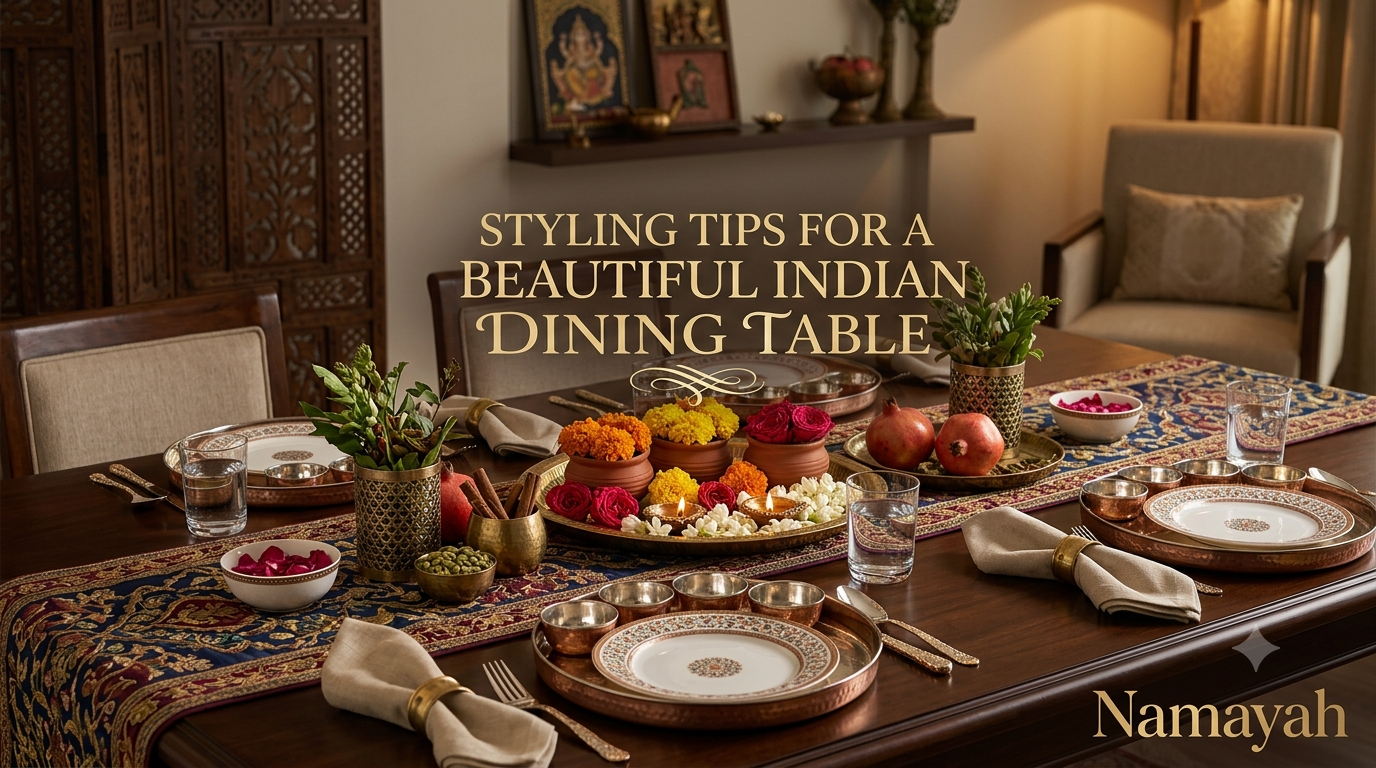
A beautiful Indian dining table does not need to look elaborate or expensive. The best styling combines functional tableware, Indian colors, natural textures, textiles, flowers, and carefully chosen decorative accents. Start with a simple base, create a balanced centerpiece, layer traditional details with contemporary pieces, and leave enough space for people to eat comfortably.
Whether you are styling your table for everyday family meals, a dinner party, Diwali, a wedding celebration, or another special occasion, thoughtful details can make the dining area feel warm and inviting.
Start With a Clear Dining Table Foundation
Before adding décor, clear the table and decide what role each item will play.
Begin with the essentials:
- Placemats or a table runner
- Dinner plates
- Bowls
- Glasses
- Cutlery
- Napkins
- A centerpiece or decorative accent
Avoid putting too many objects on the table at once. A clean foundation allows individual pieces to stand out.
For an Indian-inspired look, natural wood, neutral linens, brass accents, ceramic tableware, and woven materials can provide a versatile starting point.
Choose a Color Palette Inspired by India
Indian interiors are often associated with rich, expressive colors, but you do not need to use many colors simultaneously.
Choose one dominant color and two or three supporting shades.
For example:
| Style | Main Color | Supporting Accents |
| Contemporary Indian | Cream | Terracotta and brass |
| Festive | Deep red | Gold and ivory |
| Earthy | Brown | Green and beige |
| Bright | Yellow | Pink and orange |
| Elegant | Navy | White and metallic accents |
For everyday dining, neutral tableware can be paired with colorful napkins or a patterned runner. For celebrations, richer tones can create a more festive atmosphere.
The key is consistency. Repeating a color in two or three places can make the table look intentionally designed rather than randomly decorated.
Layer Traditional and Modern Tableware
One of the easiest ways to create an Indian dining aesthetic is to combine traditional materials with contemporary tableware.
Consider incorporating:
- Brass serving bowls
- Stainless-steel thalis
- Handcrafted ceramic plates
- Terracotta serving dishes
- Wooden serving boards
- Copper or brass glasses
- Contemporary white crockery
You do not have to make every item traditional. A modern ceramic dinner set can look striking when paired with brass serving pieces or an Indian-inspired textile.
This mix also makes the table feel personal instead of overly themed.
Add Indian Textiles for Warmth
Textiles are an easy way to introduce color and pattern without permanently changing your dining room.
Try a:
- Block-printed table runner
- Handwoven placemat
- Cotton napkin
- Ikat-inspired textile
- Embroidered tablecloth
- Natural-fiber runner
A patterned runner can become the visual foundation of the table. If the runner is highly detailed, keep the plates and centerpiece relatively simple.
For a quieter look, use a plain neutral runner and introduce Indian patterns through napkins or placemats.
Use a Centerpiece Without Blocking Conversation
A centerpiece should create a focal point without becoming an obstacle.
Good options include:
- A low floral arrangement
- A brass bowl filled with flowers
- A small collection of candles
- A decorative urli
- A low ceramic vessel
- A wooden tray with seasonal elements
For a long dining table, you can create a series of small arrangements instead of using one large centerpiece.
Keep tall decorations away from the direct line of sight whenever possible. Guests should be able to see and talk to one another comfortably.
Bring in Flowers and Natural Elements
Fresh flowers can instantly make a dining table feel more welcoming.
For an Indian-inspired setting, consider flowers and foliage that complement your overall color scheme. Marigolds can create a particularly festive appearance, while white flowers and greenery can produce a calmer everyday look.
You can also use natural elements such as:
- Fresh leaves
- Small branches
- Seasonal fruit
- Dried flowers
- Woven baskets
- Wooden serving pieces
Natural materials work especially well with brass, ceramic, and cotton textiles.
Style the Table for Everyday Meals
An everyday dining table should be attractive without becoming difficult to use.
Instead of keeping the entire table permanently decorated, use a simple setup:
- Place a runner or placemats.
- Add practical tableware.
- Keep a small centerpiece in the middle.
- Use one decorative accent, such as a brass bowl.
- Leave sufficient space for serving food.
If your dining table is used several times a day, choose washable textiles and durable tableware.
The goal is to create a table that looks beautiful but can quickly be cleared when mealtime begins.
Create a Festive Indian Dining Table
Special occasions provide an opportunity to use richer colors, decorative lighting, and traditional accents.
For a festive table, combine:
- Colorful textiles
- Brass or metal accents
- Flowers
- Diyas or candleholders
- Decorative servingware
- Coordinated napkins
- Seasonal décor
For celebrations such as Diwali, small lamps or diyas can add warmth to the setting. Place flames securely and keep them away from fabrics, decorations, and areas where guests will reach frequently.
A festive table does not need every decorative element available. Choose a few strong details and repeat them throughout the setting.
Use Diyas and Traditional Accents Thoughtfully
Traditional Indian decorative pieces can give the table a distinctive character.
Brass diyas, small bells, carved wooden objects, metal bowls, and decorative vessels can work as accents.
However, restraint is important. If you use a detailed brass centerpiece, you may not need several additional metallic objects.
Try the one focal piece + supporting accents approach:
- One centerpiece
- Two or three smaller decorative elements
- Coordinated tableware
- One textile pattern
This creates visual interest without making the table feel crowded.
Pay Attention to Plates, Glasses, and Cutlery
Good table styling is not only about decoration. The arrangement of functional pieces also affects the overall appearance.
Keep plates aligned and position cutlery consistently. Fold or loosely roll napkins and place them beside the setting or on top of the plate.
If you are serving an Indian meal with several dishes, think about the flow of the meal. Serving bowls and platters should be accessible without forcing guests to reach across the centerpiece.
For a more traditional presentation, a thali can become part of the place setting. For a contemporary dinner, individual ceramic plates can provide a cleaner visual appearance.
Keep the Dining Table Comfortable and Functional
A beautiful table should still be comfortable to use.
Avoid:
- Oversized centerpieces
- Too many decorative objects
- Fragile pieces in high-traffic areas
- Candles placed too close to guests
- Excessively layered textiles
- Decorations that make serving difficult
Think about the dining experience from the guest’s perspective.
Can everyone reach their food? Can guests see one another? Is there enough room for plates and glasses? Can the table be cleared easily?
If the answer is yes, your styling is probably doing its job.
Common Indian Dining Table Styling Mistakes
Using too many colors
Indian décor can be colorful, but combining too many competing shades can make the table look chaotic. Choose a focused palette.
Overloading the centerpiece
A centerpiece should enhance the table rather than dominate it.
Mixing too many patterns
If your runner has a bold print, balance it with simpler plates and napkins.
Ignoring the dining room
The table should complement the surrounding furniture, lighting, walls, and flooring. A highly ornate table can look disconnected in an otherwise minimalist room.
Choosing decoration over practicality
A beautiful table that cannot comfortably accommodate dinner is not successful styling.
A Simple Formula for a Beautiful Indian Dining Table
If you want an easy styling formula, start with these five layers:
1. Base: Choose a runner, placemats, or a clean tabletop.
2. Tableware: Add coordinated plates, bowls, glasses, and cutlery.
3. Texture: Introduce cotton, linen, wood, ceramic, or woven materials.
4. Focal point: Add flowers, a brass vessel, a low centerpiece, or another decorative feature.
5. Finishing touch: Use napkins, diyas, small flowers, or a subtle metallic accent.
This formula works for both everyday meals and special occasions. You can simply change the colors, textiles, and centerpiece to create a different mood.
Frequently Asked Questions
How can I make my Indian dining table look elegant?
Use a limited color palette, coordinated tableware, one strong centerpiece, and a few traditional accents. Brass, natural wood, ceramics, textiles, and fresh flowers can add warmth without overcrowding the table.
What colors are best for an Indian dining table?
Popular styling choices include earthy neutrals, terracotta, deep red, yellow, green, ivory, and metallic accents. The best combination depends on the existing colors in your dining room.
How can I decorate an Indian dining table for Diwali?
Use festive textiles, flowers, diyas, brass accents, and warm lighting. Keep decorative pieces safely positioned so they do not interfere with food or seating.
What can I use as an Indian dining table centerpiece?
A low brass bowl, urli, floral arrangement, ceramic vessel, candle grouping, or decorative tray can work well. Choose an option that does not obstruct conversation.
How do I mix modern and traditional Indian table décor?
Pair contemporary plates and glassware with traditional materials such as brass, wood, terracotta, or Indian textiles. Keeping one style dominant helps the combination look intentional.
How do I style a dining table for everyday use?
Keep the setup simple with practical placemats, coordinated tableware, a small centerpiece, and washable textiles. Avoid fragile or oversized decorative objects.
Should I use a tablecloth or runner?
Either can work. A tablecloth creates a more formal appearance, while a runner can provide color and texture while leaving part of the tabletop visible.
How many decorative items should be on a dining table?
There is no fixed number. Focus on balance and functionality rather than quantity. A centerpiece plus a few supporting accents is often enough.
Conclusion
Styling a beautiful Indian dining table is about finding the right balance between tradition, personality, color, texture, and practicality. You can create an inviting setting with simple elements such as Indian textiles, handcrafted tableware, brass accents, flowers, and a thoughtfully chosen centerpiece.
For everyday dining, keep the design uncluttered and functional. For celebrations, introduce richer colors, decorative lighting, and traditional details. Most importantly, let the table support the experience of sharing food and conversation rather than competing with it.