
How to Build a Stylish Artisan Kitchen Collection
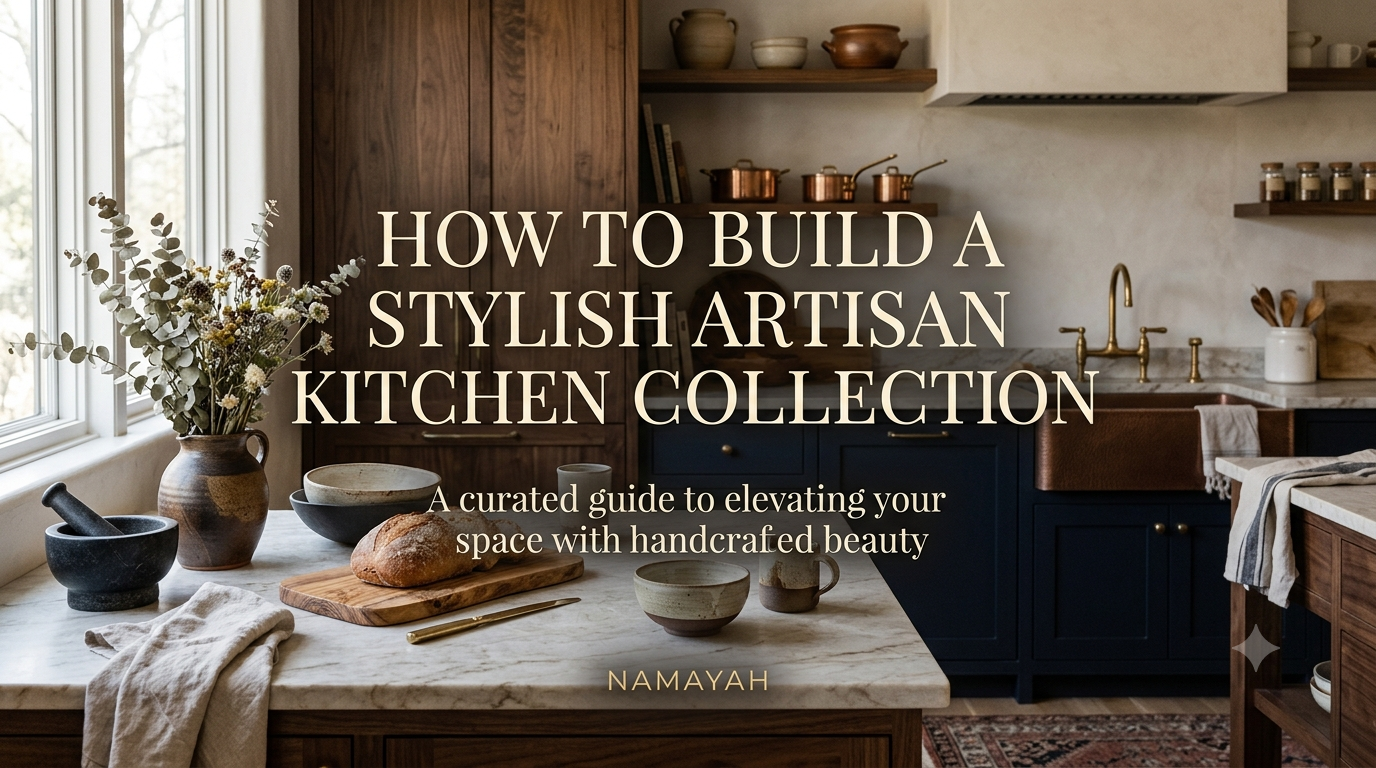
An artisan kitchen collection combines handcrafted character, useful everyday pieces, and a cohesive visual style. The best approach is to start with a clear aesthetic, choose a small palette of complementary materials and colors, invest in distinctive pieces, and gradually add functional items that make the kitchen feel personal rather than overly decorated.
What Is an Artisan Kitchen Collection?
An artisan kitchen collection is a carefully selected group of kitchen and dining pieces that emphasize craftsmanship, natural materials, distinctive finishes, and individual character.
Instead of buying every item from the same matching range, an artisan approach focuses on curating pieces that work together without looking identical.
Think handmade ceramics, wooden serving boards, textured linens, crafted utensils, distinctive cookware, and decorative objects that also have a practical purpose.
The goal is not perfection. Small variations in texture, shape, glaze, grain, or finish can be part of the appeal.
Start With Your Kitchen Style
Before buying anything, decide what you want your kitchen to feel like.
An artisan collection can suit many interiors, including:
- Modern kitchens
- Rustic kitchens
- Farmhouse-inspired spaces
- Scandinavian interiors
- Traditional kitchens
- Mediterranean-inspired rooms
- Industrial kitchens
- Contemporary neutral spaces
Start by identifying three words that describe your preferred atmosphere. For example, you might choose warm, natural, and understated.
Use these words as a filter when shopping. If an item looks beautiful but does not support your chosen direction, it may not belong in the collection.
Choose a Cohesive Material Palette
Material is one of the easiest ways to make individual artisan pieces feel connected.
Popular choices include:
- Ceramic
- Stoneware
- Wood
- Marble
- Natural stone
- Linen
- Cotton
- Glass
- Metal
You do not need to use every material.
Instead, choose two or three primary materials and introduce others sparingly. For example, warm wood, handmade ceramic, and aged metal can create a relaxed, tactile combination.
Natural materials are particularly effective because their subtle imperfections can add depth to the overall composition.
Invest in a Few Statement Pieces
A stylish collection does not need dozens of unusual objects.
Start with a few pieces that immediately establish the character of the kitchen. Depending on your space, these might include:
- A large handcrafted serving bowl
- A distinctive ceramic vase
- A carved wooden cutting or serving board
- A handmade pitcher
- A visually interesting cookware piece
- A statement fruit bowl
- A set of artisan mugs
Choose pieces that are attractive enough to display but useful enough to earn their place.
A small number of memorable objects will usually have more impact than filling every shelf with decorative items.
Build Around Everyday Essentials
Style should not come at the expense of function.
Create your collection around the things you regularly use. Consider plates, bowls, mugs, glasses, utensils, cutting boards, serving dishes, storage containers, and textiles.
Then look for artisan versions or complementary pieces where they make sense.
For example, a handmade ceramic bowl can become both a breakfast bowl and a decorative object. A wooden board can be used for food preparation and then placed on a counter when not in use.
This approach creates a kitchen that feels naturally styled because the objects are genuinely part of everyday life.
Mix Textures and Finishes
A collection can feel flat when everything has the same surface.
Texture introduces visual depth.
Try combining:
- Smooth ceramic with rough stone
- Polished glass with textured linen
- Natural wood with metal
- Matte finishes with occasional gloss
- Soft textiles with substantial serving pieces
The contrast does not need to be dramatic. Even small differences can make shelves, countertops, and dining areas more interesting.
Use Color With Intention
Artisan kitchens often benefit from a restrained color palette.
Begin with the colors already present in your kitchen, such as cabinetry, countertops, flooring, walls, or appliances.
Then select complementary shades for your collection.
A neutral kitchen might work well with:
- Cream
- Sand
- Terracotta
- Olive
- Warm brown
- Soft blue
If your kitchen already has strong colors, keep the accessories more controlled.
A useful rule is to repeat important colors several times rather than introducing a completely different color with every new item.
Style Open Shelving Thoughtfully
Open shelves can showcase an artisan kitchen collection, but they can also become visually crowded.
Start by grouping objects according to function or material.
For example, one section might contain everyday plates and bowls, while another holds serving pieces, mugs, and a few decorative accents.
Vary the heights of objects to create a more natural arrangement. Stack some pieces, stand others upright, and leave breathing room between groups.
Most importantly, do not feel obligated to display everything.
Storage and display are different functions. Keep frequently used items accessible and rotate decorative or seasonal pieces when needed.
Add Handcrafted Serving Pieces
Serving pieces are particularly useful for introducing artisan character because they can move between the kitchen and dining table.
Consider adding:
- Serving platters
- Large bowls
- Carafes or pitchers
- Wooden boards
- Salad servers
- Ceramic serving dishes
- Handmade napkin holders
These pieces can make ordinary meals feel more considered without requiring a complete kitchen redesign.
Balance Handmade and Modern Elements
You do not need a completely traditional kitchen to create an artisan collection.
In fact, handcrafted objects can provide an effective contrast in a modern space.
A streamlined kitchen with simple cabinetry can benefit from the warmth of handmade ceramics or natural wood.
Likewise, a rustic kitchen can feel more contemporary when artisan pieces are paired with clean-lined modern accessories.
The key is balance.
If every element is highly decorative, the space can feel busy. If every element is perfectly uniform, it may lose the individuality that makes an artisan collection appealing.
Avoid Common Artisan Kitchen Mistakes
Building a collection slowly can help you avoid several common mistakes.
Buying too many pieces at once:
A large shopping spree can produce a collection without a clear visual identity. Add pieces gradually.
Ignoring scale:
A tiny object may disappear on a large countertop, while an oversized item can overwhelm a narrow shelf.
Mixing too many styles:
Individual pieces can be different without being unrelated. Look for connections through material, color, shape, or finish.
Choosing appearance over function:
Beautiful objects that never get used can quickly become clutter.
Filling every available surface:
Negative space gives individual pieces room to stand out.
How to Shop for Artisan Kitchenware
When shopping, look beyond the basic appearance of an item.
Consider:
- Material: Is it made from a material that fits your collection?
- Craftsmanship: Does the construction and finishing appear thoughtful?
- Function: Will you actually use it?
- Scale: Is it appropriate for your kitchen?
- Color: Does it complement your existing palette?
- Versatility: Can it serve more than one purpose?
- Longevity: Is it something you are likely to enjoy for years?
For handmade products, natural variation can be part of the character. Slight differences between pieces may make a collection feel more personal.
Build Your Collection Over Time
The most stylish artisan kitchen collections rarely need to be completed in a single shopping trip.
Start with the pieces you use most.
You might begin with a set of everyday ceramics, add a wooden serving board, introduce textured linens, and eventually find a statement piece that becomes the focal point of the collection.
This slower approach gives you time to understand what your kitchen actually needs.
It also allows the collection to develop naturally rather than looking as though everything was purchased at the same time.
A good artisan kitchen should feel collected, useful, and personal.
FAQs About Artisan Kitchen Collections
What makes a kitchen collection look artisan?
A combination of handcrafted-looking or handmade pieces, natural materials, tactile textures, subtle variation, and thoughtful curation can create an artisan aesthetic. The overall arrangement matters as much as individual products.
Can an artisan kitchen collection work in a modern kitchen?
Yes. Handmade ceramics, natural wood, textured textiles, and other crafted pieces can soften the clean lines of a modern kitchen and add warmth without changing the underlying design.
How many artisan pieces should I have?
There is no fixed number. Start with a few useful statement pieces and expand according to your space, needs, and preferred aesthetic.
Which materials work best for an artisan kitchen?
Ceramic, stoneware, wood, linen, natural stone, glass, and metal can all work well. Choose materials that complement one another rather than trying to use every material available.
How can I make an artisan kitchen look less cluttered?
Limit the number of items on display, group similar pieces, vary heights, repeat colors or materials, and leave some open space around focal objects.
Should artisan kitchenware match?
It does not need to match exactly. A collection often looks more interesting when pieces coordinate through shared colors, materials, shapes, or finishes while retaining individual character.
How can I start an artisan kitchen collection on a budget?
Start with a few high-impact pieces rather than replacing everything. A handcrafted bowl, wooden board, textured textile, or distinctive mug can introduce the look without requiring a major purchase.
Are artisan kitchen pieces practical for everyday use?
Many can be. Prioritize pieces designed for regular use and check care instructions before purchasing, especially for handmade ceramics, wood, and delicate finishes.
Conclusion
Building a stylish artisan kitchen collection is less about buying expensive or unusual objects and more about curating pieces with purpose.
Choose a clear design direction, establish a complementary material and color palette, invest in useful statement pieces, and introduce texture through ceramics, wood, textiles, stone, and metal.
Most importantly, let the collection develop over time. The best result is a kitchen that feels functional and welcoming while reflecting your personal taste.