
How to Mix Different Wood Tones Without Clashing
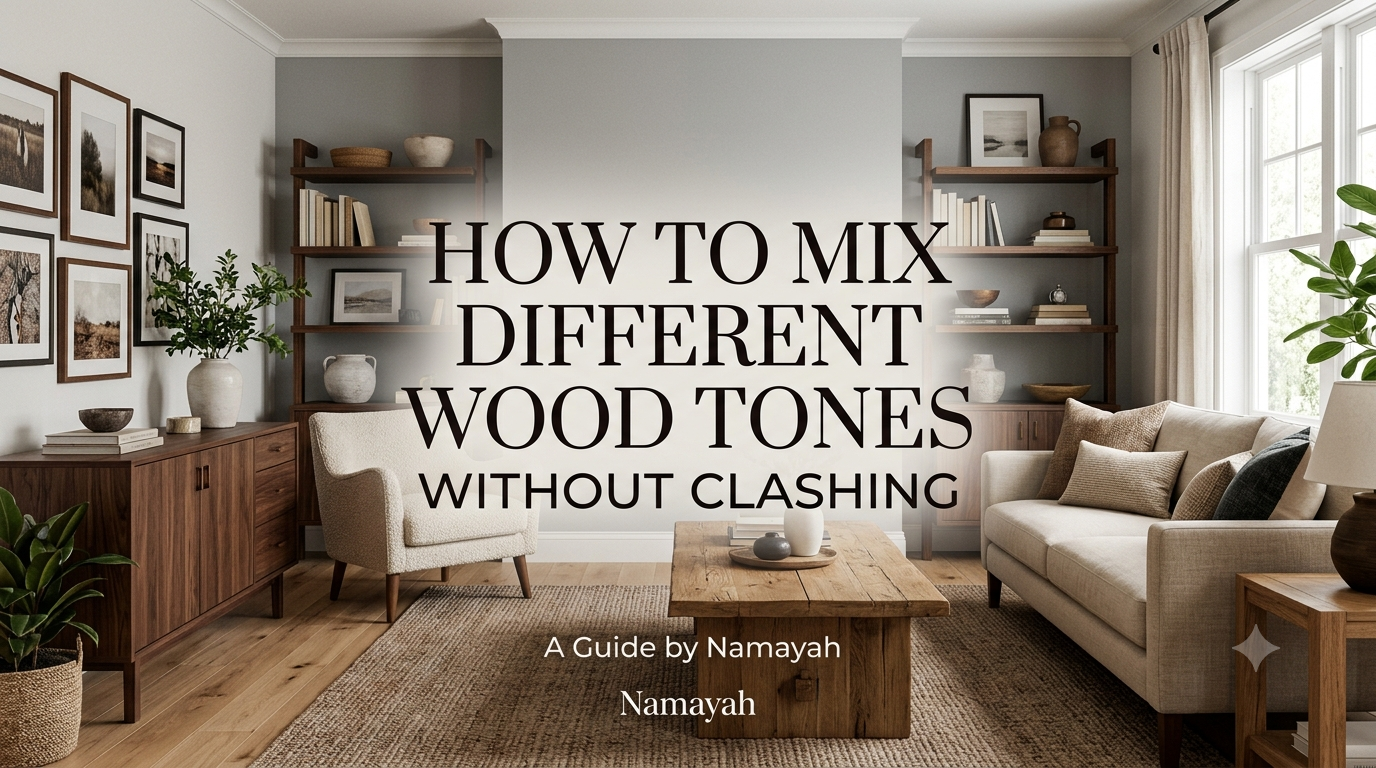
Mixing different wood tones can make a room feel warm, collected, and visually interesting. The key is not to make every piece of wood match. Instead, choose a dominant wood tone, pay attention to undertones, repeat finishes throughout the room, and use contrast intentionally. Rugs, textiles, and other materials can also help connect different woods so the overall space feels cohesive rather than chaotic.
Can You Mix Different Wood Tones?
Yes, you can mix different wood tones successfully. In fact, using several wood finishes can give a room more depth and personality than using one matching set.
The goal is to make the differences look intentional.
A room with a light oak floor, medium walnut furniture, and darker wood accents can look sophisticated when the finishes relate to one another. Problems usually arise when several unrelated wood colors are introduced without a visual connection.
Think of wood tones as part of the room’s color palette. You do not need every tone to be identical, but they should work together.
Choose a Dominant Wood Tone
One of the easiest ways to mix wood tones is to choose one finish as the dominant tone.
This is especially useful when you are starting with an existing hardwood floor, kitchen cabinets, or another large wood element that is difficult to change.
For example, if your flooring covers most of the room in a medium-toned oak, let it establish the foundation. Furniture and accessories can then introduce lighter or darker woods.
A simple hierarchy is:
- Dominant wood: The largest wood surface, such as flooring or cabinetry.
- Secondary wood: Larger furniture pieces that complement the dominant tone.
- Accent wood: Smaller tables, frames, stools, or decorative pieces.
This prevents every wood finish from competing for attention.
Understand Warm, Cool, and Neutral Wood Tones
Color is only part of the equation. Undertones can determine whether two wood finishes feel compatible.
Some woods have warm yellow, orange, or reddish undertones. Others can appear cooler, grayer, or more neutral.
For example, a warm honey-colored wood may look very different beside a gray-toned wood, even if both are technically medium brown.
Before combining pieces, look at them in the actual room and under the lighting you use most often. Natural daylight, warm bulbs, and cool bulbs can all affect how wood colors appear.
When you’re unsure, compare samples side by side rather than judging each finish separately.
Match Undertones, Not Exact Colors
A common mistake is assuming that all the wood in a room needs to be the same color.
It doesn’t.
Instead of searching for an exact match, look for relationships between the finishes. Two different woods can work beautifully when their undertones complement each other.
For example, several warm-toned woods can create a welcoming palette even when their shades vary considerably.
This approach also makes decorating easier because you are not restricted to buying furniture from one collection or manufacturer.
Use Contrast Intentionally
Contrast can make mixed wood tones look deliberate.
A room with only slightly different wood finishes may actually feel more confusing than a room with clearly different tones. When two pieces are almost—but not quite—the same color, they can look like an unsuccessful attempt at matching.
Instead, consider creating noticeable variation.
A dark walnut coffee table against a lighter oak floor, for instance, can create a clear visual relationship. The difference becomes part of the design rather than something that needs to be hidden.
The important thing is to avoid introducing too many unrelated contrasts at once.
Repeat Each Wood Tone
Repetition is one of the simplest ways to create cohesion.
If you introduce a particular wood tone once, consider repeating a similar tone somewhere else in the room.
For example, a medium walnut dining table could be echoed by:
- A walnut-framed mirror
- A small side table
- Picture frames
- Wooden shelving
- Decorative objects with a similar finish
The pieces do not have to be identical. The repetition simply helps the eye recognize the wood tone as an intentional part of the room.
Mix Light, Medium, and Dark Woods
You can combine light, medium, and dark woods, but give each one a purpose.
Light Wood
Light woods can make a room feel airy and relaxed. They often work well for flooring, larger furniture, or Scandinavian-inspired interiors.
Medium Wood
Medium tones are versatile and can act as a transition between lighter and darker finishes.
Dark Wood
Dark woods can add contrast and visual weight. They are particularly effective when used for statement furniture or smaller accents.
A balanced room might use light wood as the foundation, medium wood for furniture, and dark wood as an accent.
You don’t have to use all three. Two well-chosen tones can be enough.
Consider Wood Grain and Finish
Color is not the only thing that changes how wood looks.
Grain pattern, sheen, texture, and finish also affect how pieces interact.
A heavily textured, rustic wood table may feel very different from a smooth, glossy wood cabinet even if their colors are similar.
When mixing finishes, consider the overall style of the room.
For a relaxed space, varied natural textures can work well together. In a more contemporary room, fewer and cleaner finishes may create a more cohesive appearance.
You don’t need every surface to have the same grain pattern. Just avoid introducing so many competing textures that the room becomes visually busy.
Use Rugs and Textiles as Visual Bridges
Rugs are particularly useful when different wood tones are next to one another.
Suppose you have a light wood floor and a dark wood dining table. A rug underneath the table can visually separate the two surfaces while adding colors that connect them.
Other useful bridging elements include:
- Upholstery
- Curtains
- Throw pillows
- Area rugs
- Artwork
- Baskets
- Metal accents
- Ceramic accessories
These materials break up large areas of wood and give different finishes something else to relate to.
Mix Wood Tones in the Living Room
Living rooms often contain several wood elements, including flooring, coffee tables, media consoles, side tables, shelving, and picture frames.
Start with the floor as the foundation.
If the flooring is light, a medium or dark coffee table can create contrast. Repeat that darker tone with a smaller accessory or another furniture piece.
If you already have several wood furniture pieces, use upholstery and textiles to soften the transitions.
A rug beneath the main seating area can also prevent the furniture from visually blending into the floor.
Mix Wood Tones in the Kitchen
Kitchens can be more challenging because cabinetry and flooring often occupy large surfaces.
If your cabinets and floors are different woods, avoid trying to make them compete.
Instead, decide which element should dominate.
For example, strong wood cabinetry can be balanced with a simpler floor finish. Alternatively, understated cabinetry can allow a distinctive wood island to become the focal point.
Countertops, backsplash materials, hardware, and lighting can also help establish a visual connection between the different finishes.
Mix Wood Tones in the Bedroom
Bedrooms are ideal for a softer approach.
You might have wood flooring, a bed frame, nightstands, and a dresser in different finishes. Rather than matching everything, choose two or three related tones.
For example, a light wood floor can work with medium-toned bedside tables and a darker dresser.
Bedding, curtains, and an area rug can then provide a neutral backdrop that keeps the wood from feeling overwhelming.
Common Mistakes to Avoid
Trying to Match Every Wood Exactly
Perfect matching can make a room feel overly coordinated. Variation often creates a more natural, layered look.
Using Too Many Wood Tones
Mixing woods does not mean every piece needs a different finish. Too many unrelated tones can make the room feel fragmented.
Ignoring Undertones
Two brown woods can clash if one is strongly warm and the other is distinctly cool.
Forgetting Scale
A small dark wood frame and a large dark wood cabinet have very different visual impact. Consider how much of each finish appears in the room.
Adding Wood Without Repetition
A single isolated wood tone can look accidental. Repeat important finishes when possible.
Ignoring the Existing Floor
The floor is often one of the largest wood surfaces in the room, so furniture should be selected with it in mind.
How to Create a Cohesive Mixed-Wood Palette
Before buying new furniture, follow this simple process:
- Identify the existing wood tones. Start with flooring, cabinetry, doors, and built-ins.
- Determine their undertones. Decide whether they appear warm, cool, or relatively neutral.
- Choose a dominant finish. Usually, this will be the largest wood surface.
- Select one or two supporting tones. Create either subtle variation or intentional contrast.
- Repeat important tones. Use similar finishes in multiple places.
- Add non-wood materials. Rugs, upholstery, metal, glass, stone, and ceramics can break up the wood.
- Check samples in the room. Lighting can significantly change how finishes appear.
- Step back and evaluate the whole space. Look at the room from different angles rather than judging individual pieces alone.
A Simple Rule for Mixing Wood Tones
If you’re unsure where to start, use the dominant–supporting–accent approach.
Let one wood tone occupy most of the visual space. Add a second tone through furniture or cabinetry, then use a third tone sparingly as an accent if the room needs more contrast.
The exact colors matter less than the overall relationship between them.
The best mixed-wood interiors usually feel collected rather than perfectly matched. Variation gives the room character, while repetition and balance keep that variation from becoming chaotic.
FAQs About Mixing Different Wood Tones
Should all the wood in a room match?
No. Different wood tones can work together successfully. Focus on complementary undertones, intentional contrast, repetition, and overall balance rather than exact color matching.
How many different wood tones can you have in one room?
There is no universal maximum. However, limiting the room to a dominant wood plus one or two supporting tones is a useful starting point, particularly in smaller spaces.
Can warm and cool wood tones be mixed?
Yes, but the combination requires more attention. Strongly contrasting undertones can look intentional when supported by other colors and materials, while subtle transitions may be easier to coordinate.
Should wood floors match wood furniture?
No. Furniture does not need to match the floor. In many cases, noticeable but intentional contrast can create a more interesting interior.
Can light and dark wood be used together?
Absolutely. Light and dark woods can create strong contrast. Repeat the darker or lighter tone elsewhere in the room to make the combination feel deliberate.
Does wood grain need to match?
No. Different grain patterns can add texture and character. However, combining too many highly distinctive grains may make a room feel visually busy.
What should I do if my wood tones already clash?
Start by identifying the strongest wood tone and simplify the rest of the palette around it. A large rug, upholstery, artwork, or other non-wood material can also help visually separate and connect competing finishes.
Is it better to use the same wood throughout an open-plan home?
Not necessarily. Different wood tones can work across connected spaces. Repeating one or two finishes between areas can help maintain continuity while allowing each room to have its own character.
Conclusion
Learning how to mix different wood tones without clashing is less about finding identical finishes and more about creating relationships between them. Choose a dominant tone, pay attention to undertones, use contrast intentionally, repeat important finishes, and introduce rugs and other materials to connect the palette.
Most importantly, don’t be afraid of variation. A thoughtfully mixed collection of light, medium, and dark woods can make a home feel warmer, more personal, and more layered than a perfectly matched furniture set.