
Why Hand-Finished Wooden Products Have a Unique Appeal
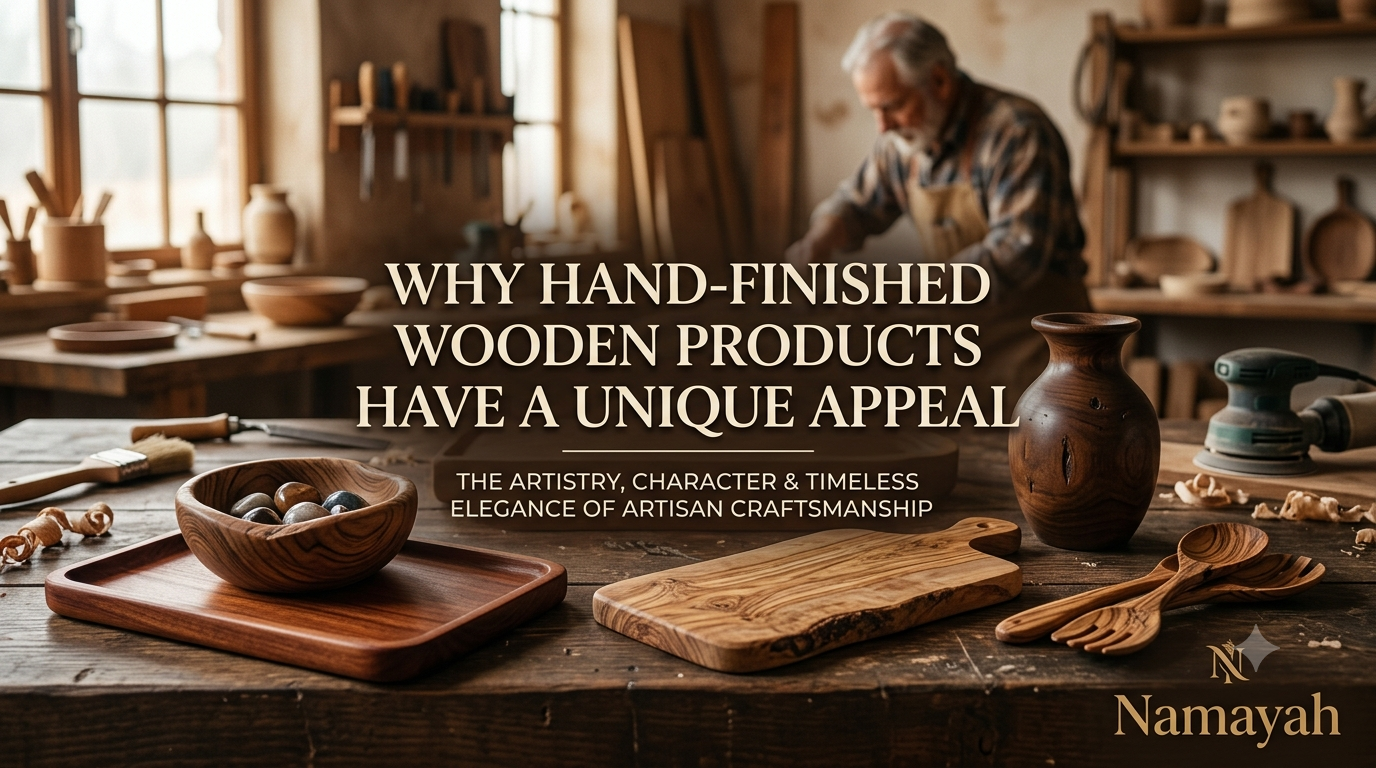
Hand-finished wooden products have a unique appeal because they combine the natural beauty of wood with visible craftsmanship. Unlike products designed to look identical, hand-finished pieces can retain subtle variations in grain, color, texture, and finish. These details give each item a distinctive character and help create a stronger connection between the product, the material, and the person who made it.
From furniture and serving boards to decorative objects and handmade gifts, finished wooden products can bring warmth and character into everyday spaces. Their appeal is not simply about appearance. It also comes from craftsmanship, material choice, tactile qualities, and the sense that the item has been thoughtfully made.
What Are Hand-Finished Wooden Products?
A hand-finished wooden product is an item that receives some or all of its finishing treatment by hand. Depending on the product and workshop, this may include sanding, applying oils, waxes, stains, paints, or other finishes, followed by careful inspection and additional handwork.
The exact process varies widely. Some products may be almost entirely handcrafted, while others may use machines for cutting and shaping before an artisan completes the final surface by hand.
This distinction matters because hand-finished does not automatically mean completely handmade. The value comes from the finishing skill, attention to detail, and character of the final product.
The Beauty of Natural Wood
One of the strongest reasons for the appeal of hand-finished wooden products is the material itself.
Natural wood can contain distinctive grain patterns, knots, color variations, and subtle changes in texture. These characteristics depend on the type of wood and the individual piece from which a product is made.
A hand-applied finish can enhance these natural characteristics rather than completely concealing them. A carefully finished surface may make the grain easier to appreciate while adding visual depth to the product.
This is particularly attractive to people who prefer natural-looking interiors over highly uniform, synthetic finishes.
Every Piece Has Its Own Character
Mass-produced products are often designed to maintain a high degree of consistency. That consistency can be useful, but it can also mean that individual pieces look almost identical.
Hand-finished wooden products can be different.
Small variations in grain, tone, edges, and finish can make two products from the same collection subtly distinct. These differences are not necessarily flaws. In many handcrafted products, they are part of the appeal.
For buyers, this can create the feeling of owning something individual rather than simply purchasing another identical item.
The Value of Skilled Craftsmanship
A beautiful wooden product depends on more than the raw material. The finishing process can require patience, precision, and an understanding of how wood behaves.
An experienced craftsperson can pay attention to details such as:
- Surface smoothness
- Grain direction
- Edge treatment
- Evenness of the finish
- Overall proportions
- Small surface imperfections
- How the final finish complements the wood
These details may be easy to overlook individually, but together they influence how a finished product looks and feels.
Craftsmanship therefore adds another dimension to the product: the visible result of human attention and skill.
A More Personal Look and Feel
Wood is naturally tactile. People can see its grain, feel its texture, and notice how its surface changes under different lighting.
Hand finishing can strengthen this sensory experience.
A well-finished wooden surface may feel smooth and comfortable while still retaining some of the visual character associated with natural wood. This can make wooden objects particularly satisfying to use in everyday life.
That tactile quality is one reason wooden furniture, kitchenware, decorative objects, and accessories can feel warmer and more personal than highly uniform manufactured alternatives.
Durability and Careful Finishing
The durability of a wooden product depends on several factors, including the type of wood, construction, intended use, environmental conditions, and finish. Hand finishing alone should not be treated as a guarantee of greater durability.
However, careful finishing can be an important part of preparing a wooden surface for its intended use.
A suitable finish may help protect the surface from everyday wear and make it easier to maintain. The right finish also depends on whether the product is decorative, used as furniture, or intended for contact with food.
For this reason, buyers should consider the product’s intended purpose and care instructions rather than assuming that every wooden finish provides the same protection.
Timeless Style for Different Interiors
Wood has remained a popular material across many interior design styles because it can work with both traditional and contemporary spaces.
A hand-finished wooden item can complement:
- Rustic interiors
- Minimalist rooms
- Traditional homes
- Modern spaces
- Scandinavian-inspired décor
- Warm, natural interiors
- Eclectic rooms
The versatility comes partly from the wide range of wood tones, shapes, finishes, and designs available.
A simple wooden object can provide warmth in a modern room, while an ornate handcrafted piece can become a focal point in a more traditional setting.
Why People Value Handmade Products
The popularity of handmade products reflects more than aesthetics. Many consumers are interested in understanding how products are made, who makes them, and what materials are involved.
Hand-finished wooden products can communicate a stronger sense of craftsmanship because the finishing process may leave subtle evidence of human involvement.
For some buyers, this creates a more meaningful purchasing experience. Instead of focusing only on function, they also value the story, process, material, and individuality associated with the object.
The appeal is especially strong when the product is purchased for a home where people want objects to feel personal rather than purely functional.
Hand-Finished Wood as a Meaningful Gift
Wooden products can also make memorable gifts because they can combine practicality with individuality.
A handcrafted serving piece, decorative item, accessory, or furniture piece may feel more personal than a generic mass-produced gift. Natural variations in the wood can further reinforce the idea that the item is distinctive.
For special occasions, buyers may also look for personalization such as engraving or customized designs. When combined with thoughtful craftsmanship, personalization can make a wooden gift feel particularly relevant to the recipient.
Choosing Quality Hand-Finished Products
Not every product marketed as handcrafted or hand-finished will have the same level of quality. Buyers should look beyond the label and examine the actual product.
Consider these factors:
- Wood quality: Look for clear information about the type and source of wood when available.
- Surface quality: Check whether the surface appears appropriately smooth and consistently finished for its intended use.
- Construction: Examine joints, edges, handles, and other structural details.
- Finish: Ask what type of finish has been used and whether it suits the product’s purpose.
- Care instructions: A responsible maker should provide appropriate maintenance guidance.
- Product description: Look for transparent information about what is handmade and what manufacturing processes are involved.
A good product description should help you understand what you are buying rather than relying solely on words such as “artisan” or “handcrafted.”
How to Care for Hand-Finished Wooden Products
Proper care can help preserve the appearance of a wooden product.
Always follow the manufacturer’s instructions because different finishes require different maintenance. In general, wooden items should be protected from conditions that are unsuitable for their particular finish and intended use.
For household wooden products, useful care habits may include:
- Cleaning according to the manufacturer’s recommendations
- Avoiding prolonged exposure to moisture when the product is not designed for it
- Keeping wooden items away from unsuitable heat sources
- Using appropriate maintenance products when recommended
- Addressing spills or moisture promptly where appropriate
Good maintenance is especially important because the appearance of natural wood can change over time. For many owners, these changes become part of the item’s character.
Why Hand-Finished Wooden Products Continue to Stand Out
The appeal of hand-finished wooden products comes from the combination of natural material, craftsmanship, individuality, and tactile beauty.
Each piece can reflect the characteristics of the wood while also showing the care involved in preparing its final surface. Subtle variations can make products feel less generic, while thoughtful finishing can enhance their appearance and usability.
For consumers who value character over uniformity, hand-finished wood offers an attractive alternative to products that are designed primarily for consistency.
FAQs
What does hand-finished mean in wooden products?
Hand-finished means that some part of the product’s final finishing process is completed by hand. This can include sanding, applying finishes, polishing, or other detailed work. The exact process varies by maker and product.
Are hand-finished wooden products completely handmade?
Not necessarily. A product can be machine-cut or machine-shaped and then hand-finished by an artisan. Buyers should check the manufacturer’s description to understand which stages are performed by hand.
Why does natural wood look different from piece to piece?
Wood naturally varies in grain pattern, color, texture, knots, and other characteristics. Even products made from the same type of wood can therefore have subtle differences.
Are hand-finished wooden products more durable?
Not automatically. Durability depends on factors such as wood species, construction, finish, intended use, and care. A careful finish can contribute to surface protection, but hand finishing alone does not guarantee longer product life.
Are wooden products suitable for modern interiors?
Yes. Wooden products can work with many modern design styles. Simple shapes, natural tones, and restrained finishes can complement minimalist and contemporary spaces.
How should hand-finished wood be cleaned?
Follow the manufacturer’s care instructions because cleaning requirements depend on the wood and finish. Avoid assuming that every wooden product should be treated in the same way.
Why are handcrafted wooden products popular as gifts?
They can combine functionality, natural beauty, and individuality. Variations in the wood and evidence of craftsmanship can make a gift feel more distinctive and personal.
What should I look for when buying hand-finished wood products?
Look at the wood, construction, surface quality, finish, intended use, care instructions, and the maker’s description of the production process. These factors provide a better indication of quality than the word “handcrafted” alone.
Conclusion
Hand-finished wooden products have a distinctive appeal because they bring together the character of natural wood and the attention of skilled finishing. Their subtle variations, tactile surfaces, versatile appearance, and craftsmanship can make them feel more personal than highly uniform alternatives.
Whether used as furniture, home décor, kitchenware, or gifts, well-made wooden products can add warmth and individuality to everyday surroundings. The key is to choose products with transparent descriptions, appropriate finishes, sound construction, and clear care instructions.