
How to Care for Natural Wood Kitchen Accessories
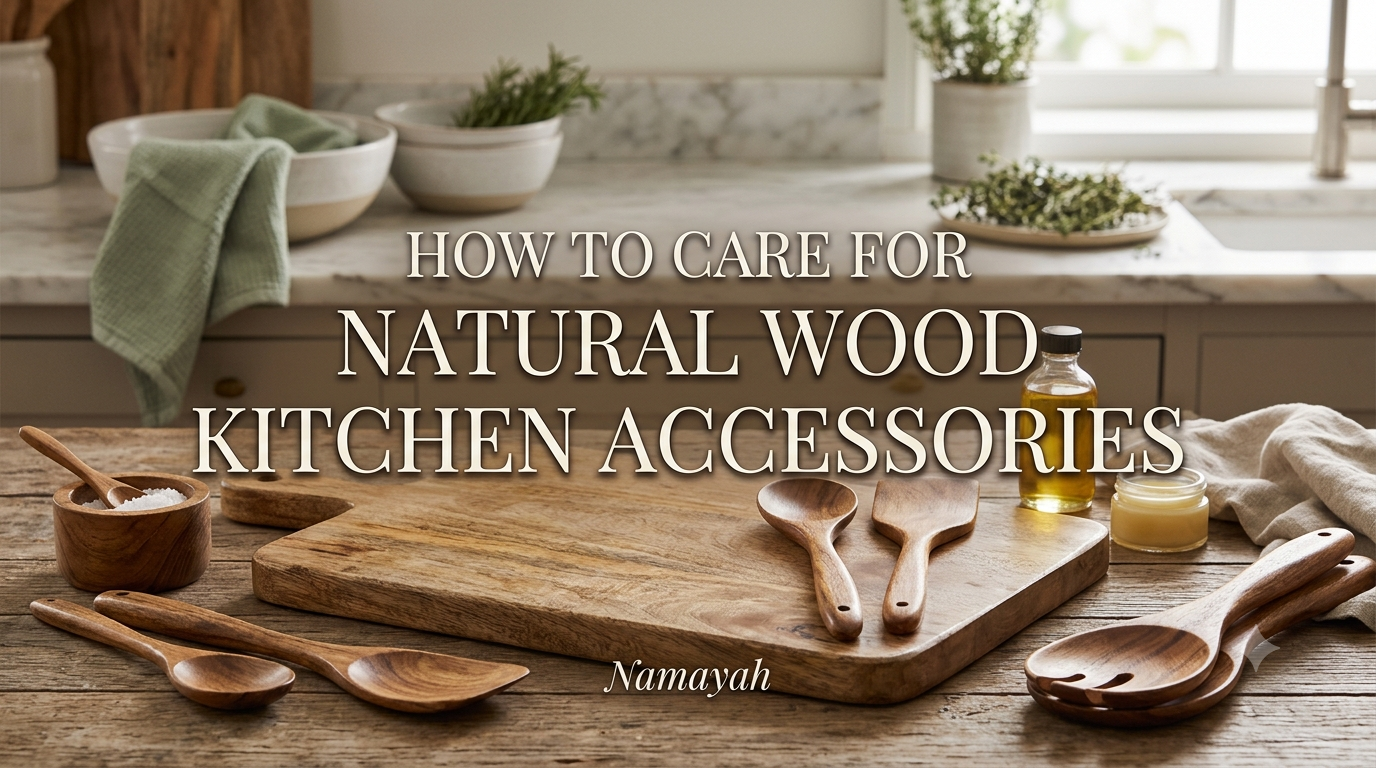
Natural wood kitchen accessories can bring warmth, character, and a timeless feel to a kitchen, but they need regular care to stay in good condition. The basic routine is simple: wash wood by hand with mild dish soap, avoid prolonged soaking, dry it thoroughly, keep it away from excessive heat, and periodically condition unfinished or oil-finished wood with an appropriate food-safe product.
With the right habits, wooden cutting boards, spoons, bowls, trays, and serving accessories can remain useful and attractive for years.
Why Natural Wood Needs Special Care
Wood is a porous, natural material that responds to moisture, temperature, and humidity. Unlike glass, metal, or many synthetic materials, it can absorb water and change dimension as it gains or loses moisture.
Repeated exposure to excessive water can contribute to swelling, splitting, warping, or surface deterioration. High heat can also dry wood excessively or damage its finish.
That does not mean wooden kitchen accessories are difficult to maintain. They simply benefit from a consistent care routine.
The most important principles are:
- Do not leave wood submerged in water.
- Wash it promptly after use.
- Dry it completely.
- Avoid the dishwasher unless the manufacturer specifically says the item is dishwasher-safe.
- Condition suitable wood surfaces when they begin to look dry.
- Keep wooden accessories away from unnecessary heat and prolonged direct sunlight.
How to Clean Wooden Kitchen Accessories
For everyday cleaning, use warm water, a small amount of mild dish soap, and a soft sponge or cloth.
Basic cleaning steps
- Remove food particles soon after use.
- Wet the surface with warm water.
- Apply a small amount of mild dish soap.
- Gently scrub the entire surface.
- Rinse thoroughly.
- Wipe away excess water.
- Allow the item to air-dry completely.
For wooden cutting boards, clean both sides rather than repeatedly washing only the food-contact surface. This can help reduce uneven moisture exposure.
What to Avoid When Cleaning Wood
Avoid habits that expose natural wood to excessive moisture or heat.
Do not routinely soak wooden accessories. Leaving a cutting board or utensil in a sink full of water can allow moisture to penetrate the wood.
Be cautious with the dishwasher. The combination of prolonged water exposure, high temperatures, and drying heat can damage many wooden kitchen products. Always follow the manufacturer’s care instructions.
Avoid abrasive cleaning tools that can unnecessarily scratch the surface.
If a wooden accessory has a manufacturer-applied finish, follow its specific cleaning instructions rather than assuming all wood finishes can be treated identically.
How to Dry Wooden Kitchen Accessories
Drying is one of the simplest and most important parts of wood care.
After washing, wipe the accessory with a clean towel and place it somewhere with good airflow. Allow both sides to dry fully before putting the item away.
Avoid placing wet wood directly against a countertop for extended periods. If possible, position boards or other flat accessories so air can circulate around them.
Do not use a very hot hair dryer, oven, or other intense heat source to speed up drying. Rapid, uneven moisture loss can stress the wood.
How to Oil Natural Wood Kitchen Accessories
Some unfinished or oil-finished wooden kitchen accessories benefit from periodic conditioning.
A commonly used option for food-contact wooden items is food-grade mineral oil specifically intended for cutting boards and similar applications. Some products are also formulated as wood conditioners or board creams and may contain ingredients such as beeswax.
Before applying anything, check the manufacturer’s instructions and confirm that the product is appropriate for the item’s intended use.
How to Oil Wood
- Start with a clean, completely dry surface.
- Apply a small amount of the recommended food-safe wood oil.
- Spread it evenly along the grain.
- Allow it to absorb according to the product instructions.
- Wipe away excess oil.
- Let the item rest before returning it to use.
The goal is not to leave a thick, greasy layer on the surface. Conditioning should leave the wood feeling cared for without creating unnecessary buildup.
How Often Should You Oil Wood?
There is no universal schedule because wood type, finish, frequency of use, washing habits, and household conditions vary.
Instead, inspect the surface regularly. If an unfinished or oil-finished item begins to look unusually dry, pale, or rough, it may be time to condition it.
Always follow the care recommendations supplied with the product.
How to Remove Stains and Odors
Wood can sometimes retain food odors or develop discoloration from ingredients such as strongly colored vegetables, spices, or sauces.
Start with normal washing using mild dish soap. For persistent issues, use a cleaning method that is appropriate for the specific wooden product and its finish.
For cutting boards, a paste made from baking soda and water is sometimes used as a gentle deodorizing treatment. Apply it carefully, avoid aggressive scrubbing, rinse thoroughly, and dry the board completely.
Do not automatically reach for harsh chemicals or aggressive abrasives. They may damage the finish or alter the surface.
If a smell persists despite cleaning and drying, inspect the item for deep cuts, cracks, or other damage that could be retaining food residue.
How to Prevent Cracks and Warping
Wood movement is natural, but good care can reduce unnecessary stress.
Keep moisture exposure consistent
Repeatedly soaking one side of a board while leaving the other side relatively dry can contribute to uneven movement.
Avoid extreme heat
Do not place wooden accessories directly beside strong heat sources for prolonged periods. Avoid using an oven, microwave, or heated surface unless the manufacturer explicitly states that the item is designed for it.
Do not leave wood wet
Prompt washing followed by thorough drying is better than allowing water to sit on the surface.
Condition appropriate surfaces
Regular conditioning can help maintain the appearance and feel of suitable unfinished or oil-finished wood products.
Rotate heavily used items
If you own several cutting boards or wooden utensils, rotating them can give individual pieces more time to dry between uses.
How to Store Wooden Kitchen Accessories
Store wooden accessories in a clean, dry location with reasonable airflow.
Avoid tightly packing damp utensils into drawers or containers. Make sure items are completely dry before storage.
Cutting boards can be stored upright or in a position that allows air to circulate around them. Keep them away from areas with persistent steam, leaks, or excessive humidity.
Wooden serving pieces should also be protected from prolonged exposure to direct sunlight if maintaining their original appearance is important.
How to Care for Different Wooden Items
Not every wooden kitchen accessory has identical care requirements.
Cutting Boards
Wooden cutting boards require frequent washing and drying because they come into direct contact with food.
Clean them after each use, avoid prolonged soaking, and periodically condition them if their finish and manufacturer’s instructions permit it.
Deep grooves, cracks, or other significant damage deserve attention because they can make a board harder to clean effectively.
Wooden Utensils
Wooden spoons, spatulas, and other utensils should generally be washed by hand and dried thoroughly.
Do not leave them standing in a container of water or soaking in a sink.
Inspect utensils occasionally, especially around the handle and working end. Replace an item if it develops significant cracks, splinters, or structural damage.
Wooden Bowls and Trays
Decorative and serving bowls can require less frequent washing than food-preparation tools, but the same basic principles apply.
Remove food promptly, wash according to the manufacturer’s instructions, dry thoroughly, and condition the surface when appropriate.
Be especially careful with finished or decorative wood because the wrong cleaning product can affect its appearance.
When Should You Replace a Wooden Kitchen Accessory?
A wooden kitchen accessory does not necessarily need replacement because it has developed minor scratches or changes in color.
However, consider replacing an item when it has:
- Deep cracks that cannot be safely cleaned
- Significant splitting
- Large splinters
- Severe warping that affects safe use
- Persistent contamination or odor that cannot be removed
- Structural damage that makes the item unstable or difficult to use
When in doubt, consult the manufacturer’s guidance, particularly for food-contact products.
A Simple Wood-Care Routine
You do not need a complicated maintenance schedule.
After every use:
Wash the item promptly and avoid prolonged soaking.
After washing:
Wipe away excess water and let the item dry completely.
During regular inspections:
Look for cracks, splinters, excessive dryness, or warping.
When the surface appears dry:
Condition compatible unfinished or oil-finished products with an appropriate food-safe wood-care product.
When damage becomes significant:
Retire the item rather than continuing to use a compromised accessory.
This simple routine makes natural wood kitchen accessories much easier to maintain.
FAQs About Caring for Natural Wood Kitchen Accessories
Can wooden kitchen accessories be washed with dish soap?
Yes. Mild dish soap and warm water are generally suitable for routine cleaning of many wooden kitchen accessories. Wash promptly, rinse thoroughly, and dry the item completely.
Can wooden kitchen accessories go in the dishwasher?
Many wooden kitchen accessories should not routinely be placed in a dishwasher because prolonged water exposure and high heat can cause damage. Always check the manufacturer’s care instructions.
How do you keep wooden kitchen accessories from cracking?
Avoid prolonged soaking, excessive heat, and rapid drying. Thoroughly dry items after washing and condition suitable unfinished or oil-finished wood when it begins to look dry.
What oil is safe for wooden cutting boards?
Use a food-safe product specifically intended for cutting boards or food-contact wooden surfaces. Food-grade mineral oil formulated for this purpose is a commonly used option. Follow the manufacturer’s recommendations for your specific board.
How often should wooden kitchen accessories be oiled?
There is no single schedule for every product. Inspect the wood and follow the manufacturer’s instructions. Items that become visibly dry with regular use may need conditioning more frequently.
How do you remove odors from a wooden cutting board?
Start by washing the board with mild dish soap and water. A gentle baking-soda-and-water treatment may help with persistent odors. Rinse thoroughly and dry completely afterward.
Why is my wooden cutting board turning white?
A pale or cloudy appearance can have several causes, including drying, surface wear, residue, or changes in the finish. Clean and dry the board first, then check the manufacturer’s care instructions before applying a conditioner.
How should wooden kitchen accessories be stored?
Store them in a clean, dry place with adequate airflow. Make sure they are completely dry before putting them away, and avoid areas exposed to persistent moisture or intense heat.
Conclusion
Caring for natural wood kitchen accessories is mostly about avoiding extremes. Clean them promptly, minimize soaking, dry them thoroughly, protect them from excessive heat, and condition appropriate surfaces when needed.
Whether you use a wooden cutting board every day or occasionally bring out a wooden serving tray, these simple habits can help preserve the material’s appearance, usability, and longevity. Always prioritize the manufacturer’s care instructions because different woods, finishes, and products can have different requirements.