
How to Choose the Right Wooden Décor for Your Home
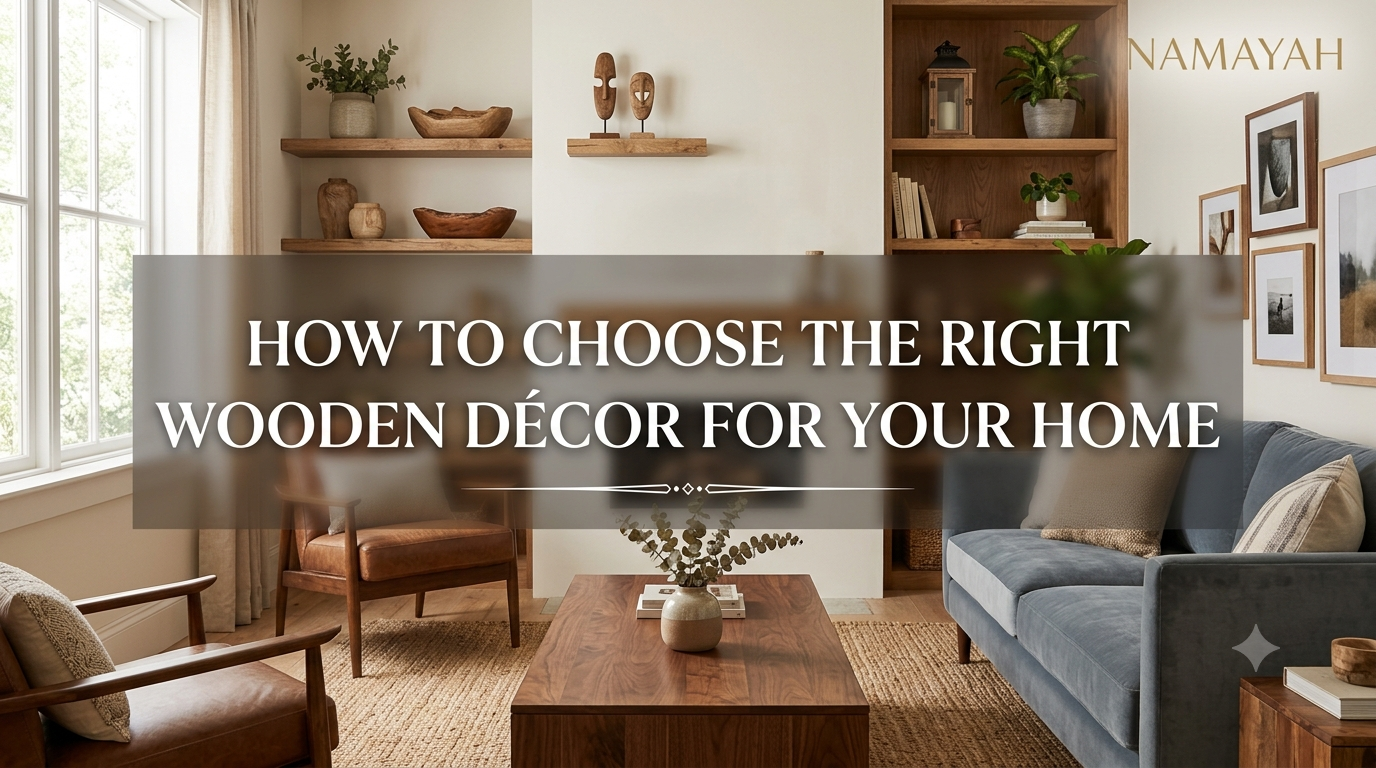
Wooden décor can make a home feel warmer, more natural, and more personal. From carved wall art and wooden mirrors to trays, shelves, lamps, stools, and statement furniture, wood can work with almost any interior style.
The key is not simply choosing the most attractive wooden piece. The right wooden décor should complement your room’s style, colour palette, available space, practical needs, and existing furniture.
Wood also varies significantly in appearance and performance. Teak, sheesham, mango, acacia, oak, pine, and other woods can have different colours, grain patterns, densities, and maintenance requirements. Choosing the material according to where and how you will use the item can help create a more cohesive and functional interior.
Why Wooden Décor Works in Almost Any Home
One of the biggest advantages of wooden décor is its versatility. Wood can appear rustic, traditional, contemporary, minimalist, Scandinavian, industrial, or luxurious depending on its shape, finish, colour, and surrounding materials.
Natural grain also gives wooden pieces visual texture. Instead of making every item match perfectly, you can use wood to introduce variation while maintaining a connection between different areas of the room.
For example, a minimalist living room could use a simple wooden coffee table, while a traditional space might benefit from carved wooden panels or an ornate mirror.
Wood can also be combined with materials such as:
- Glass
- Metal
- Stone
- Ceramic
- Linen
- Cotton
- Leather
- Plants and natural fibres
The result is often more layered than a room decorated with only one material.
Start With Your Home’s Interior Style
Before buying wooden décor, identify the overall design language of the room.
Modern and minimalist
Choose clean shapes, simple silhouettes, and relatively restrained finishes. Light or medium wood tones can work particularly well when paired with neutral walls and uncluttered furniture.
Rustic
Look for visible grain, natural imperfections, distressed finishes, reclaimed-looking surfaces, or chunky construction. The objective is to make the wood feel authentic rather than overly polished.
Traditional
Consider carved details, darker finishes, decorative frames, wooden cabinets, and classic furniture shapes.
Scandinavian-inspired
Light woods, simple forms, and functional designs generally fit this aesthetic. Keep decorative pieces understated rather than filling every surface.
Bohemian or eclectic
You have more freedom to mix wood textures, colours, handcrafted objects, woven materials, and decorative accents. However, repeat at least one wood tone or visual characteristic to prevent the room from feeling disconnected.
Choosing a theme before shopping is a useful principle because the finish and texture of wood can strongly influence the overall character of a room.
Choose the Right Type of Wood
There is no universally “best” wood for every décor item. The appropriate choice depends on appearance, intended use, budget, durability, and location.
Teak
Teak is valued for its durability and natural resistance to moisture, making it a popular choice for furniture and applications where exposure to humidity is a concern. Its warm colour and distinctive grain can also create a premium appearance.
For décor, teak can work well for:
- Statement furniture
- Trays
- Benches
- Decorative panels
- Outdoor pieces where the product is appropriately designed and finished
Sheesham
Sheesham, also known as Indian rosewood, is a dense hardwood commonly used in Indian furniture. Its rich grain and darker colour variations can give décor a substantial, traditional, or luxurious appearance.
It can be a good choice for:
- Tables
- Cabinets
- Shelves
- Decorative boxes
- Carved pieces
Mango and Acacia Wood
Mango wood can offer distinctive grain patterns and is commonly used for a variety of furniture and décor applications. Acacia is another versatile option with noticeable natural grain.
These woods can suit homeowners who want décor with a natural, character-rich appearance without automatically choosing the darkest or most formal-looking timber.
Remember that the quality of the finished product depends on more than the species. Seasoning, construction, joinery, finishing, and manufacturing quality also matter.
Consider Colour and Wood Grain
The colour of wooden décor can change how a room feels.
Light wood can help maintain an airy, relaxed appearance.
Medium wood tones can add warmth without becoming the dominant visual element.
Dark wood can create contrast and make a piece feel more substantial or formal.
Do not focus only on colour. Grain is equally important. A highly pronounced grain can become a focal point, while a quieter grain may blend more easily with existing furniture.
If your room already contains several strong wood patterns, consider choosing a simpler wooden accessory rather than introducing another competing grain.
Choose Décor Based on the Room
Different rooms have different practical and visual requirements.
Living room
The living room is a good place for statement wooden décor. Consider:
- Coffee tables
- Side tables
- Wooden wall art
- Shelves
- Console tables
- Decorative trays
- Mirrors with wooden frames
A single substantial wooden piece can often have more impact than many small accessories.
Bedroom
Choose décor that supports a calm atmosphere. Wooden bedside tables, frames, benches, wall accents, and small storage pieces can add warmth without making the room feel busy.
Dining room
Wood naturally suits dining spaces. Consider a wooden centrepiece, serving board, cabinet, console, or dining table depending on your needs.
Entryway
The entrance is an opportunity to establish the style of the home. A wooden console, mirror frame, bench, or key tray can create a practical yet welcoming first impression.
Bathroom
Wood can add warmth to bathrooms, but moisture exposure makes material selection, sealing, ventilation, and maintenance particularly important. Do not assume every wooden product is suitable for a wet environment.
Get the Scale and Proportion Right
A beautiful wooden item can still look wrong if it is too large or too small for the room.
Before purchasing, measure:
- The available floor or wall area.
- The height and width of nearby furniture.
- Door and walkway clearance.
- The visual space around the décor.
- The location where the piece will be installed.
For example, a small decorative object may disappear on a large console, while an oversized sculpture could overwhelm a narrow shelf.
When in doubt, use fewer larger pieces rather than filling every available surface.
Mix Different Wood Tones Carefully
You do not need every wooden item in your home to have exactly the same finish.
In fact, combining wood tones can make an interior feel more collected and natural. The challenge is creating enough visual connection between them.
Try these approaches:
- Repeat one dominant wood tone throughout the room.
- Keep undertones compatible.
- Use rugs or textiles to visually separate contrasting pieces.
- Combine different woods through furniture and smaller accessories.
- Avoid introducing many unrelated finishes in a single small space.
For example, a warm medium-toned floor could work with a darker wooden cabinet and lighter decorative accessories if another element—such as a frame, table, or tray—helps connect the palette.
Check Quality Before Buying
Appearance should not be your only consideration.
When buying wooden décor, inspect:
- Surface smoothness
- Joints and connections
- Stability
- Cracks or splits
- Warping
- Uneven finishing
- Sharp edges
- Hardware quality
- Finish consistency
For larger wooden furniture, ask what type of wood or wood-based material has been used rather than relying only on a product label.
If sustainability matters to you, look for credible sourcing information and recognized certifications where applicable. FSC certification, for example, is one established system associated with responsibly managed forests.
Think About Maintenance and Location
Wood is not maintenance-free, although the amount of care required varies by product, finish, environment, and use.
Keep wooden décor away from unnecessary moisture and prolonged direct sunlight unless the product has been specifically designed for those conditions.
For everyday care:
- Follow the manufacturer’s cleaning instructions.
- Remove spills promptly.
- Avoid harsh cleaners unless recommended.
- Use suitable coasters beneath drinks.
- Avoid dragging heavy objects across wooden surfaces.
- Periodically inspect furniture for damage.
The right maintenance routine depends on the particular wood and finish, so manufacturer instructions should take priority over generic cleaning advice.
Common Mistakes to Avoid
Choosing décor only because it is trendy
Trends change. A well-made wooden item that fits your home’s style can remain useful much longer than a piece selected only because it is fashionable.
Using too many wooden objects
Wood adds warmth, but covering every surface with wooden accessories can make a room feel visually heavy. Balance wood with textiles, glass, metal, plants, and open space.
Ignoring proportions
Always consider the size of the room and nearby furniture before purchasing.
Mixing incompatible finishes
Different woods can coexist, but too many unrelated colours and finishes can make a room look accidental rather than curated.
Buying without checking construction
A beautiful finish cannot compensate for unstable construction, poor joints, warping, or unsuitable materials.
Forgetting the room’s practical conditions
A decorative piece designed for a dry indoor environment may not be appropriate for an area exposed to significant moisture.
How to Style Wooden Décor
Once you have selected the right pieces, styling becomes much easier.
Start with one focal item. This could be a wooden coffee table, carved wall panel, console, mirror, or sculptural object.
Then build around it using complementary materials.
For example:
Wood + linen + plants: relaxed and natural
Wood + metal + leather: modern and sophisticated
Wood + ceramic + cotton: warm and casual
Wood + stone + glass: refined and contemporary
Vary the heights of objects rather than arranging everything along one horizontal line. You can also group smaller accessories in odd-numbered arrangements, such as three objects, while leaving enough negative space around them. Interior designers commonly use varied textures and carefully selected statement pieces to give rooms greater depth.
Frequently Asked Questions
What wooden décor is best for a modern home?
Simple wooden pieces with clean lines and understated finishes are generally easy to integrate into modern interiors. Light and medium wood tones can work particularly well with neutral colour palettes, while darker wood can provide contrast.
Which wood is best for home décor?
There is no single best option. Teak, sheesham, mango, acacia, oak, and other woods can all work depending on the product, style, location, budget, and maintenance requirements.
Can I mix different wood colours in one room?
Yes. Different wood tones can create depth, provided there is some visual connection between them. Repeat a dominant tone or use textiles and other materials to connect contrasting finishes.
How do I make wooden décor look modern?
Choose simple silhouettes, avoid excessive ornamentation, and combine wood with materials such as metal, glass, stone, or neutral textiles. Keeping the surrounding space uncluttered can also make wooden pieces feel more contemporary.
Is dark wooden décor suitable for a small room?
Yes, but use it selectively. One dark wooden accent can create contrast, while too many large dark pieces may make a small room feel visually heavy.
How can I make wooden décor last longer?
Buy well-constructed pieces, keep them in suitable environmental conditions, clean them according to the manufacturer’s instructions, and protect surfaces from unnecessary moisture, spills, and excessive sunlight.
Is wooden décor sustainable?
Wood can be a responsible material choice when it comes from appropriately managed sources, but sustainability depends on factors including sourcing, manufacturing, durability, transportation, and product lifespan. Look for credible sourcing information rather than assuming that every wooden product is automatically sustainable.
Should all wooden décor in my home match?
No. A home can look more natural when several complementary wood tones and textures are used. The goal is coordination rather than perfect matching.
Conclusion
Choosing the right wooden décor for your home starts with more than finding a piece you like. Consider your interior style, room size, wood type, colour, grain, proportions, construction quality, location, and maintenance needs before buying.
Start with one or two pieces that genuinely improve the room rather than trying to introduce wood everywhere. Then balance them with textiles, plants, metal, glass, stone, and other materials.
Whether you prefer the rich character of sheesham, the warm appeal of teak, the distinctive grain of mango or acacia, or the simplicity of a lighter wood, the best choice is the one that fits both your home and the way you use it.