
Why Traditional Indian Metalware Belongs in Modern Homes
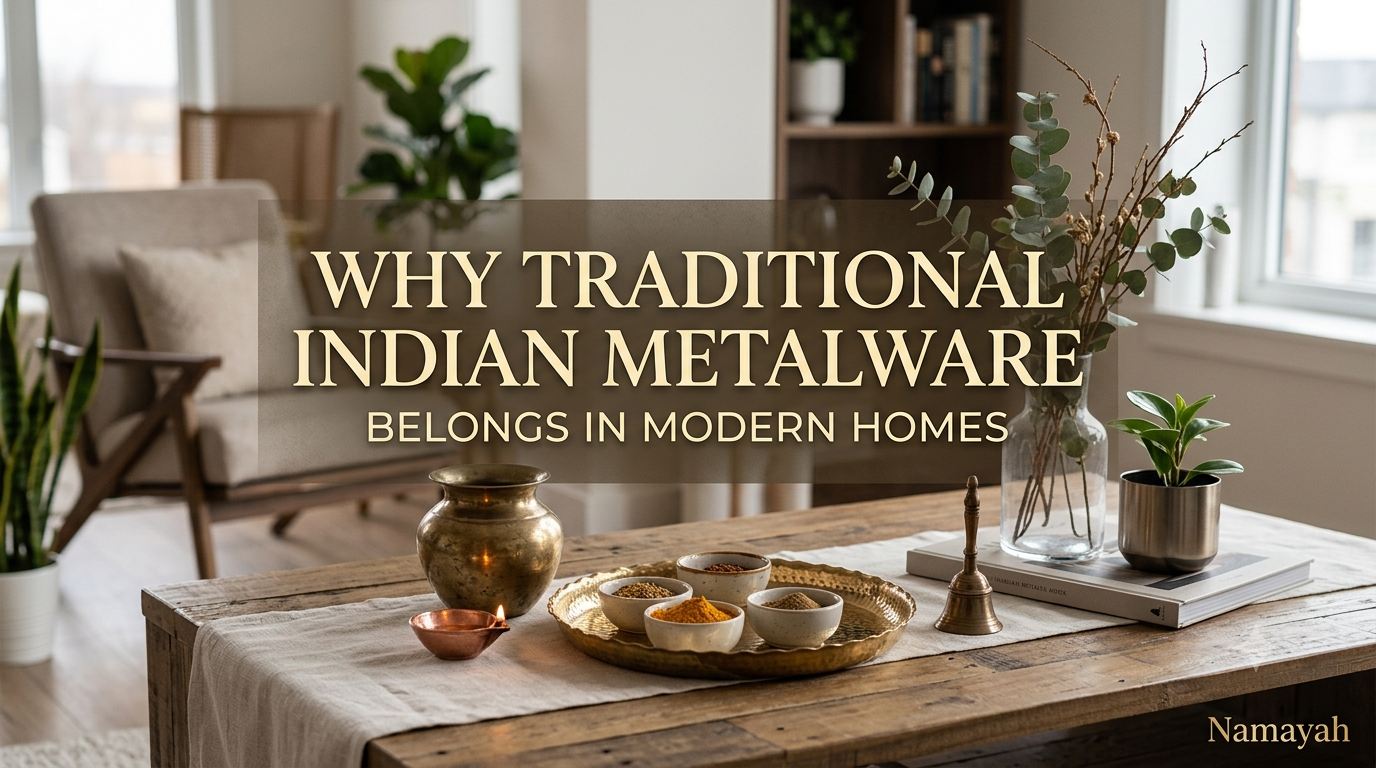
Modern interiors often focus on clean lines, neutral colours, uncluttered surfaces, and carefully selected décor. Yet a home can sometimes feel too uniform when every object follows the same contemporary aesthetic. Traditional Indian metalware offers a simple way to add warmth, texture, craftsmanship, and cultural character without abandoning modern design.
From polished brass bowls and sculptural lamps to copper vessels, bell-metal objects, and handcrafted decorative pieces, Indian metalware can work beautifully with contemporary furniture and architecture. India has a long metalworking tradition, and official Indian handicrafts resources document numerous regional metal crafts, including brass, bronze, bell metal, copper, and Dhokra traditions.
The secret is not filling a modern home with traditional objects. It is choosing a few distinctive pieces and giving them enough space to stand out.
What Makes Indian Metalware Special?
Indian metalware is more than a decorative category. It represents a wide range of regional materials, techniques, forms, and craft traditions.
Government handicrafts records list several recognised metal crafts across India, including Bastar Dhokra, Budithi Bell & Brass Metal Craft, Bakhira Brassware, Sarthebari Bell Metal Craft, Karnataka Bronzeware, Swamimalai Bronze Icons, and Uttarakhand copper products. Several are recorded as Geographical Indication (GI) crafts.
This diversity gives homeowners many ways to introduce Indian craftsmanship into their interiors.
A traditional metal object can also provide something mass-produced décor often lacks: a visible sense of material and making. Hammer marks, engraved details, patina, casting characteristics, or carefully finished surfaces can give an object depth.
That makes metalware particularly useful in modern spaces where the surrounding furniture may have deliberately simple forms.
Traditional Craft Meets Modern Design
Traditional and modern styles do not have to compete.
In fact, contrast is one of the easiest ways to create an interesting interior.
Place a traditional brass vessel on a minimalist console. Pair a sculptural metal object with a contemporary sofa. Use a copper tray on a stone coffee table. Display a handcrafted figurine against a plain wall.
The traditional object becomes an accent rather than the theme of the room.
This approach works because modern interiors often benefit from differences in texture, finish, colour, shape, and visual weight. Metalware can introduce all five without requiring major changes to the furniture.
1. It Adds Warmth to Minimal Spaces
Minimal interiors can look elegant, but too many cool or uniform surfaces may make a room feel impersonal.
Brass and warm-toned metalware can introduce visual warmth. Copper can add a softer, reddish metallic character, while darker or aged finishes can create a more grounded appearance.
The result is especially effective when the surrounding space uses materials such as:
- Natural wood
- Stone
- Linen
- Cotton
- Glass
- Neutral ceramics
- Matte-painted walls
A single brass bowl or traditional vessel can therefore act as a small but noticeable contrast against a restrained background.
2. Every Piece Can Become a Focal Point
One of the biggest advantages of traditional Indian metalware is that a relatively small object can attract attention.
A sculptural piece does not need to occupy an entire wall to influence a room.
Consider placing one distinctive item:
- On an entryway console
- On a living-room coffee table
- On an open bookshelf
- Beside a fireplace or architectural feature
- On a dining-room sideboard
- In a quiet corner of a bedroom
The key is spacing.
If every surface contains decorative objects, individual pieces lose their impact. If one carefully selected object has room around it, its shape and craftsmanship become much easier to appreciate.
3. It Brings Indian Craftsmanship Indoors
For many homeowners, décor is not only about appearance. It can also express a connection to place, history, and craftsmanship.
Indian metal crafts demonstrate how regional traditions can evolve while remaining relevant to contemporary life. The Ministry of Culture’s material on sustaining craft traditions, for example, describes brass craftsmanship as a longstanding Indian metalworking tradition and shows how traditional forms can be interpreted in contemporary designs.
This makes traditional metalware particularly suitable for modern homes that want an Indian identity without relying on an entirely traditional interior scheme.
Instead of creating a room that looks like a historical recreation, homeowners can use selected craft objects as contemporary cultural accents.
4. Brass and Copper Work Across Design Styles
Traditional Indian metalware is not restricted to one décor style.
Modern minimalist
Choose one or two pieces with simple silhouettes and avoid overcrowding the space.
Contemporary Indian
Combine brass or copper with wood, stone, woven fabrics, and modern furniture for a layered look.
Industrial
Dark metal finishes and aged surfaces can complement exposed materials, concrete-inspired finishes, and strong geometric furniture.
Japandi-inspired
Use one restrained metal object alongside natural wood, neutral textiles, and uncluttered surfaces.
Eclectic
Mix different materials, forms, and periods, while keeping a consistent colour or material relationship.
The important factor is proportion. Traditional does not have to mean ornate.
5. Metalware Can Be Both Decorative and Functional
Another reason traditional Indian metalware belongs in modern homes is versatility.
A decorative object can also have a practical role. Depending on the material, finish, construction, and intended use, metalware can appear as:
- Serving trays
- Bowls
- Vessels
- Planters
- Candle holders
- Lamps
- Storage containers
- Table accents
- Wall décor
- Sculptural objects
Indian craft traditions themselves have long included both functional and decorative metal objects. Official handicrafts material documents brass being used for cookware, figurines, and other objects.
This functional quality makes metalware easier to integrate into everyday interiors than décor that exists purely for display.
6. It Creates Contrast Without Clashing
Good interior design is often about controlled contrast.
A room dominated by soft fabrics can benefit from a hard metallic surface. A space with pale walls can gain depth from a darker metal finish. Contemporary furniture can look more distinctive when paired with an object that has visible handcrafted detail.
The goal is not to make the metalware look identical to the rest of the room.
Instead, let it be different—but related.
For example, a warm brass object can connect visually with wooden furniture, beige upholstery, warm lighting, or earthy textiles.
7. Handmade Pieces Add Character
Mass-produced objects can make it easy to create a polished interior, but handmade pieces can add individuality.
Traditional metal crafts vary considerably by region and technique. India’s official handicrafts listings include numerous regional metal traditions rather than treating Indian metalware as a single craft category.
That variety gives homeowners an opportunity to choose objects with a particular regional or visual identity.
Some pieces may have highly detailed surfaces. Others may rely on simple shapes, unusual proportions, or the natural appearance of the material.
The best choice depends on the room and the homeowner’s taste.
How to Style Traditional Indian Metalware in a Modern Home
You do not need to redesign an entire room to introduce traditional metalware. Start small and build around the piece.
Start With One Statement Piece
If you are new to traditional metalware, begin with one object.
A large brass vessel, sculptural bowl, traditional lamp, or distinctive decorative piece can establish the look without overwhelming the room.
Once you understand how the material works with your existing furniture, you can add smaller accents.
Mix Metal With Wood, Stone and Glass
Metal becomes particularly interesting when placed beside contrasting materials.
Try combinations such as:
Brass + wood: warm and grounded.
Copper + stone: tactile and earthy.
Metal + glass: crisp and contemporary.
Bronze or dark metal + neutral fabric: sophisticated and understated.
The contrast makes each material more noticeable.
Keep the Surroundings Simple
If your metalware is highly detailed, avoid placing it among dozens of equally decorative objects.
A plain wall, simple shelf, or uncluttered tabletop can give handcrafted metalware the visual space it needs.
Think of the object as artwork rather than another item to fill an empty surface.
Use Metalware in Unexpected Places
Traditional pieces do not have to stay in the living room.
Consider using them in:
- Entryways
- Dining areas
- Home offices
- Bedrooms
- Kitchens, where appropriate for the product
- Covered balconies
- Reading corners
An unexpected placement can make a familiar object feel contemporary.
Popular Types of Indian Metalware to Consider
There is no single style of traditional Indian metalware. Your choice can depend on the look you want.
| Type | Visual Character | Modern Home Use |
|---|---|---|
| Brassware | Warm, golden, versatile | Bowls, vessels, accents, lighting |
| Copperware | Warm reddish metallic tone | Kitchen-inspired décor, trays, vessels |
| Bell metal | Distinctive traditional character | Decorative and functional pieces |
| Bronze | Deeper, substantial appearance | Sculptural objects and traditional accents |
| Dhokra | Organic, handcrafted appearance | Figurines and statement décor |
| Silver metal craft | Detailed and refined | Smaller decorative or accent pieces |
Indian handicrafts records identify numerous GI metal crafts across these broad categories, including Dhokra, brass, bronze, bell metal, and copper traditions.
For example, the GI documentation for Bell Metal Ware of Datia and Tikamgarh describes distinct regional characteristics, including Datia’s jali work and Tikamgarh’s more solid, rustic appearance.
That regional variation is one reason Indian metalware can offer such a broad design vocabulary.
How to Choose Authentic-Looking Craft Pieces
When buying traditional Indian metalware, look beyond colour alone.
Consider:
- Craft details: Look closely at the surface, edges, engraving, casting, or other visible workmanship.
- Material information: Check what the product is actually made from rather than assuming that a gold-coloured finish means solid brass.
- Purpose: Decide whether you want functional tableware, decorative art, or both.
- Scale: A beautiful object can look out of place if it is too large or too small for its surroundings.
- Provenance: When regional craft identity matters to you, look for sellers who provide clear information about the craft and its origin.
- Care requirements: Understand how the finish should be maintained before purchasing.
For buyers interested in craft provenance, India’s official handicrafts resources can be useful for understanding recognised regional metal crafts and GI designations.
Caring for Traditional Metalware
Metalware can remain attractive for years when cared for according to its material and finish.
Dust pieces regularly with a soft cloth. Avoid harsh cleaning products unless the manufacturer specifically recommends them. For functional vessels, follow the care instructions supplied with the product, particularly if the item has a coating, patina, lacquer, or decorative finish.
Also remember that not every metal object is intended for food use. Decorative metalware should not automatically be treated as cookware or serving ware.
Most importantly, do not assume that a naturally changing surface is a defect. Some traditional finishes are valued precisely because they develop character over time.
FAQs About Traditional Indian Metalware
Is traditional Indian metalware suitable for modern interiors?
Yes. Traditional Indian metalware can work well in modern interiors when used selectively. A single handcrafted object can provide contrast, warmth, and texture without making the entire room look traditional.
Which Indian metal is best for home décor?
There is no single best option. Brass is popular for its warm appearance, copper offers a distinctive reddish tone, bronze can create a heavier sculptural effect, and bell metal and Dhokra can provide a more visibly traditional craft character.
How do you mix traditional décor with modern furniture?
Use traditional pieces as accents rather than trying to match every object. Pair ornate or handcrafted metalware with simple furniture, neutral walls, natural materials, and uncluttered surfaces.
Can brass décor look contemporary?
Absolutely. Brass can look contemporary when used in simple forms or placed against minimalist furniture and neutral backgrounds. The surrounding styling often matters as much as the object itself.
Is Indian metalware only decorative?
No. Indian metal crafts have historically included both functional and decorative objects. Today, metalware can include vessels, trays, bowls, lamps, figurines, and other household or decorative pieces.
How can I make traditional metalware look less old-fashioned?
Choose pieces with clean silhouettes, use them sparingly, and combine them with contemporary materials such as glass, stone, wood, and modern textiles. Avoid grouping too many ornate objects together.
What should I look for when buying Indian handicraft metalware?
Look for clear material information, quality workmanship, appropriate proportions, care instructions, and credible information about the craft or region when provenance matters.
Does traditional metalware work in minimalist homes?
Yes. In fact, minimalist spaces can provide an excellent background for handcrafted metal objects because the limited visual clutter allows their shape, texture, and finish to stand out.
Conclusion
Traditional Indian metalware belongs in modern homes because it adds something contemporary interiors often need: character.
A carefully chosen brass vessel, copper accent, bronze sculpture, bell-metal object, or Dhokra piece can introduce warmth and craftsmanship without changing the entire design language of a room.
The goal is not to choose between traditional and modern décor. It is to let them work together.
Keep the surrounding space simple, choose pieces that genuinely appeal to you, and allow their material and craftsmanship to become part of the room’s story. With thoughtful styling, traditional Indian metalware can feel neither old-fashioned nor excessive—it can feel timeless.