
How Metal Accents Add Sophistication to Neutral Interiors
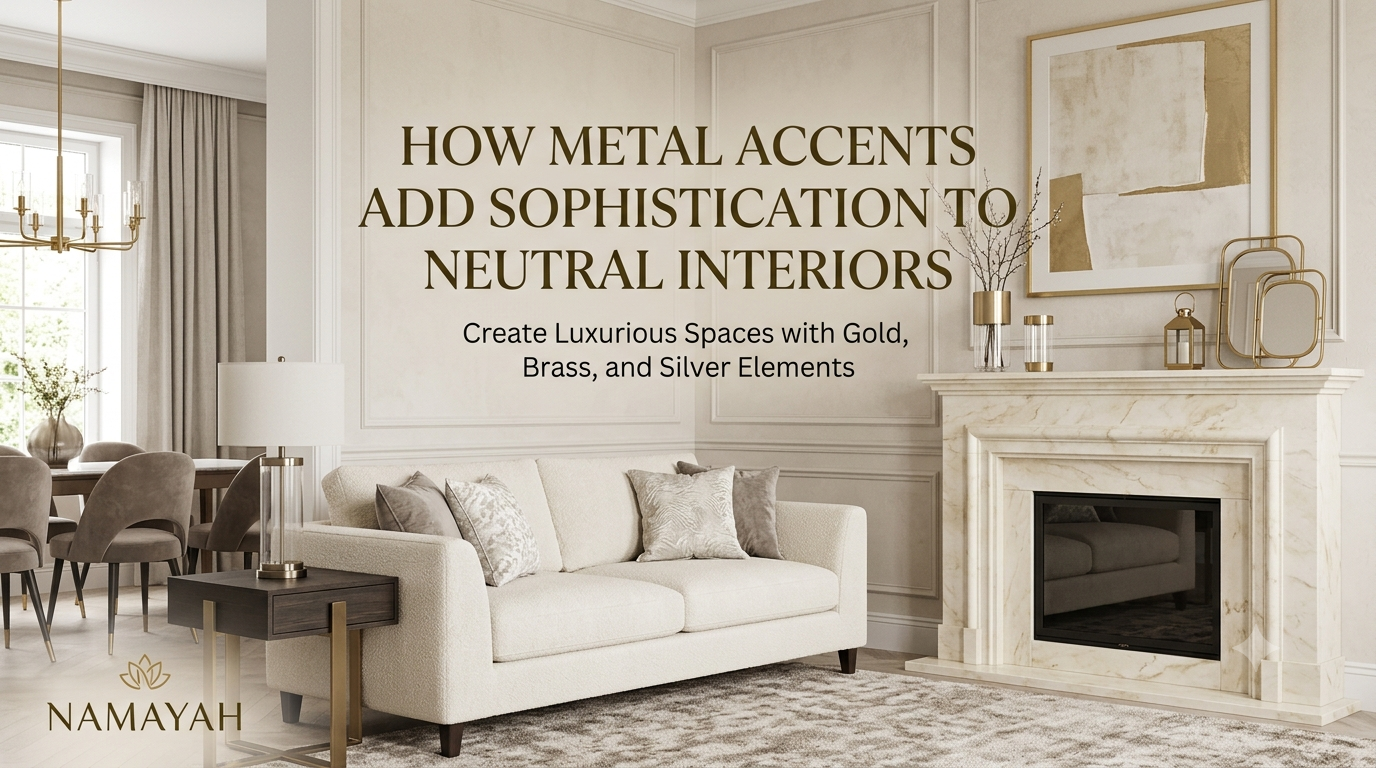
Neutral interiors are often associated with calm colors, clean lines, and timeless appeal. But without enough contrast or texture, a neutral room can sometimes feel flat. Metal accents add sophistication to neutral interiors by introducing contrast, reflection, texture, and visual definition without competing with the room’s main color palette.
From warm brass lighting to matte black hardware and polished nickel details, the right metal finish can transform an understated space into one that feels intentional and refined.
Why Metal Accents Work So Well in Neutral Spaces
Neutral colors such as white, beige, cream, taupe, gray, and greige provide a versatile foundation. Because these shades are relatively restrained, they allow other design elements to become focal points.
Metal accents can fill that role.
Unlike adding another strong color, introducing metal creates visual interest while preserving the understated character of a neutral interior. A brass pendant light, for example, can become a focal point in a cream-colored kitchen without requiring a bold wall color.
Metal also interacts with light. Polished finishes reflect their surroundings, while brushed and matte finishes create a softer, more subtle effect. This makes metal useful not only as a decorative material but also as a way to influence how a room feels.
The Role of Contrast in Interior Design
Sophisticated interiors typically rely on contrast rather than a single uniform finish.
A room dominated by soft fabrics and neutral colors can benefit from the crispness of metal. Similarly, a space filled with smooth surfaces can gain depth from aged or textured metallic finishes.
The key is balance.
Instead of using metal on every available surface, consider choosing a few intentional elements. A pendant light, cabinet hardware, and a small decorative object may be enough to establish a cohesive metallic theme.
This approach allows the metal to function as an accent rather than becoming the main visual focus.
Popular Metal Finishes for Neutral Interiors
Different metals create different moods. Choosing the right finish depends on the color temperature, materials, and overall style of the room.
Brass and Gold
Brass and gold introduce warmth and can make neutral spaces feel more inviting.
Warm metallic finishes pair particularly well with cream, beige, taupe, warm white, and natural wood. They can also work as elegant accents in bedrooms, living rooms, kitchens, and bathrooms.
For a subtle effect, consider brushed or satin brass. These finishes generally appear softer than highly polished gold and can complement a relaxed interior without looking overly formal.
Use warm metals in:
- Pendant and wall lighting
- Cabinet handles
- Mirrors
- Side tables
- Decorative trays
- Frames
- Faucets and bathroom hardware
Chrome and Polished Nickel
Cooler metals such as chrome and polished nickel can give neutral interiors a crisp, contemporary appearance.
They work especially well with white, cool gray, pale stone, and other cooler neutrals. Their reflective surfaces can also help bounce light around a room.
Chrome can feel particularly modern, while polished nickel offers a somewhat softer alternative in many interior applications.
These finishes can be effective in kitchens and bathrooms, where metal naturally appears through faucets, cabinet hardware, shower fixtures, and accessories.
Matte Black Metal
Matte black is one of the most versatile accent finishes for neutral interiors.
Against white or light beige walls, black metal creates strong definition. It can outline architectural features, emphasize furniture silhouettes, or add structure to an otherwise soft palette.
Consider matte black for:
- Window frames
- Pendant lights
- Coffee table bases
- Door hardware
- Shelving
- Mirror frames
- Cabinet pulls
Because black creates significant contrast, a little can go a long way.
Aged and Antique Finishes
Aged metals can introduce character and a sense of history.
Antique brass, aged bronze, and other weathered finishes can complement neutral interiors that include natural wood, linen, stone, leather, or textured fabrics.
Rather than looking perfectly polished, these finishes often contribute visual variation. They are particularly useful when the goal is to create a comfortable, layered interior rather than a highly contemporary one.
How to Mix Metals Without Creating Visual Clutter
Mixing metals can make a room feel collected and sophisticated, but combining too many finishes without a clear relationship can make the design feel accidental.
A simple strategy is to choose one dominant metal and one supporting metal.
For example, brushed brass could be the primary finish for lighting and cabinet hardware, while matte black appears in smaller details. The two finishes create contrast while remaining visually controlled.
You can also repeat each metal more than once. Repetition helps the finishes feel intentional rather than isolated.
When mixing metals, consider:
- Limit the number of dominant finishes. Two complementary metals are often easier to coordinate than several competing finishes.
- Repeat each finish. A metal used in multiple locations feels more deliberate.
- Consider the room’s undertones. Warm and cool finishes create different effects.
- Use metal alongside other materials. Wood, stone, glass, fabric, and ceramic can prevent a metallic palette from feeling excessive.
- Think about scale. A large metal chandelier has a different visual impact from a few small cabinet pulls.
Where to Add Metal Accents
You do not need to remodel an entire room to introduce sophisticated metal details. Small changes can have a noticeable visual effect.
Lighting Fixtures
Lighting is one of the easiest ways to introduce metal.
A sculptural pendant, wall sconce, or floor lamp can serve as both a functional feature and a decorative accent. In a neutral room, the fixture’s metal finish becomes more noticeable because it contrasts with the surrounding palette.
For a minimalist room, choose a simple geometric fixture. For a more traditional or transitional space, consider a finish with warmer or aged character.
Hardware and Plumbing Fixtures
Cabinet pulls, drawer handles, faucets, shower fixtures, and door hardware may be small, but they can establish a consistent design language.
Replacing outdated hardware with a coordinated finish can refresh a neutral kitchen or bathroom without changing the main surfaces.
Before selecting new hardware, look at existing elements such as appliances, lighting, faucets, and door hardware. The goal is to create relationships between finishes rather than matching every object perfectly.
Furniture and Decorative Accessories
Metal can also appear through furniture and accessories.
A coffee table with a metal base, a framed mirror, a decorative bowl, or a small side table can introduce metallic detail without making the space feel heavily decorated.
This is especially useful for renters or homeowners who want to experiment with a finish before committing to permanent fixtures.
How to Choose the Right Metal for Your Neutral Palette
The best metal accent depends partly on the undertones of the neutral colors already present.
| Neutral Palette | Metal Finishes to Consider | Overall Effect |
|---|---|---|
| Warm beige and cream | Brass, antique brass, bronze | Warm and inviting |
| Taupe and greige | Brass, bronze, black | Layered and sophisticated |
| Crisp white | Chrome, nickel, brass, black | Clean and versatile |
| Cool gray | Chrome, polished nickel, black | Contemporary and crisp |
| Natural stone tones | Brass, bronze, black | Organic and refined |
| White and natural wood | Brass, black, bronze | Warm with definition |
This does not mean a particular metal can only be used with one neutral family. Interior design is flexible, and contrast can be intentional. The table is a starting point rather than a strict rule.
Common Mistakes to Avoid
Metal accents can elevate a neutral room, but overuse can have the opposite effect.
Using Too Many Finishes
If every fixture has a different metal finish, the room may lack visual cohesion. Establish a primary finish and introduce secondary metals selectively.
Making Everything Match
The opposite problem is matching every metal exactly. A completely coordinated room can sometimes feel overly manufactured.
A controlled mix of complementary finishes can create more depth.
Ignoring Undertones
A cool metallic finish may feel disconnected from a room built around warm beige and natural wood. Likewise, a very warm metal can stand out unexpectedly in a cool gray palette.
Always evaluate the metal alongside the actual materials and lighting in the room.
Overusing Reflective Surfaces
Highly polished metals reflect light and attract attention. Too many reflective surfaces can make the room feel visually busy.
Mix polished finishes with brushed, satin, matte, or aged surfaces to create variation.
Treating Metal as the Only Source of Contrast
Sophisticated neutral interiors need more than metallic accents. Combine metal with texture, natural materials, lighting, artwork, and varying shapes.
How to Create a Sophisticated Neutral Look
A simple design formula can help bring everything together:
Neutral foundation + layered textures + one dominant metal + small supporting accents + natural materials.
For example, imagine a living room with warm white walls, a beige sofa, natural wood furniture, textured cushions, and a brass floor lamp. Small brass details could appear elsewhere through a mirror frame or decorative object.
The result does not depend on having large amounts of metal. Instead, repeated details create continuity.
You can also use metal strategically to direct attention. A dark metal frame can emphasize a mirror, while a brass pendant can draw the eye toward a kitchen island or dining table.
The most successful approach is usually intentional rather than excessive.
FAQs About Metal Accents in Neutral Interiors
Are metal accents suitable for minimalist interiors?
Yes. Minimalist spaces can benefit from carefully selected metal accents because they add contrast without requiring additional colors. A single pendant, table base, or hardware finish may be enough.
What is the best metal for a beige interior?
Warm finishes such as brass and bronze can complement beige particularly well, especially when the room also contains natural wood and warm textiles. Matte black can provide stronger contrast when a more defined look is desired.
Can you mix brass and black metal?
Yes. Brass and black can create a balanced combination when one finish is dominant and the other is repeated in smaller details. Lighting, cabinet hardware, frames, and furniture are useful places to distribute the two finishes.
Does metal make a neutral room look cold?
Not necessarily. Warm metals such as brass and bronze can add warmth, while wood, textiles, rugs, and natural materials can further soften cooler metal finishes.
How many metal finishes should a room have?
There is no universal limit, but keeping one finish dominant and using another as an accent is a practical starting point. Repetition and proportion matter more than simply counting finishes.
Is matte black too bold for a neutral interior?
Matte black can create strong contrast, but small applications can look refined rather than overwhelming. Consider black in lighting, hardware, frames, or furniture bases before using it across larger surfaces.
Should all the hardware in a room match?
Not necessarily. Matching hardware can create a cohesive appearance, but carefully coordinated mixed metals can add depth. The important factor is that the finishes have a clear visual relationship.
Can metal accents work with natural wood?
Yes. Metal and natural wood can create an effective balance between hard and soft visual qualities. Brass, bronze, and black metal can all complement wood depending on the room’s overall palette.
Conclusion
Metal accents add sophistication to neutral interiors by bringing contrast, reflection, texture, and definition to understated color palettes. The most effective approach is not to cover a room in metallic finishes, but to introduce them strategically through lighting, hardware, furniture, mirrors, and accessories.
Whether you prefer warm brass, crisp chrome, versatile matte black, or aged bronze, choose finishes that complement the room’s existing undertones and materials. Repeat them thoughtfully, mix finishes with restraint, and balance metal with natural textures.
The result can be a neutral interior that feels calm and timeless while still having enough detail to feel polished and distinctive.