
How to Incorporate Traditional Metalware into Modern Kitchens
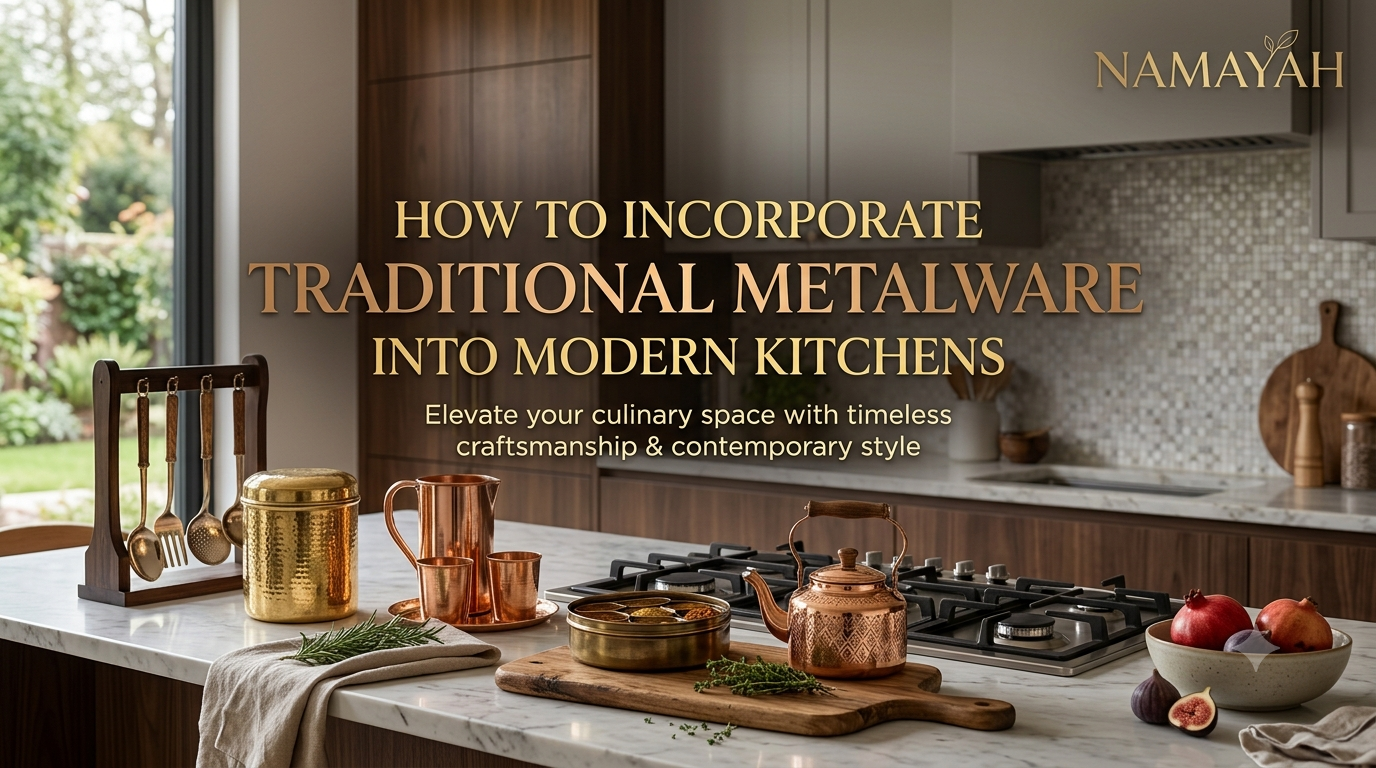
Traditional metalware can make a modern kitchen feel warmer, more personal, and visually distinctive. Instead of replacing contemporary cabinetry and appliances, use brass, copper, bronze, or other traditional pieces as carefully chosen accents. Display a few handcrafted utensils on open shelving, introduce brass handles, use a copper vessel as a centerpiece, or combine aged metal with wood, stone, and neutral cabinetry.
The key is balance. Traditional metalware should complement the clean lines of a modern kitchen rather than compete with them. Designers commonly use warm metals such as brass and copper to add depth and character to contemporary spaces.
Why Traditional Metalware Works in Modern Kitchens
Modern kitchens often rely on streamlined cabinets, integrated appliances, simple hardware, and relatively restrained color palettes. While this creates a clean appearance, too much uniformity can make the room feel impersonal.
Traditional metalware introduces texture, history, and visual warmth.
In Indian interiors, brass and copper have a particularly strong design connection because these metals have long been part of household cooking, serving, storage, and decorative traditions. Contemporary interior designers also use them as accents in kitchens and other rooms.
The contrast is what makes the combination effective: sleek cabinetry provides the modern foundation, while handcrafted metalware adds character.
Choose the Right Metal for Your Kitchen
Before buying several pieces, decide which metal best suits your existing kitchen.
Brass
Brass is an excellent choice when you want warmth and a heritage-inspired appearance. It works particularly well with white, cream, green, blue, natural wood, and darker cabinetry.
You can introduce brass through:
- Serving bowls and trays
- Storage containers
- Cabinet handles
- Taps and fixtures
- Decorative vessels
- Pendant-light details
- Open-shelf accessories
Brass can be polished for a brighter appearance or allowed to develop a more aged character. Warm metallic finishes are also being used in contemporary kitchens as alternatives to cooler, more uniform finishes.
Copper
Copper brings a richer reddish-orange tone to the kitchen. It can create a rustic look when used with an aged or hammered finish, or a more contemporary appearance when paired with clean cabinetry and polished surfaces.
Consider copper for:
- Pots and pans
- Water vessels
- Decorative bowls
- Pendant lighting
- Cabinet details
- Small countertop accessories
- Statement sinks or backsplashes where appropriate
Copper works especially well against neutral backgrounds because its warm tone becomes a natural focal point.
Bronze and Kansa
Bronze and kansa can be useful when you want a deeper, less shiny alternative to brass or copper.
Their darker, earthy appearance pairs naturally with:
- Natural timber
- Stone countertops
- Terracotta
- Cream cabinetry
- Earth-tone walls
- Handmade ceramics
A small collection of bronze or kansa serving pieces can provide heritage character without making the entire kitchen look traditionally styled.
Start With Small Metalware Accents
You do not need to redesign your kitchen to incorporate traditional metalware.
Start with three or four pieces that have a clear purpose. For example, place a brass bowl on a counter, add a copper water vessel to an open shelf, and display a traditional serving tray against the backsplash.
This approach lets you evaluate how the metal interacts with your cabinetry, lighting, countertop, and other finishes before investing in larger pieces.
It also prevents one of the most common mistakes: adding too many decorative objects at once.
Display Traditional Utensils as Decor
Some traditional kitchen utensils are visually interesting enough to function as both kitchenware and decoration.
Large brass plates, copper pots, serving trays, ladles, and vessels can become part of the kitchen’s visual composition.
Instead of hiding them inside cabinets, consider:
- Hanging selected pieces on a wall-mounted rail.
- Arranging a few vessels on open shelving.
- Leaning decorative plates against a backsplash.
- Grouping pieces by metal or finish.
- Keeping everyday pieces within easy reach.
The goal is not to display everything you own. A curated selection usually looks more intentional than a crowded collection.
Architectural Digest India has similarly highlighted old brassware, plates, jugs, and other copper and brass objects as ways to introduce metallic character into contemporary interiors.
Use Metalware on Open Shelves
Open shelving provides one of the easiest opportunities to combine traditional and modern design.
For a balanced arrangement, place traditional metalware alongside modern objects rather than creating an entirely traditional shelf.
For example, a shelf might contain:
- A brass serving bowl
- Two contemporary ceramic mugs
- A copper vessel
- A simple wooden cutting board
- A small plant
- A modern glass container
The mixture creates contrast while keeping the overall kitchen contemporary.
Avoid filling every shelf with metal. Leave negative space around statement pieces so their shapes remain visible.
Upgrade Cabinet Hardware
If you prefer subtle changes, cabinet hardware may be the best place to begin.
Replacing standard cabinet knobs or pulls with brass hardware can introduce a traditional reference without changing the kitchen’s overall architecture.
This works particularly well with simple cabinet fronts because the hardware becomes a small decorative detail rather than a competing feature.
You can also coordinate the hardware with one or two visible metalware pieces. For example, brass cabinet pulls can visually connect with a brass serving bowl or pendant light.
Modern kitchen-design guidance also recommends using metallic detailing selectively, such as thin cabinet trims, handles, or inlays, rather than overwhelming the room with metal.
Create a Traditional Focal Point
If you want a stronger statement, choose one substantial piece rather than many small decorations.
Possible focal points include:
- A large copper vessel
- A handcrafted brass platter
- A collection of traditional serving bowls
- A statement pendant with a warm metallic finish
- A large decorative tray
- A prominent traditional cooking vessel
Place the focal piece where it naturally attracts attention, such as above an island, on an open shelf, or against a relatively simple backsplash.
A statement object works best when the surrounding design is restrained.
Mix Traditional Metalware With Modern Materials
The most successful traditional-modern kitchens usually combine different materials.
Try pairing traditional metalware with:
Wood: Natural wood softens metal and emphasizes its handcrafted quality.
Stone: Marble, granite, quartz, or other stone surfaces provide a clean backdrop for warm metals.
Ceramic: Handmade or minimalist ceramics can create an appealing contrast with brass and copper.
Glass: Glass keeps displays visually light and prevents metalware from making shelves look heavy.
Matte cabinetry: Matte surfaces allow the texture and warmth of metalware to stand out.
Warm metals can also work alongside contemporary materials rather than requiring an entirely traditional kitchen style. Kitchen-design guidance specifically notes that brass and copper can add warmth to contemporary spaces.
Balance Warm and Cool Metal Finishes
You do not necessarily need every metal in the kitchen to match.
A modern kitchen might already contain stainless-steel appliances, for example. Adding brass or copper does not automatically create a mismatch.
The important consideration is visual hierarchy.
Choose one dominant metal and use other finishes as supporting accents. Contemporary kitchen designers commonly recommend limiting the number of competing finishes and establishing a clear primary metal.
For example:
- Stainless steel: Main appliance finish
- Brass: Cabinet hardware and decorative accents
- Copper: One or two statement pieces
This feels more intentional than using brass, copper, bronze, chrome, nickel, and black metal in equal quantities.
Use Color to Make Metalware Stand Out
Color can dramatically change how traditional metalware looks.
For a soft and timeless kitchen, combine brass with cream, ivory, beige, or natural wood.
For contrast, try brass against deep green, navy, charcoal, or another darker cabinet color.
Copper looks especially attractive with warm neutrals and natural materials. If your kitchen already has strong colors, keep the metalware collection simple so the space does not become visually overwhelming.
A neutral modern kitchen is particularly useful if you want traditional metalware to act as the main decorative feature.
Make Traditional Metalware Functional
One of the best ways to prevent traditional pieces from looking like museum objects is to use them.
A brass serving bowl can hold fruit. A copper vessel can become part of a carefully considered countertop display. Traditional trays can be used for serving. Metal containers can be incorporated into practical storage where they are appropriate for their intended use.
However, decorative appearance should not be confused with food safety or suitability for cooking.
Before using older, handmade, lined, or decorative metalware for food preparation or storage, verify that the specific item is intended and maintained for that purpose. Product construction, lining, alloy composition, and care requirements can vary.
This is especially important with traditional cookware, where a decorative piece may not have the same specifications as purpose-made modern cookware.
Care for Brass, Copper, and Other Metalware
Traditional metalware can change appearance with use and exposure to air. Rather than treating every change as a defect, consider whether the developing patina suits the style of your kitchen.
If you prefer a brighter appearance, follow the manufacturer’s care instructions and use appropriate non-abrasive cleaning methods.
For handmade or valuable pieces:
- Check the maker’s cleaning instructions first.
- Avoid harsh abrasives unless specifically recommended.
- Dry pieces thoroughly after washing.
- Confirm whether an item has a protective coating.
- Check whether cookware has a lining and whether it requires maintenance.
- Avoid assuming that all pieces of the same metal can be cleaned in exactly the same way.
Traditional metalware suppliers often recommend gentle hand washing and avoiding abrasive tools, but care requirements should ultimately be based on the specific product.
Common Mistakes to Avoid
1. Using too many pieces
A kitchen filled with brass and copper can quickly become visually busy. Choose a few pieces with different shapes and functions.
2. Matching everything too precisely
A perfectly coordinated collection can look staged. Small variations in texture and finish can make a display feel more natural.
3. Ignoring the existing kitchen
Consider your cabinetry, flooring, countertops, appliances, lighting, and wall color before choosing metalware.
4. Mixing too many finishes
Combining metals can work, but uncontrolled mixing can make the room look accidental. Establish a dominant finish and use other metals sparingly.
5. Choosing appearance over function
A beautiful vessel is not automatically suitable for cooking, food storage, or drinking. Check its intended use and maintenance requirements.
6. Hiding every traditional piece
If all your metalware stays behind closed doors, you lose much of its decorative potential. Display your most attractive pieces where they can contribute to the room.
FAQs About Traditional Metalware in Modern Kitchens
Can traditional metalware look good in a minimalist kitchen?
Yes. In fact, minimalist kitchens can provide an excellent backdrop for traditional metalware. A single brass bowl, copper vessel, or handcrafted tray can add warmth without disrupting the clean design.
Which traditional metal is best for a modern kitchen?
There is no single best choice. Brass is useful when you want golden warmth, copper provides a stronger reddish tone, while bronze and kansa offer darker, earthy character. Choose based on your existing finishes and the intended use of the piece.
How can I add traditional metalware without renovating my kitchen?
Start with accessories. Add a few vessels, serving pieces, trays, or decorative objects to existing shelves and countertops. You can also replace cabinet hardware with a complementary warm-metal finish.
Can I mix brass and copper in the same kitchen?
Yes. Brass and copper can work together when one is treated as the dominant finish and the other is used selectively. Keeping the number of finishes controlled helps maintain visual cohesion.
Should traditional metalware be displayed or stored?
Both approaches can work. Display distinctive pieces that contribute to the kitchen’s design, while storing everyday or visually repetitive utensils. This creates a curated rather than cluttered appearance.
Does traditional metalware require special maintenance?
Some pieces do. Maintenance depends on the metal, finish, coating, lining, and intended use. Always follow the manufacturer’s or artisan’s care instructions rather than applying the same cleaning method to every metal item.
Can traditional Indian metalware work with Western-style modern kitchens?
Absolutely. The design principle is based on contrast rather than a specific architectural style. Brass, copper, bronze, and other traditional pieces can complement contemporary cabinetry, stone surfaces, stainless-steel appliances, and minimalist layouts.
How much traditional metalware should I use?
There is no fixed number. A useful starting point is to select a few meaningful pieces and assess the overall balance. If the metal becomes the first thing you notice everywhere in the kitchen, reduce the number of accents.
Conclusion
Incorporating traditional metalware into modern kitchens is less about choosing between old and new and more about finding the right balance between them.
Use brass, copper, bronze, or other traditional pieces as intentional accents. Display selected utensils, upgrade cabinet hardware, introduce a statement vessel, and combine handcrafted metal with modern materials such as wood, stone, glass, and contemporary cabinetry.
Most importantly, let the kitchen remain functional. Traditional metalware is at its most compelling when it has a genuine purpose rather than being used only as decoration.
With a restrained selection and thoughtful placement, traditional metalware can give a modern kitchen warmth, texture, craftsmanship, and a sense of history without sacrificing its contemporary character.