
Why Craftsmanship Matters When Buying Luxury Home Products
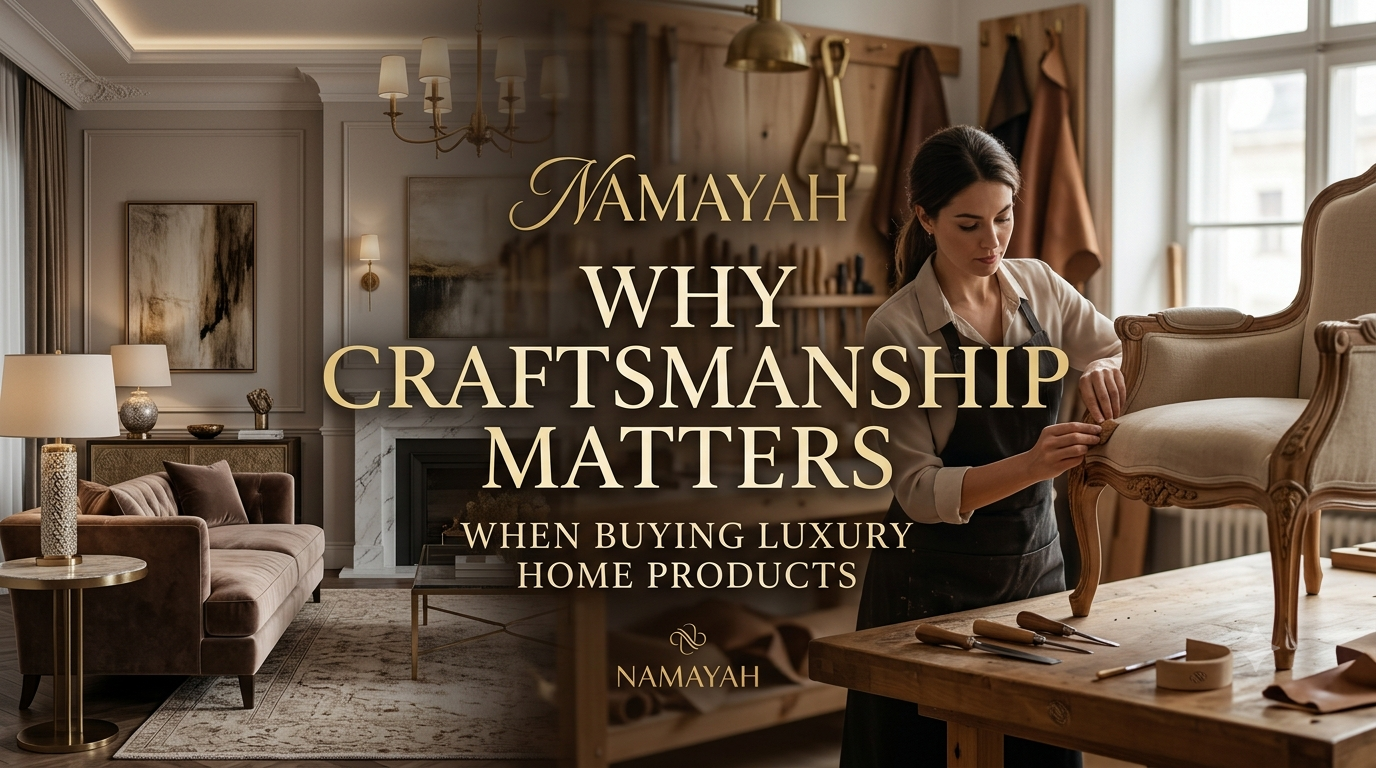
Luxury home products are often defined by sophisticated design, premium materials, and distinctive details. But one factor can influence all of these qualities: craftsmanship.
Craftsmanship matters when buying luxury home products because it can affect how a product looks, feels, performs, ages, and fits into your home over time. Skilled workmanship can turn high-quality materials into products with precise construction, refined finishes, and thoughtful details. For buyers, understanding craftsmanship makes it easier to distinguish genuine quality from a product that simply has a premium appearance.
What Does Craftsmanship Mean in Luxury Home Products?
Craftsmanship refers to the skill, care, precision, and techniques used to create a product.
In luxury home products, craftsmanship can involve everything from selecting and preparing materials to shaping components, joining pieces, applying finishes, inspecting details, and completing the final product.
A well-crafted product typically reflects careful attention throughout the manufacturing process rather than relying on appearance alone.
This distinction is important because luxury is not necessarily determined by price. A high price does not automatically mean exceptional workmanship. Buyers should look for evidence of thoughtful design, quality materials, precise construction, consistent finishing, and appropriate quality control.
Craftsmanship Goes Beyond Appearance
Visual appeal is an important part of luxury home design, but craftsmanship can influence much more than what you see.
A beautifully designed table, cabinet, lighting fixture, door, or decorative object also needs to function properly. Components should work together, surfaces should feel considered, and construction should be appropriate for the product’s intended use.
Good craftsmanship can contribute to:
- Better fit and finish
- More consistent construction
- Greater attention to small details
- Better functionality
- Greater durability
- A more distinctive appearance
- Opportunities for customization
- A stronger sense of authenticity
This is why craftsmanship should be evaluated as part of the entire product experience.
Quality Materials Are the Foundation
Even the most skilled craftspeople need appropriate materials to create a high-quality product.
Luxury home products may incorporate materials such as natural stone, hardwood, metal, glass, leather, textiles, ceramics, or other carefully selected materials. The important question is not simply whether a material sounds premium. Buyers should consider how it has been selected, processed, finished, and used.
For example, natural materials can have variations in grain, color, texture, or pattern. Rather than treating every variation as a defect, skilled makers may incorporate those characteristics into the design.
Material quality also needs to match the product’s purpose. A material that looks beautiful may not be appropriate for every environment or application.
Precision Creates Better Products
Precision is one of the less obvious signs of craftsmanship.
In furniture, cabinetry, architectural products, and other luxury home goods, small differences in measurements, alignment, joints, edges, and finishing can influence the final result.
Precision can help create:
- Clean lines
- Consistent proportions
- Accurate joins
- Smooth movement
- Better component alignment
- Refined finishing
The result is often a product that feels coherent rather than merely expensive.
For buyers, examining construction details can therefore reveal more than looking at a product from across a showroom.
Attention to Detail Sets Luxury Products Apart
Luxury design often comes down to details.
Consider the edges of a surface, the way two materials meet, the consistency of a finish, the movement of a drawer, the hardware used on a cabinet, or the transition between different components.
These details may not immediately attract attention, but together they influence how a product feels and performs.
A useful buying principle is simple: inspect the parts that are easiest to overlook.
If a manufacturer pays careful attention to hidden or secondary details, that can provide useful insight into its overall approach to quality.
Durability Can Make Luxury a Better Long-Term Choice
A luxury home product should not be judged only by how impressive it looks on the day it arrives.
Durability matters because home products are used repeatedly. Furniture is sat on, doors are opened and closed, surfaces are cleaned, and fixtures are exposed to everyday wear.
Craftsmanship can contribute to durability through appropriate material selection, construction techniques, finishing, and quality control.
However, durability depends on the individual product and how it is used and maintained. Buyers should therefore review care requirements, warranties, materials, construction information, and manufacturer guidance rather than assuming that every luxury product will last indefinitely.
Craftsmanship Supports Timeless Design
Trends can change quickly. Craftsmanship can help a product remain relevant beyond a particular design moment.
Timeless products often combine thoughtful proportions, useful functionality, quality materials, and restrained details. When these elements are executed carefully, the product can become part of a home’s character rather than simply following a temporary trend.
This is particularly valuable for major purchases. A carefully chosen piece may continue to work with different interiors, renovations, and design styles.
Handmade and Artisan Techniques Add Character
Handcrafted production can introduce characteristics that are difficult to reproduce through highly standardized manufacturing.
Depending on the product, artisan techniques may create subtle variations in texture, finish, shaping, or pattern. These differences can give an object a sense of individuality.
That does not mean handmade automatically equals better. Industrial manufacturing can also achieve exceptional consistency and precision. The better question is whether the production method is appropriate for the product and whether the maker demonstrates genuine expertise.
For buyers who value individuality, provenance, and visible human skill, artisan craftsmanship can add another dimension to the purchasing decision.
Customization Can Make a Product Truly Personal
Luxury home products are often used in carefully designed spaces where proportions, materials, colors, and finishes matter.
Customization allows buyers to adapt certain characteristics to their needs. Depending on the manufacturer, options may include:
- Dimensions
- Materials
- Finishes
- Hardware
- Colors
- Upholstery
- Configuration
- Decorative details
Customization is most valuable when it solves a real design or functional requirement. A bespoke option should not be chosen simply because it sounds luxurious.
Craftsmanship and Sustainability
Longer-lasting products can potentially reduce the need for frequent replacement, which may be one reason buyers consider craftsmanship when making more responsible purchasing decisions.
However, craftsmanship alone does not establish that a product is sustainable.
A broader assessment should consider material sourcing, production methods, repairability, expected lifespan, packaging, transportation, and end-of-life options where relevant.
If sustainability is important to you, ask the manufacturer specific questions rather than relying on general terms such as “eco-friendly” or “responsible.”
How to Evaluate Craftsmanship Before You Buy
You do not need to be an expert artisan to assess a luxury home product.
Use this practical checklist.
1. Examine the materials
Ask what materials are used and why they were selected. Look for clear information about material specifications and finishes.
2. Inspect construction
Look at joins, edges, seams, hardware, moving parts, and connections. These areas can reveal how carefully the product has been made.
3. Feel the product
Texture, weight, movement, and surface quality can provide useful information about the physical experience of the product.
4. Ask about the maker
Find out where the product is made and whether the brand can explain its manufacturing process.
5. Review finishing details
Look closely at surfaces, corners, transitions, and areas that may receive less visual attention.
6. Understand maintenance
Ask how the product should be cleaned, maintained, repaired, and stored. A quality product should come with appropriate care information.
7. Compare construction, not just price
Two products may look similar while differing considerably in materials, construction, finishing, customization, warranty, or production methods.
Common Mistakes to Avoid When Buying Luxury Home Products
Mistake 1: Assuming expensive means well-crafted
Price can reflect many factors, including design, branding, distribution, materials, and production. It should not be treated as proof of craftsmanship.
Mistake 2: Choosing appearance over function
A beautiful product still needs to work for your lifestyle and space.
Mistake 3: Ignoring maintenance requirements
Some premium materials require specialized care. Understand those requirements before purchasing.
Mistake 4: Focusing only on visible surfaces
Inspect construction details and functional components as well as the main visual surfaces.
Mistake 5: Buying without asking questions
A reputable brand should be able to provide meaningful information about materials, production, care, and warranty terms.
Why Craftsmanship Matters Across Different Home Categories
Craftsmanship can matter across many areas of the home.
| Product Category | Craftsmanship Considerations |
| Furniture | Joinery, proportions, materials, finish, structural integrity |
| Cabinetry | Precision, hardware, doors, drawers, finishing |
| Lighting | Materials, assembly, detailing, component quality |
| Decorative objects | Surface finish, shaping, material selection |
| Doors and architectural products | Fit, alignment, hardware, finishing |
| Textiles | Fiber quality, construction, stitching, finishing |
| Kitchen and bathroom products | Materials, precision, functionality, maintenance |
The exact criteria vary by product. A handcrafted ceramic object should not be evaluated in the same way as a cabinet or architectural fixture.
Questions to Ask a Luxury Home Product Brand
Before making a significant purchase, consider asking:
- Where is the product made?
- What materials are used?
- How are those materials selected?
- Which parts are handmade or artisan-produced?
- What manufacturing or finishing techniques are used?
- Can the product be customized?
- How should it be maintained?
- Are replacement parts available?
- What warranty is provided?
- Can the product be repaired or refinished?
Clear answers can help you understand what you are actually paying for.
The Long-Term Value of Craftsmanship
The value of craftsmanship is not simply about owning something expensive. It is about buying a product where design, materials, construction, and finishing have been thoughtfully considered.
For many buyers, that can make a luxury home product feel more satisfying to own and use. A well-made piece can also become a defining element within an interior because its value is not dependent solely on current trends.
The best approach is to evaluate luxury products with both emotion and evidence. Appreciate the design, but examine the construction. Consider the brand, but ask about the materials. Look at the price, but understand what contributes to it.
Ultimately, craftsmanship matters because luxury should be experienced through quality, not just communicated through a price tag or polished appearance.
FAQs About Craftsmanship and Luxury Home Products
What makes a luxury home product well-crafted?
A well-crafted luxury home product typically combines suitable materials, precise construction, careful finishing, thoughtful design, and appropriate quality control. The specific indicators depend on the type of product.
Is craftsmanship more important than materials?
Neither exists independently. High-quality materials can provide an excellent foundation, while skilled craftsmanship determines how effectively those materials are shaped, assembled, finished, and used.
Are handcrafted luxury products always better?
Not necessarily. Handmade production can provide individuality and artisan character, while advanced manufacturing can offer exceptional precision and consistency. The right choice depends on the product and the buyer’s priorities.
How can I tell if a luxury product is high quality?
Inspect materials, construction, joints, finishes, hardware, moving parts, and details. Also ask the manufacturer about production, maintenance, warranty, and repair options.
Does better craftsmanship make a product more durable?
It can contribute to durability through appropriate construction, materials, finishing, and quality control. However, durability varies by product and depends on usage and maintenance.
Why does craftsmanship matter in interior design?
Craftsmanship can influence how products look, function, age, and interact with the surrounding space. Carefully made pieces can contribute to a more cohesive and considered interior.
Is expensive furniture always better quality?
No. Price alone does not establish quality. Buyers should compare materials, construction, finishing, functionality, warranty, and manufacturing information.
Why should I consider craftsmanship when buying a luxury home product?
Considering craftsmanship helps you look beyond branding and appearance. It can help you understand the construction and long-term characteristics of a product before committing to a significant purchase.
Conclusion
When buying luxury home products, craftsmanship deserves as much attention as design and materials. It can influence precision, durability, finishing, functionality, customization, and the overall experience of owning a product.
Instead of asking only whether a product looks luxurious, ask how it was made, what materials were chosen, how carefully it was finished, and whether its construction suits your needs.
That approach can help you make more informed purchasing decisions and choose luxury products for their underlying quality—not simply their appearance.