
What Defines a Premium Handcrafted Product?
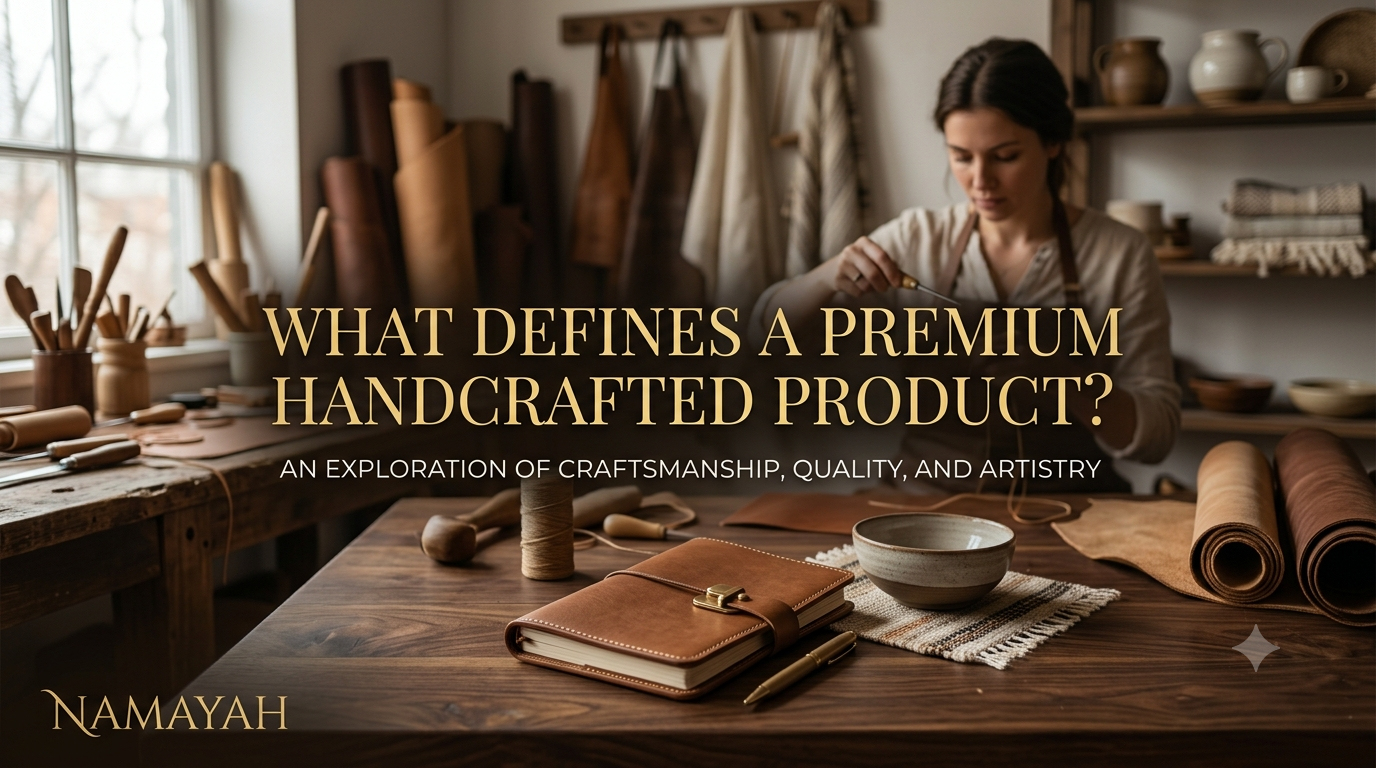
A premium handcrafted product is defined by more than the fact that it was made by hand. True premium quality combines carefully selected materials, skilled craftsmanship, thoughtful design, precise finishing, durability, authenticity, and consistent attention to detail. The result is a product designed to offer lasting function, distinctive character, and value that goes beyond its price tag.
In a market filled with mass-produced goods, handcrafted products can offer something different: a closer connection between the maker, the materials, the design, and the finished object. But not every handmade product automatically deserves the label “premium.”
So, what should you look for when evaluating one?
Handmade Does Not Always Mean Premium
The terms handmade, handcrafted, and artisan-made can describe a wide range of products. A product may be handmade yet use inexpensive materials, inconsistent construction, or basic finishing.
A premium handcrafted product goes further.
Its quality should be evident throughout the entire process, from material selection to construction and final inspection. The maker’s skill matters, but so does the standard applied to every component.
Think of it this way:
Handmade describes how something is made. Premium describes the level of quality achieved.
This distinction is important for buyers who want to understand whether a higher price reflects genuine craftsmanship or simply a marketing position.
1. Exceptional Materials
Materials form the foundation of any high-quality product.
Premium handcrafted goods typically begin with materials selected for characteristics such as durability, appearance, performance, texture, or suitability for the intended use.
Depending on the product category, this could include carefully selected wood, leather, textiles, metals, ceramics, natural fibers, or other specialized materials.
However, an expensive material alone does not make a product premium. The material needs to be appropriate for the design and used effectively.
A useful buyer question is:
Does the material improve the product’s function, durability, appearance, or overall experience?
If the answer is yes, the material choice contributes meaningfully to quality.
2. Skilled Craftsmanship
Craftsmanship is at the heart of a premium handcrafted product.
Experienced makers understand how materials behave and how different techniques affect the final result. Their expertise can influence everything from cutting and shaping to joining, stitching, carving, polishing, glazing, or assembly.
Skill is particularly visible in areas that require precision.
Look for:
- Clean and deliberate construction
- Accurate proportions
- Strong and appropriate joins
- Consistent stitching or detailing
- Smooth transitions between materials
- Careful shaping
- Appropriate finishing techniques
- Few unnecessary imperfections
Handcrafted products can retain subtle variations because they are made individually. Those variations are not necessarily defects. The key distinction is whether they reflect the character of the making process or indicate poor workmanship.
3. Attention to Detail
Small details often separate an ordinary handcrafted item from an exceptional one.
Premium makers consider aspects that may not be immediately obvious. Edges may be carefully finished, hardware may be selected to complement the design, surfaces may receive additional treatment, and functional elements may be refined for everyday use.
Attention to detail can appear in both visible and hidden areas.
For example, a premium product should not necessarily look impressive only from the front. Construction, underside details, internal components, closures, fasteners, and finishing should also reflect an appropriate level of care.
This is one reason experienced buyers often inspect a product from multiple angles before making a purchase.
4. Thoughtful Design
Premium craftsmanship needs a strong design foundation.
A beautifully made product can still be unsuccessful if it is uncomfortable, impractical, difficult to maintain, or poorly suited to its intended purpose.
Thoughtful design balances aesthetics and function.
A premium handcrafted product should answer questions such as:
- Is it comfortable or convenient to use?
- Are the proportions appropriate?
- Does the design serve a clear purpose?
- Are materials used where they make sense?
- Does the product feel considered rather than unnecessarily complicated?
- Will the design remain appealing over time?
Good design also gives craftsmanship a purpose. Instead of adding decoration simply to appear luxurious, premium design uses form, material, texture, and detail intentionally.
5. Superior Finishing
Finishing is one of the clearest indicators of product quality.
The finishing stage can involve polishing, sanding, conditioning, glazing, coating, edge treatment, stitching refinement, surface preparation, or other techniques depending on the product.
The goal is not always perfection in the industrial sense.
Instead, premium finishing should create a coherent and carefully completed object.
A well-finished handcrafted product should feel intentional. Surfaces should be appropriate for their intended use, details should appear resolved, and the final presentation should match the quality of the underlying construction.
6. Durability and Longevity
Premium quality should not be limited to how a product looks when it is new.
Durability is an important part of the value equation.
A product intended for frequent use should be constructed with appropriate materials and techniques for the demands it will face. Hardware, joints, seams, surfaces, and other components should be selected with practical use in mind.
Longevity can also influence sustainability. When a person keeps and uses a well-made product for many years instead of repeatedly replacing lower-quality alternatives, the product can provide value over a longer period.
That does not mean every handcrafted product will last forever. Durability depends on the category, materials, construction, care, and intended use.
The important point is that premium products should be designed with their expected use and lifespan in mind.
7. Authenticity and Provenance
Another defining characteristic of premium handcrafted products is authenticity.
Buyers increasingly want to know more about what they purchase. Who made it? Where was it produced? What materials were used? What techniques were involved?
Clear information about the product’s origin can help buyers understand its value.
Provenance does not necessarily mean that a product must come from a famous workshop or have a long historical story. It means that the maker or brand can communicate the product’s origins honestly and clearly.
Authenticity is strengthened when businesses provide meaningful information rather than relying only on vague terms such as “luxury,” “artisan,” or “exclusive.”
8. Consistent Quality Control
Handmade production does not eliminate the need for quality control.
In fact, quality control can be especially important when products are individually crafted.
Natural materials can vary. Hand processes can introduce small differences. Different batches may also have subtle variations.
Premium makers recognize these realities and establish standards for what is acceptable.
Quality control may include inspecting:
- Materials before production
- Structural components
- Surface quality
- Functional mechanisms
- Stitching or joins
- Finishing
- Packaging
- The completed product before shipment
The objective is not necessarily to make every handmade item completely identical. Instead, it is to ensure that every product meets a defined standard.
9. Meaningful Value Beyond Price
Price alone does not determine whether a handcrafted product is premium.
A higher price may reflect better materials, more labor-intensive techniques, lower production volumes, specialized expertise, careful finishing, or stronger quality controls.
But a high price without corresponding value does not automatically indicate premium quality.
The better question is:
What am I receiving for the price?
Consider the complete value proposition:
| Quality Factor | What to Look For |
|---|---|
| Materials | Appropriate, carefully selected materials |
| Craftsmanship | Skilled and precise construction |
| Design | Functional, purposeful, attractive design |
| Finishing | Thorough and consistent finishing |
| Durability | Construction suited to intended use |
| Authenticity | Clear information about origin and making |
| Quality control | Defined standards and inspection |
| Service | Useful product information and support |
| Longevity | Value that extends beyond initial purchase |
When these elements work together, the higher price can be easier to understand.
How to Evaluate a Premium Handcrafted Product
You do not need to be an expert craftsman to assess a handcrafted product.
Start with five simple checks.
1. Examine the materials
Ask what materials were used and whether they are appropriate for the product.
2. Inspect the construction
Look closely at joins, seams, edges, hardware, and structural elements.
3. Consider functionality
A premium product should perform its intended job effectively, not merely look attractive.
4. Ask about the maker
Look for transparent information about who made the product, where it was produced, and what techniques were used.
5. Assess the overall value
Compare the quality, craftsmanship, durability, design, and expected lifespan with the asking price.
This approach is more useful than judging a product solely by its appearance.
Handcrafted vs. Mass-Produced Products
Mass production and handcrafted production serve different purposes.
Mass-produced goods can offer affordability, scalability, uniformity, and broad availability. These advantages make them appropriate for many everyday purchases.
Handcrafted products can provide greater emphasis on individual making, specialized techniques, material character, design detail, and maker identity.
| Feature | Premium Handcrafted | Mass-Produced |
| Production | Often smaller-scale or individual | Large-scale manufacturing |
| Variation | May have subtle individual differences | Generally highly uniform |
| Craftsmanship | Strong emphasis on maker skill | Strong emphasis on repeatable processes |
| Materials | Often selected around design and craft | Selected for manufacturing requirements and cost |
| Customization | May be more available | Often limited |
| Availability | Can be limited | Usually widely available |
| Price | Often higher | Often lower |
| Character | Individual or distinctive | Consistent and standardized |
Neither approach is automatically better. The right choice depends on the buyer’s priorities.
Are Premium Handcrafted Products Worth It?
A premium handcrafted product can be worth the investment when its additional cost corresponds to meaningful improvements in materials, construction, design, durability, craftsmanship, or overall experience.
The decision becomes particularly compelling when the product is intended for frequent or long-term use.
However, buyers should evaluate products individually rather than assuming that every handmade item is premium.
Look beyond the label.
Ask what makes the product different, how that difference benefits you, and whether the quality is visible in the finished object.
Frequently Asked Questions
What makes a handcrafted product premium?
A premium handcrafted product combines high-quality materials, skilled workmanship, thoughtful design, careful finishing, durability, authenticity, and consistent quality control. Being handmade alone does not guarantee premium quality.
Is handmade the same as high quality?
No. Handmade describes a production method, while high quality describes the standard of the finished product. A handmade item can be inexpensive or poorly constructed, just as a manufactured product can be exceptionally well made.
Why are handcrafted products often more expensive?
Handcrafted products can require more direct labor, specialized skills, carefully selected materials, slower production methods, and more individual attention. The price should still be evaluated against the product’s actual quality and value.
How can you tell if a handmade product is well made?
Inspect the materials, construction, stitching or joins, finishing, functionality, and overall consistency. Also look for transparent information about the maker and production process.
Do small imperfections mean a handcrafted product is low quality?
Not necessarily. Natural materials and manual processes can produce subtle variations. The important question is whether the variation is an intentional characteristic of the material or craft, rather than a sign of careless construction.
What materials are used in premium handcrafted products?
The answer depends on the product. Premium goods may use carefully selected wood, leather, textiles, metals, ceramics, natural fibers, or other materials chosen for their performance, appearance, durability, or suitability for the intended design.
Are handcrafted products more sustainable?
Not automatically. Sustainability depends on factors such as materials, production methods, product lifespan, transportation, packaging, repairability, and disposal. A handcrafted label alone is not proof of sustainability.
Should you pay more for a handcrafted product?
A higher price can make sense when it reflects genuine improvements in materials, craftsmanship, design, durability, or service. Compare the actual value rather than paying more simply because a product is described as handmade.
What is the difference between artisan and handcrafted products?
The terms overlap and are often used differently by different businesses. “Handcrafted” generally emphasizes the making process, while “artisan” often emphasizes the skilled maker or traditional craft. Neither term alone guarantees a particular quality level.
What is the most important quality of a premium handcrafted product?
There is no single universal quality. The strongest premium products combine appropriate materials, skilled craftsmanship, thoughtful design, reliable construction, careful finishing, and a clear purpose. The overall experience matters more than any single feature.
Conclusion
So, what defines a premium handcrafted product?
It is the combination of qualities rather than a single label. Exceptional materials provide the foundation. Skilled craftsmanship transforms those materials. Thoughtful design gives the product purpose, while careful finishing and quality control help create a dependable final result.
Authenticity, durability, and transparent information add further value.
For buyers, the best approach is to look beyond the word handcrafted. Examine how the product was made, what materials were selected, how carefully it was finished, and whether its quality justifies its price.
Ultimately, a premium handcrafted product should feel considered, purposeful, well made, and built to provide lasting value.