
From Raw Material to Finished Product: The Handmade Journey
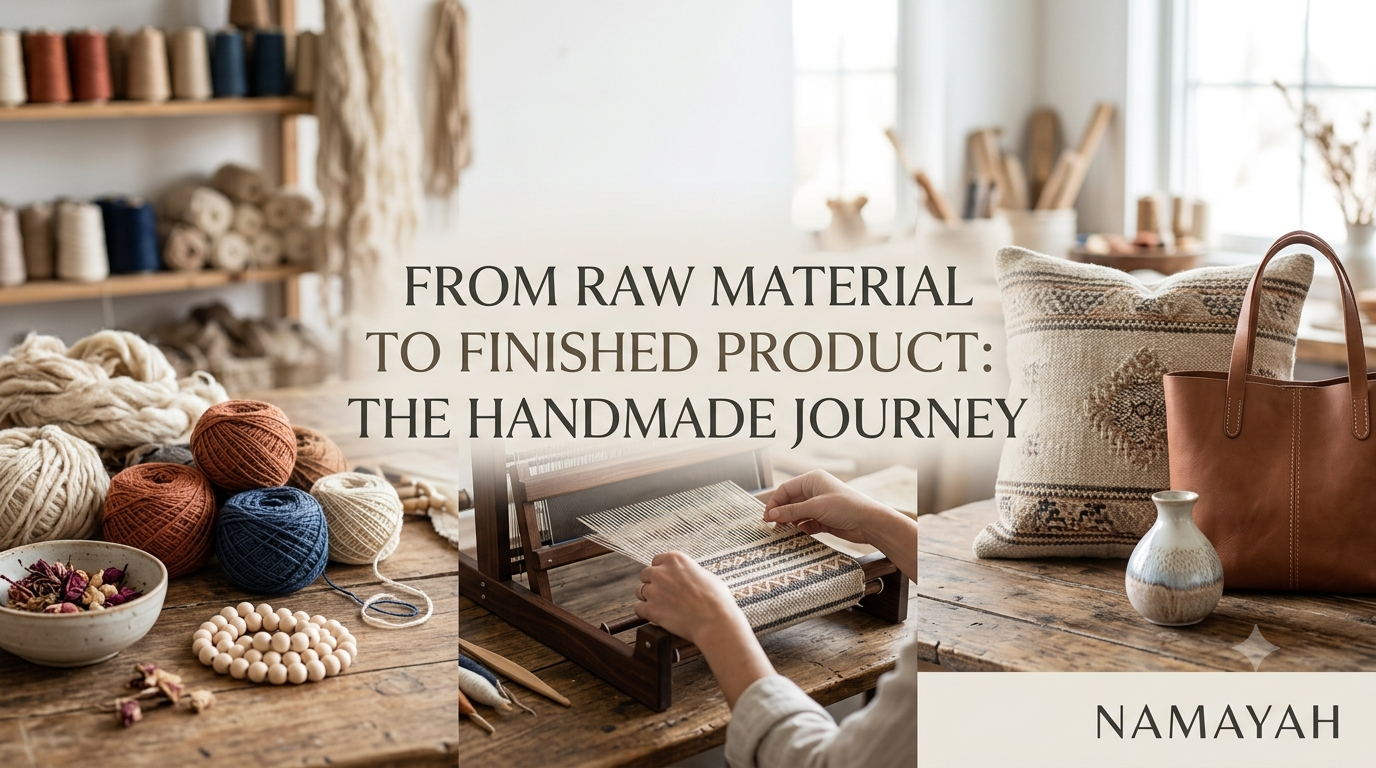
A handmade product begins long before it reaches a customer’s hands. Its journey starts with the selection of raw materials and continues through preparation, design, skilled craftsmanship, quality inspection, finishing, and packaging. Unlike highly automated manufacturing, handmade production often depends on human judgment and technique at several stages.
This process can give each finished piece distinctive characteristics. Small variations in texture, shape, color, or surface may reflect the materials used and the techniques applied by the maker.
Understanding the journey from raw material to finished product helps consumers appreciate not only what they buy, but also the work, decisions, and skills behind it.
What Makes a Product Truly Handmade?
A handmade product is generally created substantially through human skill rather than being produced entirely through automated industrial processes. The exact meaning of “handmade” can vary by product category and market, so consumers should consider how much of the production process involves direct craftsmanship.
Handmade production may still use tools, machinery, molds, cutting equipment, or other technology. The important distinction is the role of the craftsperson in transforming materials into the final product.
The handmade approach can involve:
- Selecting and preparing materials
- Measuring and cutting
- Shaping and assembling
- Applying decorative details
- Finishing surfaces
- Inspecting the completed piece
- Making adjustments based on the material and design
The result is often a product in which the maker’s decisions remain visible throughout the production process.
Step 1: Selecting the Right Raw Materials
Every handmade product begins with materials suited to its purpose.
Depending on the product, these materials might include wood, clay, leather, fabric, natural fibers, metal, paper, stone, glass, or other resources. The maker needs to consider characteristics such as durability, texture, flexibility, color, weight, and workability.
Material selection can influence nearly every later stage of production. A material that looks attractive may not be suitable for a product that needs to withstand frequent use. Likewise, a material that is easy to shape may not provide the desired appearance or strength.
For this reason, experienced makers often evaluate materials before beginning the actual construction process.
What Should Makers Consider When Choosing Materials?
Important considerations can include:
- Quality: Is the material suitable for the intended use?
- Consistency: Does it have predictable characteristics?
- Workability: Can it be shaped or processed using the available techniques?
- Appearance: Does its color, grain, texture, or finish fit the design?
- Durability: Can it withstand expected use?
- Availability: Can the maker source enough material consistently?
- Environmental considerations: Can it be sourced and used responsibly?
Material selection is therefore not simply the first step. It establishes the foundation for the finished product.
Step 2: Preparing the Materials
Once materials have been selected, they often require preparation.
Wood may need to be dried, cut, or sanded. Fabric may need to be measured and cut. Clay may need to be conditioned. Metal can require cutting, cleaning, or shaping. Natural fibers may need sorting, cleaning, or processing before they can be woven or constructed.
Preparation improves control during later stages.
This is also where makers may identify imperfections or characteristics that could affect the final design. In some forms of craftsmanship, these natural variations are not defects but part of the material’s character.
Step 3: Designing the Product
The next stage turns an idea into a workable plan.
A maker may begin with a sketch, pattern, prototype, measurements, or an established design. The level of planning varies considerably between crafts.
A complex product may require detailed measurements and several prototypes. A more organic craft may allow the material itself to influence the final form.
Good design considers both appearance and function. The product should not only look appropriate but also work as intended.
At this stage, the maker may decide:
- Dimensions and proportions
- Materials and components
- Construction techniques
- Decorative elements
- Colors or surface treatments
- Assembly sequence
- Final finishing method
The design becomes a roadmap for transforming the prepared material into a finished object.
Step 4: Shaping and Crafting
This is the stage most people associate with handmade production.
The craftsperson begins transforming the material through techniques appropriate to the product. These might include carving, cutting, weaving, sewing, molding, forging, forming, stitching, turning, painting, or assembling.
Skill matters because materials rarely behave exactly the same way every time.
A craftsperson may need to adjust pressure, temperature, tool position, cutting direction, tension, or timing depending on the material. These decisions can influence the final appearance and performance of the product.
Unlike a fully standardized automated process, hands-on craftsmanship can allow the maker to respond immediately to unexpected characteristics in the material.
Step 5: Adding Handmade Details
Once the main structure is complete, smaller details can give the product its individual identity.
These may include hand stitching, carving, engraving, painting, decorative patterns, carefully fitted components, textured surfaces, or other finishing touches.
Details are not always purely decorative. A handmade element can also improve usability, durability, comfort, or structural integrity.
This stage is one reason two products made from the same general design may still have subtle differences.
The maker’s technique, material variations, and individual decisions can influence the final result.
Step 6: Quality Inspection
Before a handmade product is considered finished, it should be inspected.
Quality control can involve checking:
- Dimensions
- Structural strength
- Seams and joints
- Surface quality
- Functionality
- Alignment
- Decorative details
- Finish consistency
- Packaging readiness
Inspection is especially important because handmade production can involve natural variations.
Not every variation is a problem. A difference in natural wood grain, for example, may be an inherent characteristic of the material. A loose joint or damaged surface, however, may require correction.
The goal is to distinguish intentional character from problems that affect quality or function.
Step 7: Finishing and Refinement
Finishing brings the product closer to its final form.
Depending on the material, this could involve sanding, polishing, coating, glazing, washing, pressing, conditioning, painting, sealing, or another treatment.
Finishing can affect both appearance and performance.
A suitable finish may help protect a surface, improve its feel, emphasize natural characteristics, or create the desired visual appearance.
This stage often requires patience. Rushing a finish can undermine the work completed during earlier stages.
Step 8: Packaging the Finished Product
The final product still needs protection before it reaches its destination.
Packaging should be appropriate for the product’s size, fragility, material, and shipping requirements. Makers may also use packaging as an opportunity to communicate information about the product.
Depending on the business, packaging may include:
- Product care instructions
- Material information
- Maker or brand information
- Handling guidance
- Product labels
- Protective wrapping
- Recyclable or reusable packaging
For handmade businesses, packaging can become part of the customer’s first physical interaction with the finished product.
Sustainability in the Handmade Journey
The environmental impact of handmade production depends on many factors, including material sourcing, production methods, transportation, packaging, energy use, and product lifespan.
It is therefore too broad to assume that every handmade product is automatically sustainable.
However, some handmade businesses may emphasize practices such as using locally sourced materials, reducing waste, repairing products, reusing offcuts, selecting durable materials, or minimizing unnecessary packaging.
A useful way to evaluate sustainability is to look at the entire production journey rather than relying solely on the word “handmade.”
Consumers can ask:
- Where did the materials come from?
- How long is the product expected to last?
- Can it be repaired?
- Is material waste minimized?
- How is it packaged?
- Does the maker provide care or repair guidance?
These questions provide a more meaningful picture of responsible production.
Handmade vs. Mass-Produced Products
| Factor | Handmade | Mass-produced |
|---|---|---|
| Main production approach | Human craftsmanship | Highly standardized production |
| Production volume | Often smaller | Usually larger |
| Variation | May be more noticeable | Usually more standardized |
| Customization | Often easier to offer | May be more limited |
| Production speed | Often slower | Generally faster |
| Material characteristics | May remain visible | Often standardized through processing |
| Craft involvement | Often significant | More automated or mechanized |
Neither approach is automatically better for every purpose. Mass production can provide scale, consistency, and accessibility, while handmade production can provide craftsmanship, customization, and a closer connection to the maker.
Why the Handmade Process Adds Value
The price of a handmade product reflects more than its raw materials.
The final cost may include material preparation, skilled labor, tools, design time, finishing, quality inspection, packaging, business expenses, and other costs involved in creating and selling the product.
A handmade item may also require more time per unit than an industrially manufactured product.
This does not mean every handmade product is automatically higher quality. Buyers should evaluate craftsmanship, materials, construction, functionality, and the reputation or transparency of the maker.
The value of handmade production often lies in the combination of material, skill, time, design, and individual attention.
How Consumers Can Recognize Quality Craftsmanship
When evaluating a handmade product, look beyond photographs or marketing language.
Check the construction carefully. Look at seams, joints, edges, surfaces, stitching, hardware, and other areas appropriate to the product.
Useful questions include:
- Are the materials clearly described?
- Does the construction appear sound?
- Are functional parts properly fitted?
- Is the finish appropriate for the material?
- Does the maker explain the production process?
- Are care instructions provided?
- Can the product be repaired or maintained?
- Does the seller clearly distinguish handmade elements from machine-produced components?
Transparency is often a useful indicator. A maker who explains materials and production methods gives buyers more information with which to assess the product.
The Human Story Behind the Finished Product
A handmade product carries more than physical materials from one stage to another.
It also reflects decisions.
Someone selected the material. Someone developed or adapted the design. Someone shaped, assembled, decorated, inspected, and finished the product.
That human involvement is what makes the handmade journey particularly interesting.
The finished object may look simple, but its creation can involve numerous small decisions that are invisible once production is complete.
Understanding those decisions changes how we see the final product. Instead of viewing it only as an object for sale, we can understand it as the outcome of a process involving materials, knowledge, time, and craftsmanship.
Frequently Asked Questions
What is the handmade production process?
The handmade production process typically involves selecting raw materials, preparing them, designing the product, shaping or constructing it, adding details, inspecting quality, applying finishing treatments, and packaging the completed item.
Why are handmade products different from mass-produced products?
Handmade products typically involve greater direct human involvement during production and may show natural or craft-related variations. Mass-produced products are generally designed for standardized, high-volume manufacturing.
Does handmade mean completely made without machines?
Not necessarily. Handmade products can involve tools and machinery. The key consideration is the extent to which human craftsmanship contributes to transforming the materials into the finished product.
Why can handmade products cost more?
Handmade products can require substantial time, skilled labor, material preparation, finishing, inspection, and individual attention. These costs can make some handmade products more expensive than comparable mass-produced items.
Are handmade products always sustainable?
No. Sustainability depends on factors such as material sourcing, energy use, waste, transportation, packaging, durability, and repairability. A handmade production method alone does not guarantee environmental sustainability.
Why do handmade products sometimes have small variations?
Natural materials can vary, and hand processes may produce subtle differences in dimensions, texture, color, or finish. Some variations are expected characteristics of craftsmanship rather than quality problems.
How can I tell if a handmade product is well made?
Look at the materials, construction, finishing, functionality, and consistency appropriate to the product. Clear information about materials and production methods can also help buyers make informed decisions.
What makes handmade craftsmanship valuable?
Handmade craftsmanship combines material knowledge, design, technical skill, time, and human judgment. The maker’s direct involvement can also allow greater attention to detail or customization.
Conclusion
From raw material to finished product, the handmade journey is a sequence of choices, skills, and careful processes.
It begins with selecting appropriate materials and continues through preparation, design, crafting, detailing, inspection, finishing, and packaging. Each stage can influence the final result.
For consumers, understanding this journey provides a better way to evaluate handmade products. For makers, it highlights the importance of every stage of production—not just the visible work that happens at the end.
Ultimately, the appeal of handmade production comes from the connection between material, maker, method, and finished product. That connection is what turns a collection of raw materials into something designed to be used, appreciated, and potentially enjoyed for years.