
Understanding the Craftsmanship Behind Handmade Metalware
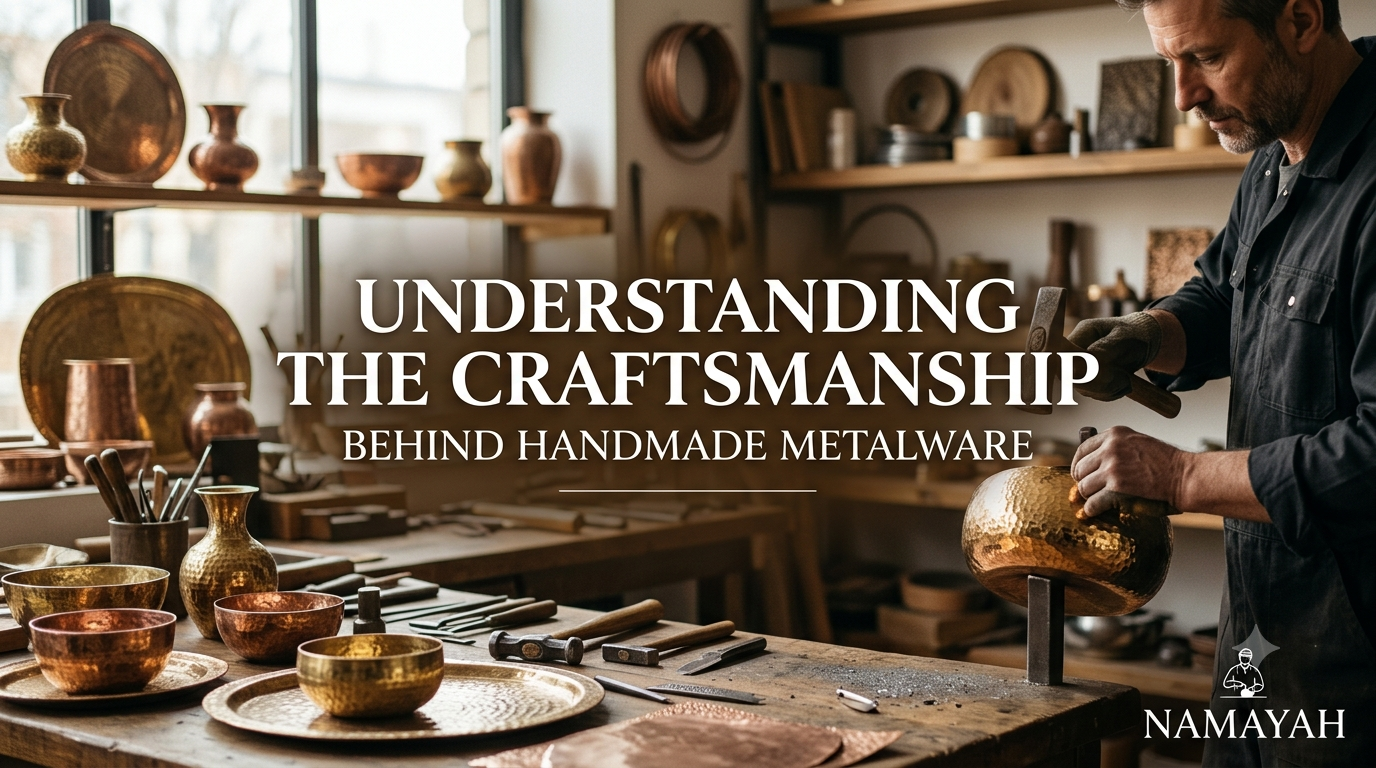
Handmade metalware combines material knowledge, skilled handwork, traditional techniques, and careful finishing. Depending on the object and craft tradition, artisans may cut, heat, hammer, forge, emboss, engrave, join, and polish metal by hand. The result is an object whose surface, shape, and small variations reflect the making process rather than uniform factory production.
Traditional metalworking encompasses many different methods. The Victoria and Albert Museum, for example, describes techniques including embossing, chasing, and chiselling, while India’s handicrafts documentation records processes involving cutting, shaping, soldering or welding, drilling, sanding, and polishing.
What Is Handmade Metalware?
Handmade metalware refers to objects in which artisans play a substantial role in forming, decorating, assembling, or finishing the metal.
It can include:
- Bowls and serving vessels
- Trays and plates
- Lamps and candleholders
- Sculptures and figurines
- Wall décor
- Architectural hardware
- Jewelry and smaller decorative objects
- Kitchen and household utensils
The exact process varies according to the material, object, workshop, and cultural tradition. A handcrafted piece may be made almost entirely by hand, while another may combine traditional hand processes with selected machines for cutting, turning, or final polishing.
For example, documentation of Delhi metal craft describes sheets being shaped with hammers, components being turned on a hand lathe and soldered, and the final polishing or buffing being performed mechanically.
Why Craftsmanship Matters
The appeal of handmade metalware is not simply that it is made without a factory.
Craftsmanship determines how successfully an artisan controls shape, proportion, texture, detail, and finish.
Two objects made from the same type of metal can look completely different because of the tools and techniques used to work them. Hammering can create texture, engraving can introduce fine lines, and polishing can dramatically change how the surface reflects light.
Handmade work can also preserve cultural knowledge. India’s official handicrafts resources describe metalwork as a diverse craft tradition combining regional techniques, materials, forms, and decorative practices.
In this sense, a handcrafted metal object can be both a functional product and an expression of craft heritage.
Choosing the Right Metal
The metal is one of the first decisions that influences how an object can be made.
Common materials include:
- Brass: valued for its warm, golden appearance and suitability for decorative and functional objects.
- Copper: known for its distinctive reddish tone and malleability.
- Silver: often used where fine detailing and a precious-metal finish are desired.
- Iron and steel: useful for structural and decorative work, including forged objects.
- Bronze and other alloys: frequently associated with casting, sculpture, and traditional metalwork.
Different metals respond differently to heat, hammering, cutting, and finishing. An experienced artisan must understand how much force and heat a material can tolerate and how its surface will respond during finishing.
Indian craft documentation, for example, records the use of copper, brass, silver, iron, bronze, bell metal, and other alloys across different regional metalworking traditions.
From Raw Metal to Finished Piece
Although techniques differ, handmade metalware often follows a recognizable progression from raw material to finished object.
Cutting and Preparing the Metal
The first stage is preparing the material to match the intended form.
An artisan may work from a sheet, bar, ingot, casting, or another starting shape. Cutting tools, shears, chisels, saws, or other equipment can be used depending on the craft.
In some traditions, the design is first drawn on paper and transferred onto the metal before shaping begins. Delhi’s metalworking tradition provides an example of this approach.
Heating and Shaping
Heat can make metal easier to manipulate.
Depending on the metal and technique, artisans may heat the material before hammering, bending, forging, or other forming processes. Repeated heating may be necessary when continued deformation makes the metal harder or less workable.
Traditional Indian metal craft documentation describes heating metal to make it malleable before subsequent shaping processes.
Hammering and Forging
Hammering is one of the clearest signs of traditional metal craftsmanship.
Instead of forcing metal into its final shape with a single industrial process, an artisan can gradually manipulate it with controlled blows. The type of hammer, supporting surface, force, and rhythm all influence the result.
Forging can create both functional forms and decorative surfaces. In some Indian traditions, craftspeople manually beat metal sheets into shape using different hammers and supports.
The objective is not simply to hit the metal harder. Precision matters because uncontrolled force can distort the object or create unwanted marks.
Repoussé and Chasing
Repoussé and chasing are among the most distinctive techniques used to create relief decoration on metal.
In repoussé, the artisan works from the reverse side to push the metal outward. Chasing works from the front to refine, define, or sink areas of the design. The two techniques are often used together.
The process requires repeated manipulation of the metal and careful control of tools.
India’s Banaras Metal Repoussé tradition demonstrates how these methods can be used on copper, brass, and silver sheets to create raised decorative patterns and reliefs. The documented process involves alternating work from the back and front of the sheet, with reheating and finishing stages along the way.
This is one reason handmade metalware can have a remarkable sense of depth. The design is not merely printed onto the surface; the metal itself has been physically transformed.
Engraving and Surface Detailing
Engraving creates decorative lines and patterns by working the surface with specialized tools.
Unlike chasing, which manipulates the metal without necessarily removing material, engraving can cut or incise lines into the surface.
Traditional Delhi metal engraving uses tools such as chisels and other specialized implements to transfer intricate designs onto brass, copper, and silver objects.
The quality of engraving depends heavily on control. A small deviation can change the appearance of a repeated pattern, border, or motif.
Joining and Assembly
Some metalware consists of a single formed piece. Other objects require multiple components.
Artisans may use:
- Soldering
- Welding
- Mechanical connections
- Riveting
- Other traditional joining methods
The joining method affects both appearance and structural integrity.
In traditional Delhi metalware, separate components can be made individually and then soldered together, followed by additional hammering and surface work to refine the joint.
A well-made joint should work with the overall design rather than distracting from it.
Polishing and Finishing
Finishing is where the character of the metal becomes particularly visible.
Depending on the desired appearance, an artisan may sand, scrape, polish, buff, engrave, patinate, enamel, or otherwise treat the surface.
The finish can be:
- Highly polished
- Satin or matte
- Textured
- Antiqued
- Naturally aged
- Decoratively contrasted
India’s official art-metalware documentation notes the use of polishing and grinding as finishing stages, as well as decorative treatments such as patinas and enameling.
Finishing is more than cosmetic. It can emphasize texture, reveal engraved details, protect or alter the surface, and influence how the object interacts with light.
The Role of the Artisan
Tools are important, but craftsmanship ultimately depends on the person using them.
An experienced artisan learns to judge:
- How metal responds to force
- When material needs reheating
- How much pressure a tool requires
- Where a surface needs correction
- How different finishes affect appearance
- How individual parts should fit together
This knowledge is often developed through long practice rather than through a single written formula.
Traditional metalworking communities also preserve specialized knowledge about tools, motifs, materials, and production methods. Documentation of Delhi metal craft notes that some tools themselves are made by metalworkers.
Traditional Metalware Around the World
Handmade metalware is not one single craft. It encompasses numerous regional traditions.
In India alone, metalworking includes traditions associated with brassware, copper work, wrought iron, bell metal, repoussé, engraving, casting, and other techniques. India’s official handicrafts resources identify numerous metal craft categories and regional centers.
For example, Banaras metal repoussé uses raised and chased decoration, while Delhi has documented traditions of hammered metalware and engraving.
These differences are important when evaluating handmade metalware. The meaning of a particular hammer mark, motif, finish, or construction method depends on its craft tradition.
Handmade vs. Mass-Produced Metalware
| Feature | Handmade Metalware | Mass-Produced Metalware |
|---|---|---|
| Production | Artisan-led processes | Industrial production |
| Surface | May show subtle tool marks and variations | Usually highly uniform |
| Decoration | Often individually applied | Frequently standardized |
| Shape | Can contain small variations | Designed for consistency |
| Craft knowledge | Strong role for artisan judgment | Greater reliance on machinery and standardized processes |
| Cultural connection | May reflect regional traditions | Usually focused on scalable production |
| Appearance | Often has individual character | Generally consistent across pieces |
Neither approach is automatically better for every purpose.
Mass production is valuable when consistency, scale, and standardized specifications are priorities. Handmade metalware is particularly appealing when buyers value individual character, traditional techniques, and visible evidence of craftsmanship.
How to Recognize Quality Craftsmanship
When buying handmade metalware, look beyond the overall appearance.
1. Examine the surface
Look for intentional texture and consistent finishing. Handmade does not mean careless.
2. Check the proportions
A well-crafted object should feel balanced. Handles, rims, bases, and decorative elements should work together visually.
3. Inspect the joins
Where components are joined, look for clean construction appropriate to the object.
4. Study the decorative work
Engraving, chasing, embossing, or other ornamentation should appear deliberate rather than random.
5. Ask about the technique
A reputable seller or artisan should be able to explain the material and major production methods.
6. Consider the craft tradition
If cultural or historical significance matters to you, learn where the technique originates and how the piece relates to that tradition.
The most important point is that handmade should describe a meaningful level of artisan involvement, not simply be used as a marketing label.
Caring for Handmade Metalware
Proper care depends on the specific metal and finish.
A few general principles are useful:
- Follow the maker’s care instructions whenever available.
- Avoid aggressive cleaning products unless the manufacturer specifically recommends them.
- Use appropriate soft materials when cleaning delicate surfaces.
- Keep decorative metalware away from unnecessary moisture when its finish is vulnerable to corrosion or staining.
- Understand that some finishes are intentionally designed to develop a patina over time.
Aged appearance is not necessarily a defect. In some traditions, changes in surface character are part of the visual appeal of the object.
The Future of Handmade Metalware
Traditional metalworking does not necessarily have to compete with modern manufacturing on identical terms.
Its strength lies elsewhere: skill, cultural identity, individuality, material knowledge, and connection between maker and object.
Modern artisans can combine established techniques with contemporary forms, allowing traditional skills to appear in lighting, furniture, tableware, sculpture, architecture, and interior accessories.
India’s official handicrafts resources describe this broader evolution: traditional metalwork continues to combine heritage processes with changing design requirements and modern markets.
That adaptability may be essential to keeping specialized craftsmanship relevant.
FAQs
What makes handmade metalware different from factory-made metalware?
Handmade metalware involves substantial artisan input in shaping, decorating, assembling, or finishing the object. This can create subtle variations, distinctive textures, and visible evidence of the making process.
Which metals are commonly used for handmade metalware?
Common materials include brass, copper, silver, iron, steel, bronze, and various alloys. The appropriate material depends on the object’s purpose and the technique being used.
What is repoussé in metalworking?
Repoussé is a technique in which an artisan works metal from the reverse side to create raised relief. It is frequently combined with chasing, which refines details from the front.
Is handmade metalware durable?
It can be highly durable when the appropriate material, construction, and finishing methods are used. Durability varies considerably between products, so construction quality and intended use should be considered.
Why does handmade metalware have small variations?
Hand tools and individual artisan decisions can produce subtle differences in shape, texture, engraving, and finish. These variations can be a natural characteristic of handmade production.
How can I tell if metalware is genuinely handmade?
Ask about the material, production process, craft tradition, and degree of artisan involvement. Examine hammer marks, engraved details, joins, and surface finishing, but remember that visual inspection alone cannot always prove how an object was manufactured.
Why is traditional metal craftsmanship important?
Traditional metalworking preserves specialized skills, techniques, designs, and cultural knowledge. It can also provide artisans and craft communities with opportunities to continue adapting those traditions to contemporary markets.
What is the difference between engraving and chasing?
Engraving generally involves cutting or incising the metal surface to create lines or designs. Chasing uses controlled hammering and tools to manipulate and define the metal surface without the same material-removal process associated with engraving.
Conclusion
Understanding the craftsmanship behind handmade metalware changes how we see the finished object. A brass tray, copper vessel, engraved lamp, or sculptural piece is not simply a metal product. Its character can come from dozens of decisions involving material selection, heating, hammering, shaping, joining, decoration, and finishing.
From repoussé and chasing to engraving and forging, these techniques demonstrate how skilled hands can transform relatively simple materials into objects with functional, decorative, and cultural value.
The next time you look at handmade metalware, examine the surface, construction, details, and finish. Those features can reveal the process—and the craftsmanship—behind the piece.