
Creating an Elegant Home Without Overdecorating
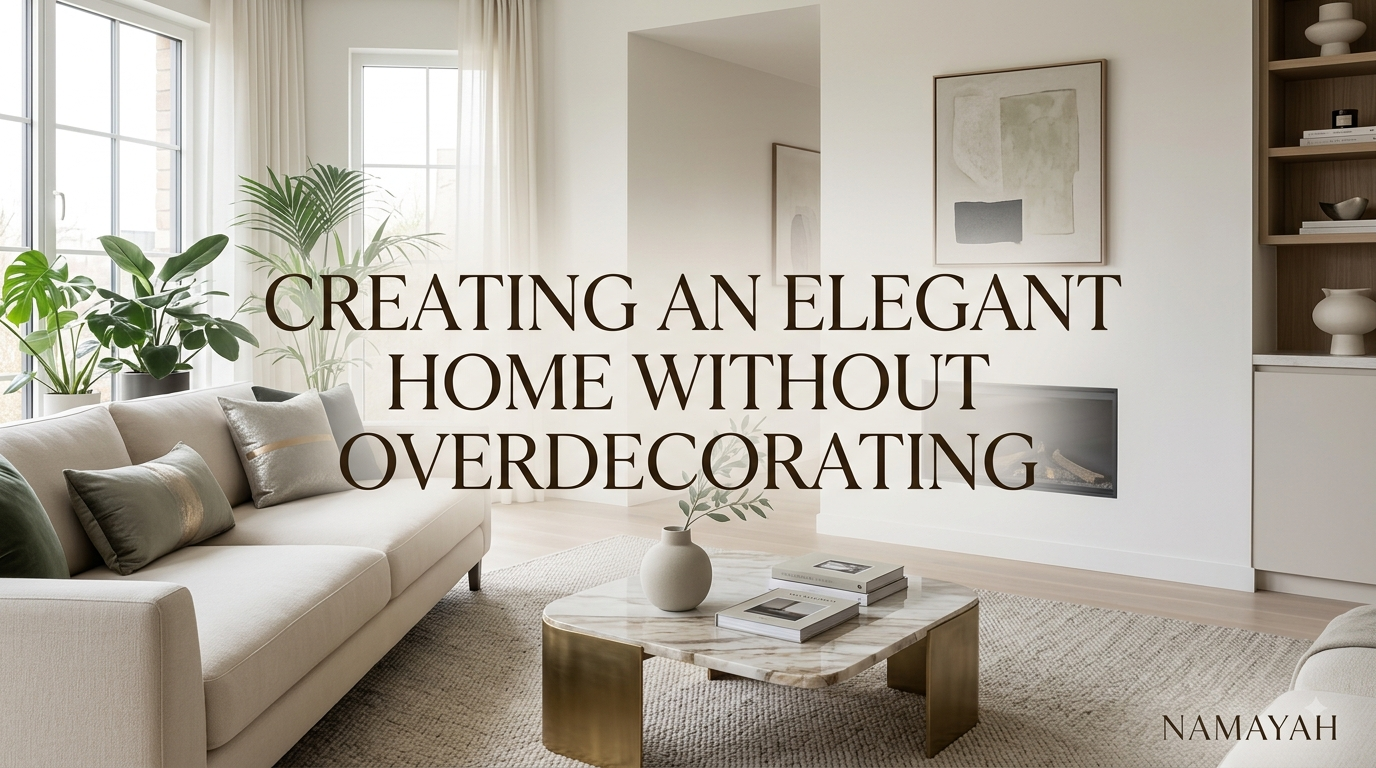
An elegant home does not need to be filled with expensive furniture, elaborate accessories, or decorations on every available surface. In many cases, sophistication comes from the opposite approach: choosing fewer elements, giving them enough space, and making sure every piece has a purpose.
A restrained color palette, well-proportioned furniture, layered lighting, natural materials, thoughtful artwork, and carefully selected accessories can make a home feel polished without making it feel crowded. The goal is not to create an empty or overly minimalist space. It is to create a home where each element feels intentional.
Recent interior-design guidance similarly emphasizes curation, negative space, natural materials, lighting, and removing unnecessary objects rather than continually adding more.
What Makes a Home Feel Elegant?
Elegance in interior design is less about a particular decorating style and more about balance and intention.
A room can be traditional, contemporary, minimalist, eclectic, or even rustic and still feel elegant. What matters is how the elements work together.
Five qualities commonly contribute to an elegant interior:
- Balance: Furniture and decorative elements have appropriate visual weight.
- Proportion: Objects are sized appropriately for the room and for one another.
- Harmony: Colors, materials, and styles feel connected.
- Negative space: Not every corner or surface is filled.
- Intentionality: Decorative pieces have a reason for being there.
Interior-design principles such as balance, harmony, rhythm, scale, and focal points are commonly used to create cohesive spaces.
The result should feel comfortable rather than staged. Your home should still look lived in—it simply should not feel visually overwhelmed.
Start With a Clear Design Direction
Before buying anything new, decide how you want the room to feel.
Do you want it to be warm and traditional? Calm and contemporary? Organic and relaxed? Dramatic and sophisticated?
You do not need to choose a strict design label. Instead, identify three or four words that describe your preferred atmosphere.
For example:
Warm + refined + natural + comfortable
These words can guide decisions about furniture, paint, fabrics, lighting, and accessories.
A clear direction also helps prevent impulse purchases. Instead of asking, “Do I like this object?” ask, “Does this belong in the room I am trying to create?”
That small change in thinking can dramatically reduce unnecessary decorating.
Use a Restrained Color Palette
Color is one of the easiest ways to create visual cohesion.
A sophisticated home does not necessarily have to be completely neutral. However, limiting the number of dominant colors can make different pieces feel more connected.
A practical palette might include:
- One main wall color
- One or two complementary neutrals
- One darker or richer accent
- Small amounts of a contrasting color
Soft whites, warm beige, taupe, muted greens, earthy browns, soft gray, and dusty blue can provide a calm foundation. Richer colors can then appear in artwork, cushions, rugs, curtains, or a single accent chair.
If you are choosing paint, test larger samples in the actual room. Natural and artificial light can significantly affect how a color appears throughout the day.
The objective is not to eliminate color. It is to make color feel deliberate.
Choose Fewer, Better Furniture Pieces
One of the fastest ways to make a home look overdecorated is to add furniture simply because there is empty floor space.
Instead, start with the pieces the room actually needs.
In a living room, that might mean:
- A comfortable sofa
- One or two accent chairs
- A coffee table
- A rug
- A useful side table
- Appropriate storage
You do not necessarily need multiple cabinets, several occasional tables, numerous chairs, and decorative furniture in every corner.
Choose furniture according to the room’s size and function. A smaller collection of appropriately scaled pieces often looks more sophisticated than a larger collection competing for space.
Give Furniture Room to Breathe
Empty space is not wasted space.
It helps the eye rest and gives important furniture and architectural features more visual impact. A beautiful console, artwork, fireplace, or sofa can lose its presence when surrounded by too many competing objects.
This principle is particularly useful in smaller rooms. Reducing visual congestion can make the space feel more open and orderly.
Before adding another piece, ask:
Would this room actually look better with something here?
If the answer is no, leave the space alone.
Make Lighting Part of the Design
Good lighting can make a simple room feel considerably more sophisticated.
Rather than relying on one bright overhead fixture, consider using several layers of light:
- Ambient lighting for overall illumination
- Task lighting for reading, cooking, working, or other activities
- Accent lighting to highlight artwork, architectural details, or decorative features
Floor lamps, table lamps, wall sconces, pendant lights, and dimmable fixtures can all contribute to a more flexible atmosphere.
Lighting is increasingly treated as a design element rather than merely a practical necessity, with designers recommending layered sources to create depth and ambience.
You also do not need an oversized chandelier to make a statement. Sometimes one well-chosen light fixture is enough.
Layer Texture Instead of More Decor
If a room feels flat, the solution is not always another decorative object.
Try adding texture instead.
A simple room can gain depth through combinations such as:
- Linen curtains
- A textured wool or cotton rug
- Wood furniture
- Stone surfaces
- Woven baskets
- Soft upholstery
- Ceramic accessories
- Natural fiber textiles
This creates visual interest without filling shelves and tables with small objects.
Natural materials can also make restrained interiors feel warmer and more authentic. Contemporary guidance on curated interiors frequently emphasizes materials such as wood, stone, and linen as elements that can carry visual interest without excessive decoration.
Create One Strong Focal Point
Every room benefits from having somewhere for the eye to land.
Your focal point might be:
- A large piece of artwork
- A fireplace
- A striking sofa
- A sculptural light fixture
- A beautiful view
- An architectural feature
- A distinctive piece of furniture
Once you have chosen the focal point, avoid giving every other object equal visual importance.
For example, if a large artwork is the star of the living room, the coffee table does not need five decorative objects competing with it.
A strong focal point allows the rest of the room to support rather than compete.
Choose Meaningful Accessories
Accessories should add character, not simply fill empty surfaces.
Instead of placing small decorations everywhere, select objects that have one or more of these qualities:
- Personal meaning
- Interesting craftsmanship
- Useful function
- Strong visual shape
- Connection to the home’s color palette
- Emotional or cultural significance
One distinctive ceramic vase can have more impact than six unrelated decorative objects.
This is the difference between decorating and curating. Decorating can involve adding things to a room. Curating involves deciding what deserves to remain.
Use Art Strategically
Art can make a home feel personal without creating clutter.
A common mistake is using many small pieces simply because the walls are available. Consider whether a larger work—or a deliberately arranged collection—would create a stronger visual statement.
The artwork does not have to be expensive. It can be:
- A family photograph
- A vintage print
- A painting from a local artist
- A meaningful textile
- A framed sketch
- A personal collection
Choose pieces because you genuinely like them rather than because they happen to match a current trend.
Bring in Natural Materials
Natural materials can help a restrained interior feel warm rather than sterile.
Wood introduces variation and warmth. Stone adds weight and texture. Linen can soften furniture and windows. Ceramics can provide subtle handcrafted character.
You do not need all of these materials in every room.
A simple combination of painted walls, wood furniture, soft textiles, and one or two tactile accessories can be enough.
The principle is straightforward: let materials contribute to the design instead of covering them up with decoration.
Avoid Common Overdecorating Mistakes
Several habits can make an otherwise attractive home feel busy.
Filling Every Surface
A console, coffee table, bookshelf, and kitchen counter do not need to display something simply because they are empty.
Buying Too Many Small Objects
Many tiny accessories can create visual noise. Larger, more substantial pieces are often easier to appreciate.
Matching Everything
An elegant home does not have to look like a furniture showroom. Mix complementary materials, shapes, and finishes while maintaining a cohesive palette.
Following Every Trend
Trends can provide inspiration, but copying an entire trend can quickly make a home feel generic. Your home should reflect the people who live there.
Ignoring Function
A beautiful room that is uncomfortable or difficult to use is not successful design. Practicality should influence furniture placement and decorative decisions.
Recent commentary from designers also highlights overcrowding, poor lighting, excessive trend-following, and prioritizing appearance over practicality as common home-design problems.
Apply the Approach Room by Room
Living Room
Start with comfortable seating, a properly sized rug, appropriate lighting, and one focal point. Keep coffee-table styling simple and leave enough open surface for everyday use.
Bedroom
Prioritize a comfortable bed, quality bedding, practical bedside lighting, and calm colors. Avoid filling the nightstands with decorative objects.
Dining Room
Let the dining table and lighting fixture provide much of the visual interest. A simple centerpiece can be more effective than a permanent collection of decorations.
Entryway
Keep the entry functional. A mirror, useful storage, a small lamp, or one artwork may be all you need.
Kitchen
Clear unnecessary items from countertops whenever possible. Display only the objects you use regularly or genuinely enjoy seeing.
Bathroom
Use coordinated towels, thoughtful lighting, and a small number of useful accessories. Good materials and cleanliness often create more elegance than additional decoration.
How to Create Elegance on a Budget
Elegance does not require replacing everything in your home.
Start by editing what you already own.
Remove items that are broken, redundant, out of scale, or no longer meaningful. Then identify the pieces that deserve attention.
You might spend your budget on one improvement at a time:
- Better lighting
- Quality curtains
- A well-sized rug
- New cabinet hardware
- Fresh paint
- Improved storage
- One substantial artwork
- Better cushions or throws
Small, intentional upgrades can have a stronger effect than buying many inexpensive decorative pieces. Recent design advice similarly emphasizes thoughtful, targeted changes rather than simply spending more.
A Simple Editing Process
If your home already feels overdecorated, you do not need to start again.
Try this five-step edit:
1. Photograph the room.
A photo can make visual clutter easier to notice than looking at the room every day.
2. Remove 20–30% of the accessories.
Do not throw anything away immediately. Put selected items in storage temporarily.
3. Identify the focal point.
Decide what should attract attention first.
4. Group related objects.
Avoid scattering similar accessories across every surface.
5. Reintroduce only what improves the room.
If an item does not add beauty, function, meaning, or useful texture, it may not need to return.
The goal is not to own as little as possible. Minimalism for its own sake is not required. The goal is to make the things you choose more visible and more meaningful.
FAQs About Creating an Elegant Home Without Overdecorating
1. How can I make my home look elegant without spending a lot?
Focus on editing before buying. Remove unnecessary clutter, improve lighting, create a cohesive color palette, rearrange furniture, and invest selectively in high-impact pieces such as curtains, rugs, artwork, or hardware.
2. Does an elegant home have to be minimalist?
No. An elegant home can contain collections, books, artwork, family photographs, and decorative objects. The important factor is how those elements are arranged. Elegance comes from balance and intentionality rather than a strict number of possessions.
3. What colors make a home look elegant?
There is no single elegant color palette. Soft neutrals, earthy tones, muted greens and blues, warm whites, and deeper accent colors can all work. The key is creating relationships between colors rather than using many unrelated shades.
4. How many decorative items should I put on a coffee table?
There is no universal number. Start with one substantial object or a small, intentional grouping and leave enough usable surface for everyday life. Scale and composition matter more than following a fixed decorating rule.
5. How do I make a small home feel elegant?
Prioritize appropriately scaled furniture, clear pathways, useful storage, restrained colors, layered lighting, and negative space. Avoid filling every corner and choose fewer pieces with stronger visual impact.
6. Can an elegant home still feel cozy?
Absolutely. Elegance does not require a cold or formal atmosphere. Soft textiles, warm lighting, natural materials, comfortable furniture, books, artwork, and meaningful objects can make a refined room feel welcoming.
7. Should all furniture match?
No. A completely matching furniture set can sometimes make a room feel less personal. Choose pieces that share compatible proportions, colors, materials, or design characteristics rather than requiring every item to match.
8. What is the biggest mistake when trying to create an elegant home?
Trying to make every part of the room a statement. Too many focal points compete with one another. Choose a few important elements and allow the surrounding space to support them.
Conclusion
Creating an elegant home without overdecorating is ultimately an exercise in intentional choice.
You do not need to fill every wall, surface, or corner. Instead, establish a cohesive palette, choose furniture carefully, improve lighting, introduce texture, use natural materials, and keep accessories meaningful.
Most importantly, allow your home to have breathing room.
A refined interior is not necessarily the one with the most impressive objects. It is the one where the furniture, colors, materials, lighting, and personal details work together naturally.
When you stop asking what else you can add and start asking what truly deserves to stay, creating an elegant home becomes simpler—and often much more affordable.