
How to Use Decorative Trays to Elevate Interior Styling
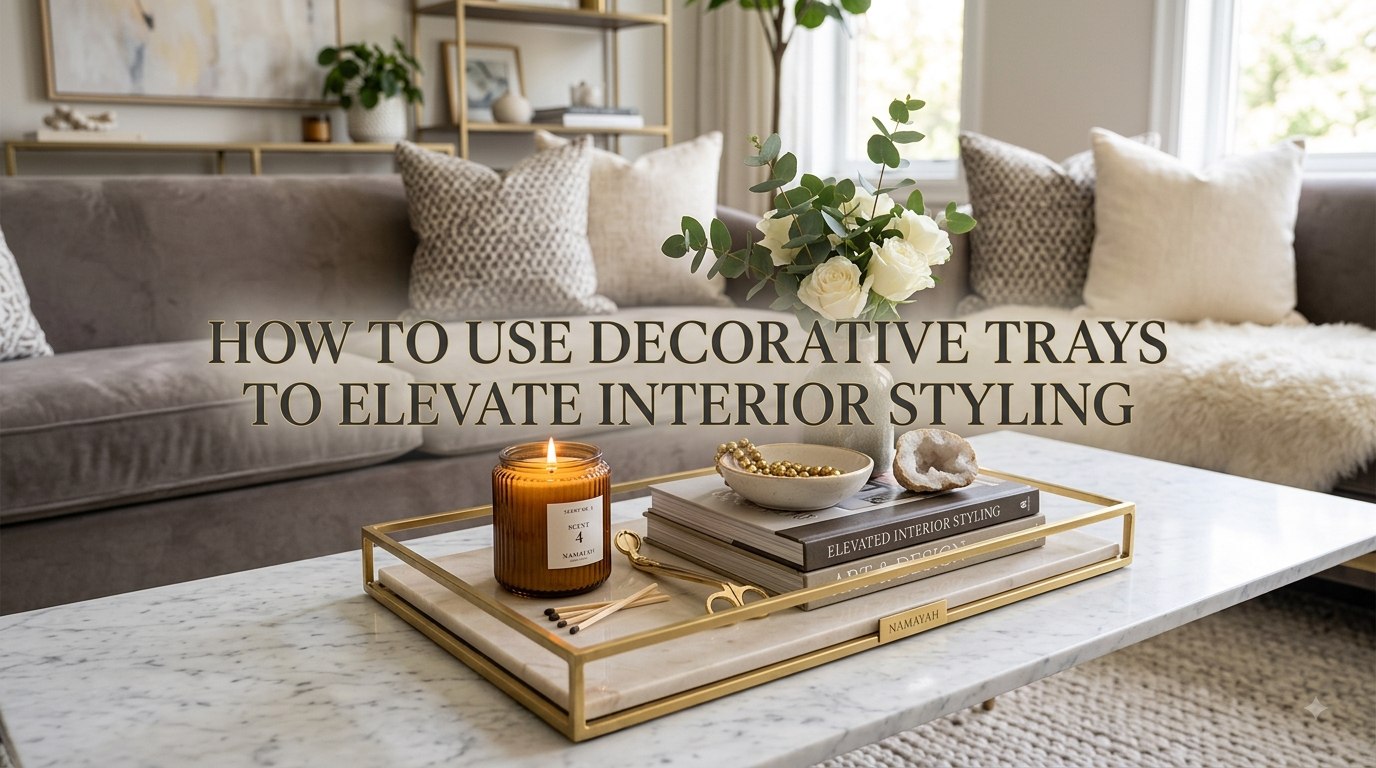
Decorative trays are one of the simplest ways to make everyday surfaces look more intentional. Instead of allowing candles, books, plants, remotes, or small accessories to appear scattered, a tray groups them into a defined visual area. This creates structure while giving you an easy opportunity to introduce color, texture, height, and personality.
The key is to treat a tray as more than a container. Think of it as a small styling stage. The right tray can anchor a coffee table, organize a console, add character to a bedroom, or bring order to a kitchen counter.
Why Decorative Trays Work So Well
A decorative tray performs two jobs at once: it organizes objects and helps create a cohesive composition.
Small objects can easily look disconnected when placed individually across a large surface. A tray gives those objects a boundary, making the arrangement feel like one intentional vignette rather than a collection of unrelated items. Interior styling guides commonly recommend trays for this reason, particularly on coffee tables, consoles, nightstands, and other horizontal surfaces.
Trays can also make cleaning and rearranging easier. Instead of moving several individual objects, you can move the entire grouping at once.
Most importantly, trays give you a controlled area in which to experiment with your interior style.
Choose the Right Decorative Tray
Before deciding what to put on your tray, choose a piece that suits the furniture and overall room.
Consider the size
Scale matters. A tray that is too small can look lost on a large coffee table, while an oversized tray can dominate a compact nightstand.
For a larger surface, consider a tray with enough room to hold several accessories while still leaving visible space around it. Smaller trays are generally better suited to bedside tables, bathroom counters, shelves, or compact entryway furniture.
The goal is proportion rather than maximum coverage.
Choose a complementary shape
Rectangular trays work naturally on long console tables and rectangular coffee tables. Round trays can soften rooms dominated by straight lines and work particularly well on round or square surfaces.
The shape does not have to match the furniture exactly. In fact, contrasting shapes can create visual interest when the proportions feel balanced.
Select a material that supports your style
The material of a tray contributes to the room’s overall texture.
- Wood: Warm, relaxed, rustic, or organic interiors
- Metal: Contemporary, glamorous, or industrial settings
- Marble or stone: Refined and sophisticated spaces
- Rattan or woven materials: Casual, coastal, or natural interiors
- Ceramic: Minimal, artistic, or modern rooms
- Glass: Light and visually understated arrangements
You can either match the tray to existing materials or deliberately introduce contrast.
Build a Balanced Tray Arrangement
Once you’ve selected your tray, the next step is deciding what belongs inside it.
A useful approach is to combine objects with different heights, textures, shapes, and functions. Styling references frequently recommend beginning with a larger anchor item before layering smaller pieces around it.
Start With One Anchor Piece
Begin with the largest or tallest object.
This might be:
- A vase
- A small plant
- A candle
- A decorative bowl
- A sculpture
- A stack of books
The anchor establishes the visual hierarchy. Smaller accessories can then support it instead of competing for attention.
Add Height and Texture
A tray can look flat if every object sits at the same level.
Create variation by combining:
- A tall vase with a low bowl
- Books with a small decorative object
- A plant with a candle
- Ceramic with wood
- Glass with metal
- Smooth surfaces with woven textures
The aim is not to add as many materials as possible. Two or three contrasting textures are often enough to make a small arrangement more visually engaging.
Leave Some Negative Space
One of the easiest mistakes is filling every available inch.
A well-styled tray does not need to be crowded. Leaving some of the tray surface visible creates breathing room and makes the individual objects easier to appreciate. Recent interior-design guidance similarly emphasizes negative space as a way to make tray arrangements feel more restrained and elevated.
If your tray feels cluttered, remove one item before adding another.
Decorative Tray Ideas for Every Room
Decorative trays are not limited to coffee tables. Their combination of organization and styling makes them useful throughout the home.
Living Room and Coffee Table
The coffee table is one of the most natural places to use a decorative tray.
Try combining:
- Two or three coffee-table books
- A small bowl
- A candle
- A compact plant
- One personal decorative object
Keep frequently used items accessible. A tray can also make it easier to clear the coffee table when you need more space.
For a minimalist room, use fewer objects and let the tray itself become part of the design.
Entryway and Console Table
An entryway tray can turn everyday essentials into an organized arrangement.
Use a small tray for items such as:
- Keys
- Sunglasses
- Wallets
- Small accessories
- Fragrance
- A decorative object
This is particularly useful when you want a practical drop zone that still looks intentional.
Bedroom and Nightstand
A decorative tray can make a bedside table feel calmer and more organized.
Consider styling it with a small lamp nearby, a candle, a book, hand cream, or a small dish for jewelry. Keep the arrangement compact so it does not interfere with the practical function of the nightstand.
For bedrooms, softer materials and natural textures can help create a relaxed atmosphere.
Kitchen and Dining Area
Trays can organize frequently used kitchen items while adding visual cohesion.
For example, place a tray near a coffee station with mugs, a small container, and a decorative plant. On a dining table, a tray can group a vase, candles, or seasonal accessories into one centerpiece.
The important distinction is between decorative styling and food-service use. If the tray will regularly carry food or drinks, choose a material and construction appropriate for that purpose.
Bathroom and Vanity
A smaller tray can organize bathroom accessories without making the counter feel crowded.
Try grouping items such as:
- Hand soap
- Lotion
- Perfume
- A small plant
- Rolled guest towels
- Decorative containers
A tray can be especially useful on a guest bathroom counter because it creates a tidy, intentional presentation.
Match Your Tray to Your Interior Style
The tray should feel connected to the room rather than appearing as an unrelated accessory.
Modern interiors
Choose clean shapes, restrained colors, and materials such as metal, stone, or smooth ceramic.
Rustic interiors
Wooden trays, distressed finishes, and natural textures can complement a warmer, more relaxed aesthetic.
Minimalist interiors
Keep both the tray and its contents simple. A single vase, a small stack of books, or one sculptural object may be enough.
Bohemian interiors
Experiment with woven trays, layered textures, plants, ceramics, and objects with handmade character.
Traditional interiors
Look for trays with classic proportions, richer materials, decorative details, or finishes that complement existing furniture.
The strongest result comes from coordinating the tray with the room’s existing colors and materials rather than treating it as an isolated decoration.
Common Decorative Tray Styling Mistakes
Even a beautiful tray can look awkward if the composition is unbalanced.
Using too many objects: More accessories do not automatically create a better display. Edit aggressively.
Ignoring scale: Tiny accessories can disappear on a large tray, while oversized pieces can overwhelm a small one.
Using identical heights: When everything is the same height, the arrangement can appear flat.
Ignoring function: A decorative tray should not make an everyday surface harder to use.
Matching everything too closely: Coordinated does not mean identical. Introduce controlled contrast through texture, shape, or material.
Forgetting the surrounding space: A tray should work with the furniture, nearby artwork, lighting, and other accessories.
Filling the entire tray: Empty space is part of the composition. Let some of the tray remain visible.
Easy Ways to Refresh a Tray Seasonally
One advantage of decorative trays is how easily they can be updated.
For spring, introduce fresh greenery, lighter ceramics, or botanical elements. During summer, natural textures and lighter accessories can create a relaxed feel. In autumn, consider warmer textures and earthy decorative objects. For winter, candles, greenery, and richer materials can create a cozier arrangement.
You do not need to replace the entire display. Keep the tray and one or two core pieces, then rotate smaller accessories around them.
This makes seasonal decorating simpler and prevents the room from feeling permanently locked into one arrangement.
FAQs About Decorative Trays
What should you put on a decorative tray?
Start with one larger anchor item, such as a vase, plant, candle, bowl, or stack of books. Add one or two smaller objects with contrasting heights or textures. Keep enough empty space to prevent the tray from looking crowded.
Where should a decorative tray be placed?
Popular locations include coffee tables, ottomans, console tables, nightstands, bathroom counters, kitchen counters, dining tables, and entryway furniture. Choose a location where the tray improves organization without interfering with everyday use.
How do you make a decorative tray look expensive?
Focus on proportion, restraint, and material contrast rather than filling the tray with accessories. Combine a few well-chosen pieces, vary their heights, and leave negative space around them.
Should a decorative tray match the furniture?
It does not have to match exactly. A tray can coordinate with the furniture through color, material, or shape while providing a subtle contrast. The overall arrangement should feel connected to the room.
How many items should go on a decorative tray?
There is no fixed number. Three or five objects can provide a useful starting point, but the right number depends on the tray’s size and the objects’ proportions. The goal is visual balance, not a specific item count.
Can decorative trays be used in small spaces?
Yes. Small trays can be particularly useful in compact homes because they organize small objects without requiring additional furniture. Choose a proportionate tray and avoid filling it with unnecessary accessories.
Are decorative trays still useful if I prefer minimalist decor?
Absolutely. A tray can actually support minimalist styling by creating a defined area for a small number of objects. A simple tray with one or two carefully selected pieces can be more effective than several accessories spread across a surface.
Conclusion
Decorative trays are a practical styling tool because they combine organization with visual structure. They can turn scattered everyday objects into a deliberate composition while introducing texture, color, height, and personality.
The best approach is simple: choose a tray that suits the scale and style of the room, begin with an anchor piece, add contrasting textures and heights, and leave enough negative space to keep the arrangement breathable.
Whether you are styling a coffee table, organizing an entryway, refreshing a bedroom, or creating a kitchen display, the same principles apply. Use the tray to make the space feel more intentional—not more crowded.