
Natural Materials That Instantly Warm Up Your Home
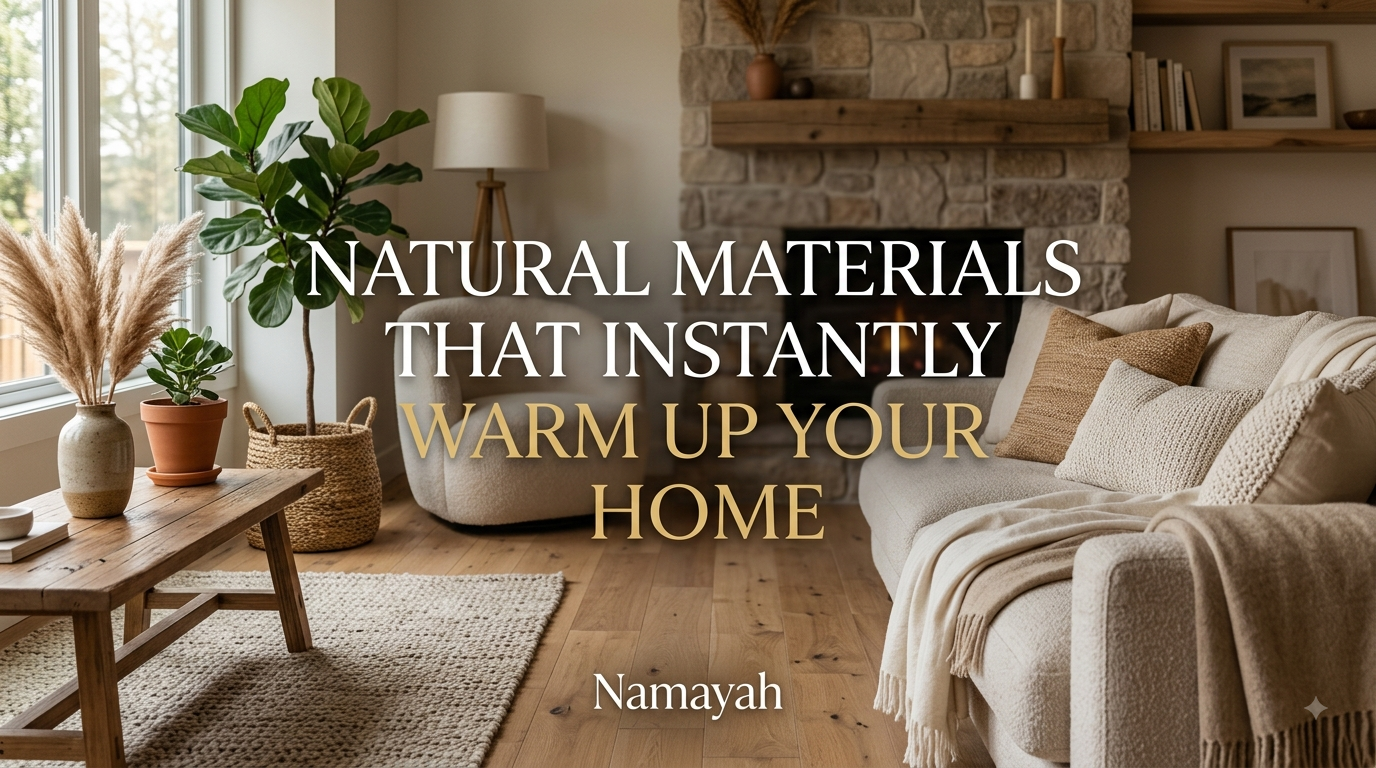
A home can look beautiful and still feel cold. If your rooms have hard surfaces, uniform furniture, or too many polished finishes, adding a few natural materials can introduce the texture, depth, and visual softness that make a space feel more inviting.
The best natural materials for warming up a home include wood, linen, wool, rattan, jute, stone, clay, and leather. You do not need to redesign an entire room. A wooden coffee table, linen curtains, wool rug, woven basket, or handmade ceramic accent can make a noticeable difference.
The key is balance. Rather than filling every room with rustic pieces, combine two or three natural materials with your existing furniture and finishes. Contemporary interiors can benefit from natural textures just as much as traditional or farmhouse spaces.
Why Natural Materials Make a Home Feel Warmer
Natural materials add warmth in several ways. Their organic variations, tactile surfaces, and earthy tones can soften rooms dominated by glass, metal, glossy finishes, or uniform manufactured surfaces.
Interior-design guidance consistently points to materials such as wood, linen, wool, rattan, stone, and other natural textures as effective ways to create depth and a more relaxed atmosphere.
There is also an important visual advantage: natural materials rarely look completely identical from one piece to another. Wood grain varies, woven fibers have irregularities, and handmade ceramics often have subtle differences. Those imperfections can give a room more character.
You also do not need to use every material at once. In fact, restraint usually produces a more sophisticated result. A recent design approach described as “layered comfort” emphasizes combining different textures and materials instead of relying on a perfectly matched furniture set.
1. Wood: The Easiest Way to Add Instant Warmth
Wood is one of the most versatile natural materials for interior design. It can work in minimalist, contemporary, traditional, Scandinavian, rustic, and transitional interiors.
Use wood for:
- Coffee and side tables
- Dining tables
- Bed frames and headboards
- Shelving
- Cabinet fronts
- Flooring
- Decorative bowls and trays
- Picture frames
The finish and tone matter. Pale oak can keep a room bright and understated, while walnut and other darker woods can introduce a richer, more grounded appearance.
If your room already contains plenty of cool colors, consider introducing a warm wood tone through one substantial piece rather than scattering many small wooden accessories throughout the space.
A solid wood coffee table, for example, can become the visual anchor of a living room without requiring you to replace the sofa or flooring.
2. Linen: Softness Without Visual Heaviness
Linen is particularly useful when a room needs softness but you do not want it to feel heavy.
Try linen for:
- Curtains
- Cushion covers
- Bedding
- Upholstery
- Table runners
- Decorative throws
Its slightly relaxed texture works especially well with wood and woven materials. Architectural Digest also highlights combinations of wood, linen, jute, and rattan in natural, relaxed interiors.
Linen is especially effective around windows. Light-colored linen curtains can soften the transition between bright natural light and the harder architectural surfaces of a room.
For a simple bedroom update, pair linen bedding with a wooden bed frame and a textured rug. The result can feel warmer without adding strong patterns or bold colors.
3. Wool: Add Tactile Comfort Underfoot
If a room feels visually cold, look at the floor.
A wool rug can introduce softness, pattern, and texture while making seating areas feel more defined. Wool throws and cushions can provide another layer of tactile comfort.
Consider wool for:
- Area rugs
- Throws
- Blankets
- Cushions
- Upholstery
Natural-material design guidance frequently recommends wool as a cozy textile, particularly for rugs and throws.
You can also use wool to balance harder materials. A stone coffee table, for example, can feel more approachable when paired with a soft wool rug and upholstered seating.
4. Rattan and Cane: Bring in Lightweight Texture
Rattan and cane can add warmth without making a room feel visually heavy.
Their woven construction creates small-scale texture that works well on furniture and accessories. Try:
- Rattan accent chairs
- Cane cabinet doors
- Woven pendant lights
- Baskets
- Headboards
- Storage pieces
- Decorative trays
The key is moderation. One rattan chair or pendant can add enough texture to a modern room. If every major furniture piece is woven, the room can begin to feel themed rather than naturally layered.
Rattan also pairs particularly well with linen and wood. The combination gives you three different textures without requiring a complicated color scheme.
5. Jute and Other Natural Fibers: Ground the Room
Jute is a practical choice when you want to introduce natural texture at a relatively large scale.
A jute rug can visually connect furniture while adding an earthy foundation beneath it. It works particularly well in:
- Living rooms
- Dining areas
- Bedrooms
- Entryways
- Sunrooms
You can also use woven baskets made from natural fibers for storage. This turns an everyday organizational item into part of the room’s design.
Natural-fiber rugs and woven accessories are especially useful in rooms that already contain smooth surfaces. They add visual variation without demanding attention.
6. Natural Stone: Add Depth Without Making a Room Feel Cold
Stone is often associated with cool surfaces, but its natural variation can actually bring significant visual warmth to an interior.
Travertine, limestone, marble, slate, and other stones can be used for:
- Coffee tables
- Countertops
- Fireplaces
- Floors
- Wall accents
- Side tables
- Decorative objects
The secret is what you put around it.
A large stone surface can feel more inviting when combined with warm wood, soft textiles, and layered lighting. Natural-stone interiors can therefore feel sophisticated rather than sterile.
If a full stone renovation is outside your budget, use a smaller stone element such as a side table, tray, lamp base, or decorative object.
7. Clay and Terracotta: Introduce Earthy Character
Clay and terracotta are excellent choices when a room needs a small dose of earthy color and handcrafted texture.
Consider:
- Terracotta planters
- Ceramic vases
- Handmade bowls
- Clay lamps
- Decorative vessels
- Terracotta tiles
These materials are particularly effective against neutral walls. A handmade ceramic vase can provide more character than a collection of mass-produced decorative objects.
You can also use terracotta sparingly as an accent color. It works naturally alongside cream, beige, brown, muted green, and warm wood tones.
8. Leather: Add Richness and Contrast
Leather can complement other natural materials by providing a different texture and a slightly richer visual weight.
A leather armchair, ottoman, bench, or accent cushion can work particularly well alongside:
- Oak or walnut
- Linen
- Wool
- Stone
- Jute
- Rattan
For a relaxed look, combine a leather chair with a woven rug and linen curtains. The materials contrast with one another while remaining connected through their organic appearance.
Rather than matching everything perfectly, focus on creating a conversation between textures.
How to Mix Natural Materials Without Overdoing It
The biggest mistake with natural-material decorating is assuming that more is always better.
A room filled with wood, rattan, jute, stone, terracotta, leather, and plants can lose its sense of calm if every surface competes for attention.
Instead, try the three-layer approach:
1. Choose a dominant material
Start with one major material, such as wood flooring or a wooden dining table.
2. Add a soft material
Introduce linen, cotton, wool, or another textile to soften the harder surfaces.
3. Add one textured accent
Finish with rattan, jute, stone, clay, or another tactile material.
This creates variety without making the room feel busy.
A useful combination might be:
Wood + linen + rattan
Or:
Stone + wool + leather
Or:
Wood + jute + clay
The goal is not to create a “natural materials room.” The goal is to create a room that feels naturally comfortable.
Natural Materials Room by Room
Living Room
Start with a wood coffee table, wool or jute rug, linen cushions, and one woven accent. If the room has a lot of hard flooring, prioritize a large textured rug.
Bedroom
Wooden furniture, linen bedding, wool throws, and woven baskets can create a relaxed combination. Keep colors restrained so the different textures remain the focus.
Dining Room
A wooden dining table can become the central natural element. Add linen napkins, woven pendant lighting, or cane dining chairs for additional texture.
Kitchen
Wooden cutting boards, natural stone, ceramic vessels, and woven storage can soften kitchens dominated by cabinetry and appliances.
Entryway
A wooden bench, jute runner, woven basket, and ceramic vase can make an entryway feel more welcoming without taking up much space.
Bathroom
Natural stone accessories, wooden accents, woven baskets, and linen or cotton textiles can soften an otherwise hard-surface environment.
Small Changes That Make a Big Difference
You do not need a renovation to make your home warmer.
Try these low-commitment changes first:
- Replace synthetic-looking cushions with linen or textured natural-fiber covers.
- Add a wood tray to a coffee table or console.
- Place a woven basket beside the sofa or in the entryway.
- Use a jute or wool rug to soften a hard floor.
- Swap glossy decorative objects for handmade ceramic pieces.
- Add a wooden stool or side table.
- Introduce natural-fiber curtains where appropriate.
- Layer natural textures instead of adding more decorative objects.
These smaller changes are useful because you can evaluate how the room feels before making a larger investment.
Common Mistakes to Avoid
Using Too Many Matching Natural Materials
Natural design does not mean every item needs to be made from wood, rattan, or jute. Contrast creates interest.
Choosing Materials Only for Appearance
Think about durability and maintenance as well as appearance. A material that looks beautiful but is unsuitable for how you use the room may not be a practical choice.
Making Every Room Look the Same
Natural materials should create continuity, not uniformity. You might use wood throughout the home while changing the secondary textures from room to room.
Ignoring Lighting
Material selection and lighting work together. A textured material can look very different under bright overhead lighting compared with softer, layered illumination.
Turning the Home Into a Theme
Earthy interiors work best when natural elements are balanced with personal belongings, contemporary pieces, artwork, and functional furniture. A recent guide to earthy interiors similarly emphasizes restraint and warns against using every natural material at equal intensity.
Frequently Asked Questions
What natural materials make a home feel warmer?
Wood, wool, linen, rattan, jute, clay, leather, and natural stone can all contribute warmth through texture, color, and visual variation. Wood and textiles are particularly easy starting points because they can be introduced through furniture, rugs, curtains, and accessories.
What is the best natural material for a living room?
Wood is one of the most versatile choices for a living room. Combine it with a wool or jute rug, linen textiles, and one woven accent to create layered texture without overwhelming the space.
How can I make a modern home feel warmer?
Add natural textures rather than replacing your entire modern interior. A wooden table, linen curtains, wool rug, woven basket, or handmade ceramic piece can soften sleek surfaces and introduce visual depth.
Are natural materials good for small homes?
Yes. In small spaces, use natural materials selectively. A few textured pieces can add warmth without creating visual clutter. Woven baskets are particularly useful because they combine texture with storage.
Can natural materials work with minimalist interiors?
Absolutely. Natural materials can complement minimalism because they add texture and character without requiring lots of decoration. Wood, linen, stone, and wool are especially effective in restrained interiors.
How many natural materials should I use in one room?
There is no fixed rule, but starting with two or three complementary materials is a practical approach. For example, combine wood as the main material with linen and a woven fiber as supporting textures.
How can I make a room feel warm without using dark colors?
Focus on texture instead of relying on dark paint. Light wood, linen, wool, jute, clay, and warm off-whites can create a comfortable atmosphere while keeping the room visually bright.
What natural materials work best together?
Wood and linen are a reliable starting point. You can then introduce wool, rattan, jute, stone, or clay depending on the room. The strongest combinations usually mix different textures rather than repeating the same material.
Conclusion
Natural materials can change the atmosphere of a home without requiring a complete redesign. Wood adds warmth and structure, linen brings softness, wool adds tactile comfort, rattan and jute introduce woven texture, stone provides depth, and clay adds earthy character.
The most successful approach is not to use all of them at once. Choose a dominant material, layer in contrasting textures, and leave enough visual space for each element to work.
Start with one simple change—a wooden table, textured rug, linen curtains, or woven basket—and build from there. The result should feel less like a themed interior and more like a comfortable home with natural character.