
Luxury Interior Accessories That Make a Home Feel Personal
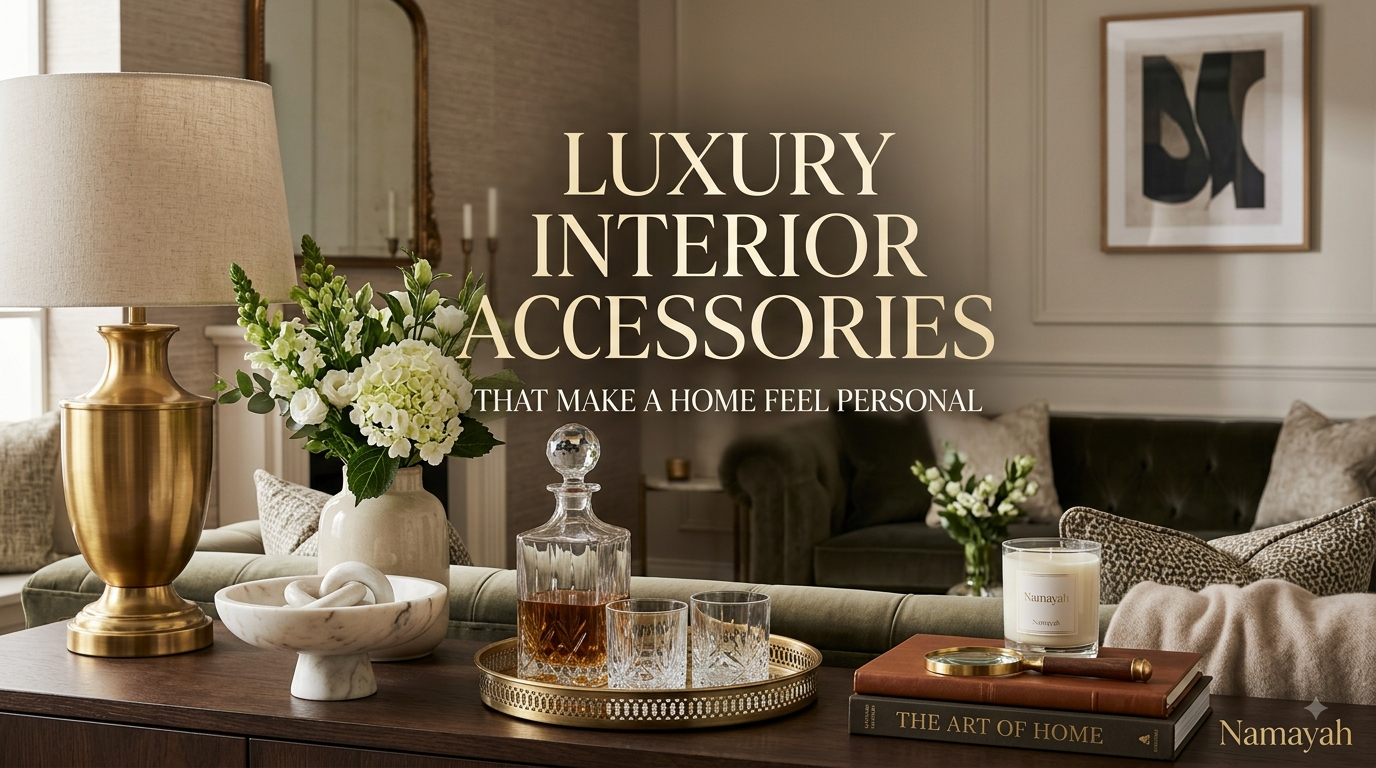
A beautifully furnished home can still feel incomplete if it lacks the small details that reveal who lives there. The right luxury interior accessories can bridge that gap. Sculptural objects, meaningful artwork, elegant lighting, premium textiles, books, vessels, and collected pieces can add warmth and individuality without compromising a sophisticated aesthetic.
Luxury does not have to mean filling a room with expensive objects. In fact, current interior styling advice increasingly emphasizes thoughtful editing, meaningful pieces, craftsmanship, and negative space. Architectural Digest India recently highlighted the importance of treating styling as the layer that gives a professionally designed room personality and a lived-in quality.
The goal, therefore, is not to make your home look like a showroom. It is to create an interior that feels considered, collected, and unmistakably yours.
Why Accessories Matter in a Luxury Interior
Furniture and architecture establish the foundation of a room, but accessories provide much of its personality.
A sofa establishes scale. Flooring establishes texture. Architectural details establish structure. Accessories add the story.
A handcrafted bowl might remind you of a memorable trip. A framed artwork may reflect an artist you admire. A vintage object can introduce history into a contemporary space. Even a carefully chosen candle or throw can influence how a room feels at a particular time of day.
Luxury home décor retailers commonly categorize accessories around items such as vases, decorative bowls, candleholders, ornaments, mirrors, frames, and scent products—categories that demonstrate how many small details can contribute to the overall character of an interior.
The key is curation rather than accumulation.
1. Sculptural Objects With Character
Sculptural décor is one of the simplest ways to introduce personality into an elegant room.
Instead of choosing several small decorative pieces that compete for attention, consider one distinctive object with an interesting silhouette. It could be an abstract sculpture, carved form, architectural object, or handcrafted piece.
Place it on:
- A console table
- Coffee table
- Open shelving
- Sideboard
- Entryway cabinet
- Bedroom dresser
The most effective pieces do not necessarily need to be colorful or oversized. Shape, proportion, texture, and material can provide enough visual interest.
A sculptural object can also become a conversation starter, especially when it has a personal connection or an interesting origin.
2. Art That Reflects Your Story
Art is one of the strongest ways to prevent a luxury interior from feeling generic.
Rather than selecting artwork simply because its colors match the sofa, think about what you actually want to see every day. Consider paintings, photography, prints, textiles, ceramics, or works from artists whose stories resonate with you.
The objective is not perfect coordination. It is emotional relevance.
A neutral room can become significantly more personal with one expressive artwork. Architectural Digest India has similarly emphasized the role of thoughtful accessories and statement pieces in adding individuality and narrative to contemporary interiors.
For a more sophisticated arrangement, combine different scales rather than hanging every piece at the same visual weight. A large artwork can anchor a room while smaller personal pieces create layers around it.
3. Decorative Vases and Vessels
Luxury vases are useful because they combine sculpture, color, texture, and function.
You can choose:
- Hand-finished ceramic vessels
- Sculptural glass vases
- Stone or marble vessels
- Metal containers
- Traditional handcrafted forms
- Oversized statement vases
Do not assume every vase needs flowers. An architectural vessel can stand beautifully on its own.
For a more personal look, mix one contemporary vessel with something inherited, handmade, or collected. The contrast can make a space feel evolved rather than purchased all at once.
4. Luxury Lighting and Candleholders
Lighting is both functional and emotional.
A carefully selected lamp, sculptural table light, elegant floor lamp, or pair of candleholders can dramatically change the atmosphere of a room. Layered lighting is also a practical way to make an interior more flexible, with different sources creating different moods throughout the day.
For an especially personal touch, consider lighting that has an identifiable material or design language.
Candleholders can also become decorative objects in their own right. Meanwhile, fragrance introduces another layer of personalization: the scent associated with a home can become part of how people remember it. Recent coverage has described scented candles as a small luxury capable of influencing the sensory identity of a space.
5. Premium Cushions and Throws
Soft furnishings are among the easiest ways to introduce color, texture, and personality without making permanent changes.
Look for materials such as:
- Linen
- Velvet
- Silk
- Wool
- Cashmere
- Handwoven textiles
Rather than buying an entire matching set, combine complementary textures.
For example, a neutral sofa could feature one patterned cushion, one richly textured cushion, and a simple woven throw. This creates depth while maintaining visual restraint.
Textiles can also connect different areas of a home. A color or material repeated subtly in the living room, bedroom, and reading area can create continuity without making the rooms look identical.
6. Books and Meaningful Collections
Books are powerful interior accessories when they genuinely represent the people who live in the home.
Choose books because you enjoy their content, subjects, authors, photography, or history—not merely because their covers look good.
A shelf filled with books you have actually read can reveal interests, travels, hobbies, and values. That makes the room feel authentic.
You can combine books with small objects such as:
- Personal photographs
- Ceramic pieces
- Travel souvenirs
- Small sculptures
- Decorative bookends
- Family heirlooms
The result should feel like a collection that developed naturally over time.
7. Decorative Trays and Boxes
A decorative tray can turn several unrelated objects into one intentional arrangement.
For example, a coffee-table tray might hold a candle, a small vase, and a personal object. A console tray could organize keys, fragrance, and a decorative bowl.
The tray creates a visual boundary, helping accessories read as a composition rather than clutter. This styling principle is also reflected by luxury décor retailers that recommend using trays to define smaller decorative zones.
Decorative boxes serve a similar purpose while adding concealed storage.
Choose materials that complement the room, such as lacquer, leather, wood, stone, or metal.
8. Mirrors With Sculptural Appeal
A mirror does not have to be purely practical.
An unusual frame can turn a mirror into an artwork. Look for distinctive shapes, textured borders, aged finishes, or handcrafted details.
Place a statement mirror:
- Above a console
- In an entryway
- Opposite a window
- Above a bedroom dresser
- Along a transitional hallway
The right mirror can introduce light and visual depth while contributing to the overall design language of the room.
9. Objects With Cultural or Travel Stories
Some of the most personal luxury accessories are not purchased as décor at all.
A ceramic piece collected during a trip, an inherited box, a locally crafted textile, or an antique discovered at a market can carry more meaning than a perfectly coordinated decorative set.
These objects give your interior a sense of history.
The growing interest in “slow decorating” also reflects this preference for interiors that develop over time through meaningful, durable, and personally relevant objects rather than constant replacement.
The important point is authenticity. Choose pieces because they mean something to you, not simply because they appear exotic or fashionable.
10. Natural Materials and Handcrafted Details
Material choice has a major influence on how luxury accessories feel.
Consider:
- Marble
- Natural stone
- Solid wood
- Handblown glass
- Ceramic
- Brass
- Bronze
- Linen
- Wool
- Leather
Small imperfections can actually make an object more interesting. Handcrafted surfaces often have variations that give them individuality.
This is particularly useful in contemporary interiors, where too many perfectly uniform surfaces can make a room feel sterile.
Mixing refined materials with organic or handmade elements creates contrast and warmth.
How to Layer Luxury Accessories Without Creating Clutter
One of the biggest mistakes in luxury styling is assuming that more accessories automatically create a richer room.
Usually, the opposite is true.
A useful approach is to begin with one focal object and build around it. Vary height, texture, shape, and scale. Then remove anything that does not contribute to the composition.
Try this simple formula:
- Choose one focal piece.
- Add one or two supporting objects.
- Introduce a contrasting texture.
- Include something personal.
- Leave visible negative space.
- Step back and remove one unnecessary item.
The last step can be surprisingly effective.
Recent interior-design guidance from Architectural Digest India similarly emphasizes editing and allowing negative space to give meaningful objects room to stand out.
How to Choose Accessories for Different Rooms
Living Room
Focus on objects people can interact with and notice from different angles.
Good choices include sculptural coffee-table objects, art books, decorative trays, cushions, throws, vases, lamps, and statement side tables.
Bedroom
Keep the mood quieter and more intimate.
Consider tactile throws, bedside lamps, small artwork, elegant boxes, fragrance, ceramics, and personal photographs.
Dining Room
Use accessories that support entertaining.
A sculptural centerpiece, decorative bowl, candleholders, serving pieces, or a distinctive vase can add personality without interfering with the table’s function.
Entryway
The entry is an opportunity to establish the character of the home immediately.
A mirror, console sculpture, tray, artwork, lamp, or distinctive vessel can create a memorable first impression.
Home Office
Personalize the space with objects that reflect your interests rather than filling it with generic office accessories.
Books, artwork, a handcrafted desk object, an elegant lamp, and a meaningful photograph can make the room feel sophisticated and genuinely lived in.
Common Mistakes to Avoid
Buying Everything From One Collection
Matching accessories can create cohesion, but too much coordination can make a home look staged.
Mix designers, materials, eras, and sources where appropriate.
Choosing Décor Only for Its Appearance
An attractive object is not necessarily the right object.
Ask whether you genuinely like it, whether it works with the room, and whether you will still appreciate it in several years.
Overfilling Every Surface
Luxury interiors benefit from breathing room.
A single beautiful object can have greater impact when surrounded by negative space.
Following Trends Too Literally
Trends can provide inspiration, but personal interiors should not depend entirely on them. Current design commentary increasingly favors meaningful, individual objects over generic trend-driven styling.
Ignoring Craftsmanship
Price alone does not determine whether something feels luxurious.
Pay attention to materials, construction, finish, proportions, and the story behind the object.
FAQs
What are the best luxury interior accessories for a personal home?
The best accessories are those that combine quality with personal meaning. Sculptures, artwork, handcrafted vessels, premium textiles, books, decorative lighting, mirrors, and collected objects can all make an interior feel more individual.
How can I make my luxury home feel less like a showroom?
Mix polished pieces with personal possessions, books, travel finds, artwork, family objects, and handcrafted items. Avoid arranging every surface too perfectly and leave some negative space around important pieces.
What makes an interior accessory look luxurious?
Material quality, craftsmanship, proportion, texture, and thoughtful design generally contribute more to a luxurious appearance than simply choosing the most expensive item.
How many decorative accessories should I put in one room?
There is no universal number. Start with a few purposeful pieces and add only what improves the composition. If a surface feels crowded, remove an object rather than automatically adding another.
Are handmade accessories good for luxury interiors?
Yes. Handmade pieces can introduce texture, individuality, and craftsmanship. Their natural variations can also prevent a highly polished room from feeling overly uniform.
How do I mix modern and traditional accessories?
Use a common connection such as color, material, scale, or shape. For example, a contemporary sculpture can sit comfortably beside an antique vessel when both share a complementary palette or material.
Which accessories work best on a coffee table?
A tray, sculptural object, decorative bowl, book, vase, or candle can work well. Combine different heights and textures while keeping enough open space for practical use.
How can accessories make a neutral room feel more personal?
Introduce meaningful artwork, colorful textiles, collected objects, books, natural materials, and distinctive lighting. Neutral architecture provides a calm backdrop for more expressive personal pieces.
Should luxury home accessories match my furniture?
They should coordinate rather than necessarily match. Repeating one or two colors, materials, or shapes can create harmony while allowing accessories to have individual character.
Conclusion
The most successful luxury interior accessories do more than make a room look expensive. They reveal something about the people who live there.
A sculptural object can express your taste. A travel find can preserve a memory. A favorite book can reveal an interest. A handcrafted vessel can introduce cultural character. A carefully selected lamp can change the atmosphere of an evening.
The strongest approach is therefore to decorate with intention. Choose fewer pieces, prioritize quality and meaning, mix old and new, and give special objects enough space to be appreciated.
A truly luxurious home does not need to look perfect. It should feel personal, layered, comfortable, and collected over time.