
Decorating Your Coffee Table with Artisan Accessories
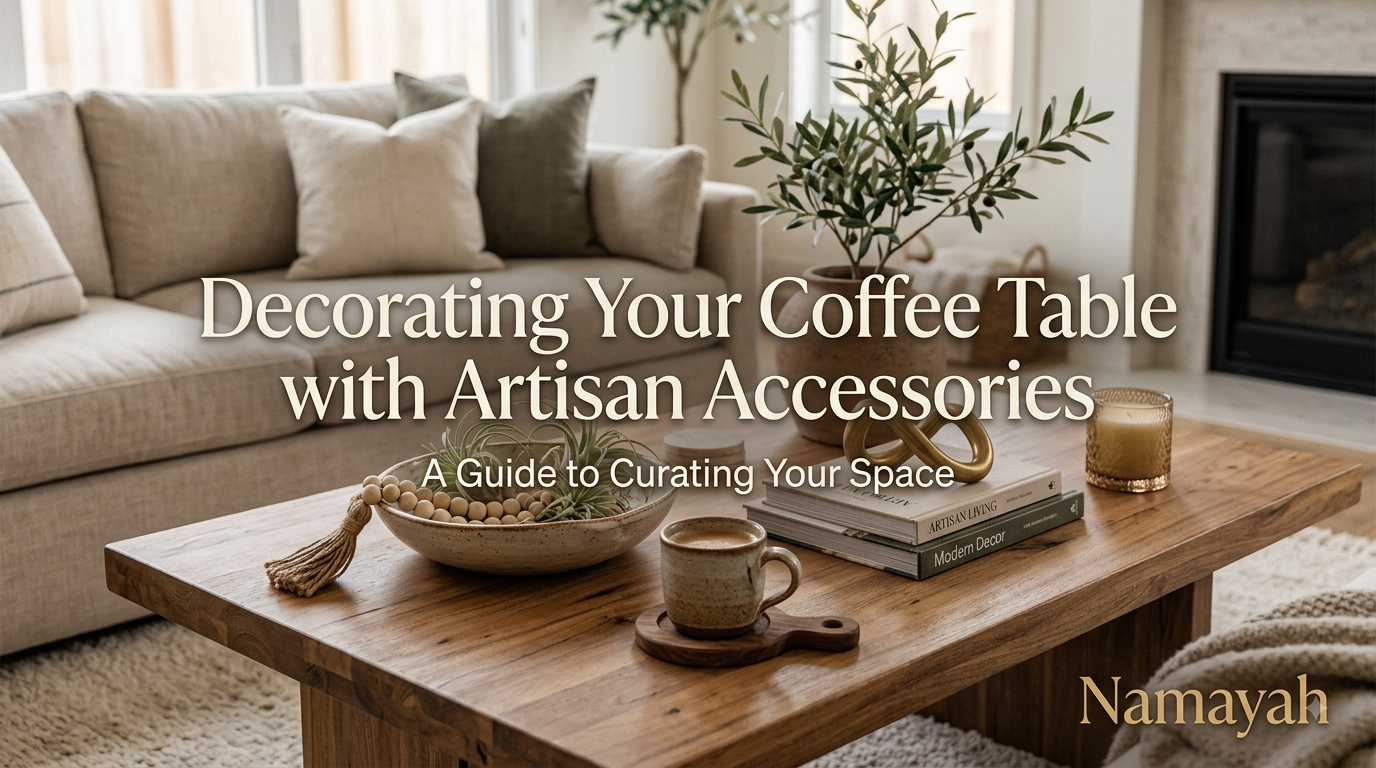
A coffee table is more than a convenient place for books, drinks, or remote controls. It is one of the visual focal points of a living room, making it an ideal surface for expressing your decorating style. Decorating your coffee table with artisan accessories can add warmth, texture, personality, and a sense of individuality without requiring a complete room makeover.
The key is thoughtful curation rather than filling every inch of the surface. Interior styling guidance consistently emphasizes varying heights, mixing textures, using meaningful objects, and preserving negative space.
Handmade ceramics, carved wooden objects, woven trays, sculptural pieces, artisan bowls, candles, books, and natural elements can work together to create a coffee table that feels collected rather than overly decorated.
Why Artisan Accessories Work So Well
Artisan accessories bring visual character that mass-produced décor can sometimes lack. Small variations in texture, shape, color, and finish can make handcrafted pieces feel distinctive.
An artisan coffee table arrangement can also tell a story. A hand-thrown ceramic bowl, carved wooden sculpture, woven tray, or locally crafted object can reflect your interests, travels, or appreciation for traditional craftsmanship.
The goal is not to create a display case. Instead, choose a few pieces that have a reason to be there.
A useful approach is to combine:
- One anchoring accessory
- One or two objects with height
- A tactile or organic element
- Something personal
- Plenty of open space
This creates a composition that looks intentional while keeping the table useful.
Start with the Coffee Table Itself
Before selecting accessories, consider the table’s shape, size, material, and color.
A large rectangular coffee table can accommodate several visual zones, while a small round table may work better with one compact arrangement. A glass table can benefit from textured accessories that add warmth, while a solid wood table may need lighter or more sculptural pieces to prevent the surface from feeling visually heavy.
Think about proportion as well. Very small objects can disappear on a large table, while oversized accessories can overwhelm a compact surface.
Your accessories should complement the furniture rather than compete with it.
Choose an Artisan Tray as Your Foundation
An artisan tray is one of the most useful starting points for coffee table styling.
A handcrafted wooden, brass, ceramic, stone, or woven tray can visually group several smaller objects. It also provides a practical way to move your accessories when you need more table space.
Place the tray slightly off-center rather than automatically positioning it in the middle. Then build a small arrangement inside it.
For example, you could combine:
- A short stack of books
- A handmade ceramic bowl
- A small candle
- A sculptural object
The tray establishes a visual boundary, turning individual objects into a cohesive vignette.
Add Handcrafted Books and Objects
Books are useful because they provide both visual interest and height. Interior stylist Colin King recommends using stacks of two or three books as platforms for decorative objects, while also choosing books that invite people to browse.
Choose books that genuinely interest you rather than selecting them only for their covers. Art, architecture, travel, food, photography, design, and cultural subjects can all contribute personality to a living room.
Place a smaller artisan accessory on top of the stack. A carved object, ceramic piece, small bowl, or stone sculpture can turn the books into a low display platform.
Avoid creating too many stacks. On most coffee tables, one well-positioned stack is enough.
Introduce Sculptural Accessories
A sculptural accessory can become the focal point of your coffee table.
Look for handcrafted pieces with interesting silhouettes rather than simply choosing the largest object available. An abstract ceramic form, carved wooden figure, metal sculpture, stone object, or handmade vessel can give the arrangement a strong visual anchor.
One distinctive object is often more effective than several small decorations competing for attention.
Think about the shape of the sculpture in relation to the table. If the tabletop has strong rectangular lines, a rounded or organic sculpture can introduce contrast. If the table is already curved, a more angular accessory may provide balance.
Bring in Handmade Ceramics
Ceramics are particularly effective for artisan coffee table décor because they combine function, texture, and craftsmanship.
A handmade bowl can hold decorative objects while remaining useful. A ceramic vase can introduce height. A small pottery vessel can add a subtle accent without taking over the arrangement.
Consider finishes carefully.
A rough, matte ceramic can contrast beautifully with polished wood, glass, or metal. A glossy glaze can introduce a small reflective element to an otherwise natural composition.
Imperfections can also be part of the appeal. Slight variations in shape or glaze can reinforce the handcrafted character of the arrangement.
Use Natural Elements
Natural materials help keep an artisan coffee table arrangement from feeling too rigid.
Consider adding:
- Fresh flowers
- A small leafy plant
- Dried branches
- Dried grasses
- A wooden object
- A stone or mineral specimen
- A small bowl filled with natural materials
A natural element can also introduce height and soften harder surfaces.
If fresh flowers require too much maintenance, dried botanicals or a small plant can provide a longer-lasting alternative.
The important thing is moderation. One organic element may be enough to give the entire arrangement a more relaxed appearance.
Balance Height, Shape, and Texture
Successful coffee table styling is largely about contrast.
If every accessory is the same height, the arrangement can look flat. If everything is tall, the table may feel crowded. If every object has the same finish, the composition can lack visual interest.
Instead, combine different levels.
For example:
Tall: Handmade vase with a branch
Medium: Ceramic sculpture or candle
Low: Artisan bowl
Flat: Coffee-table book or tray
Texture matters just as much as height. Pair smooth ceramic with woven fibers, rough wood with polished stone, or matte finishes with subtle metallic details.
Current styling guidance also emphasizes negative space. Leaving part of the tabletop open helps individual objects stand out and keeps the arrangement from becoming cluttered.
Keep Functionality in Mind
A beautiful coffee table still needs to function as a coffee table.
Leave enough clear space for drinks, books, snacks, or everyday activities. Avoid placing fragile pieces where they are likely to be knocked over.
One practical approach is to keep decorative objects concentrated in one defined area while leaving another portion of the table relatively clear.
This is especially important in smaller living rooms, where a crowded coffee table can make the entire space feel cramped.
A useful rule is simple: decorate the table without making it difficult to use.
Style Different Coffee Table Shapes
Rectangular Coffee Tables
Rectangular tables offer plenty of room for layered arrangements. Divide the surface visually into two or three zones instead of placing every object in the center.
You might use a tray on one side, a stack of books near the middle, and a low bowl or vase toward the opposite side.
Round Coffee Tables
Round tables naturally encourage a centralized composition. Try a round or organically shaped tray with three or four complementary objects.
Avoid filling the entire circumference. Open space around the arrangement helps emphasize the table’s shape.
Square Coffee Tables
Square tables can accommodate a balanced central arrangement or several smaller zones.
A single artisan tray placed slightly off-center can soften the geometry, while rounded ceramics and sculptural accessories can provide contrast.
Small Coffee Tables
For a small table, edit aggressively.
Choose three carefully selected pieces rather than attempting to use every favorite accessory. A small tray, one handmade vessel, and one low sculptural object may be all you need.
Match Artisan Accessories to Your Décor
Artisan pieces can work with almost any interior style when their materials and colors are chosen thoughtfully.
Modern Interiors
Choose sculptural ceramics, simple trays, stone objects, and accessories with clean silhouettes.
Keep the color palette restrained and allow the craftsmanship of each object to provide interest.
Rustic Interiors
Look for carved wood, woven materials, textured ceramics, aged finishes, and natural elements.
Layering several tactile materials can reinforce the warm, relaxed character of the room.
Bohemian Interiors
You can be more expressive with color, pattern, and collected objects. Combine handmade ceramics, woven trays, books, textiles, and natural materials.
The key is still editing. Eclectic does not have to mean cluttered.
Minimalist Interiors
Use fewer pieces and make each one count. A single sculptural ceramic vessel paired with a book stack may be enough.
Negative space becomes an important part of the design.
Traditional Interiors
Brass accessories, carved wood, decorative bowls, ceramics, books, and classic objects can complement traditional furniture.
Choose pieces with craftsmanship and visual weight that feel appropriate to the room.
Common Coffee Table Styling Mistakes
Even beautiful artisan accessories can look ineffective when arranged poorly.
Avoid these common mistakes:
- Using too many small objects: Collections of tiny accessories can quickly look like clutter.
- Making everything the same height: Varying levels creates a more dynamic composition.
- Ignoring scale: Accessories should be proportional to both the coffee table and surrounding furniture.
- Choosing pieces without a color connection: Individual objects can be different while still sharing complementary tones.
- Blocking the entire tabletop: A coffee table needs usable space.
- Using only decorative objects: Include books, bowls, or other functional pieces when appropriate.
- Overmatching: A complete matching set can feel less collected and personal.
- Ignoring texture: Similar surfaces throughout the arrangement can make it feel flat.
- Putting everything in the center: Off-center arrangements can create more visual movement.
- Keeping everything permanently unchanged: Small seasonal adjustments can keep the room feeling fresh.
A Simple Step-by-Step Styling Method
If you’re unsure where to begin, use this straightforward process.
Step 1: Clear the Table
Remove everything so you can see the entire surface. Starting from a blank slate makes it easier to judge proportion and negative space.
Step 2: Select a Foundation
Place an artisan tray, stack of books, or another low anchor on the table.
Step 3: Add Height
Introduce a handmade vase, tall candleholder, or sculptural vessel.
Step 4: Add Texture
Bring in a ceramic bowl, carved wooden object, woven piece, or another tactile accessory.
Step 5: Add Something Organic
Use flowers, greenery, branches, or another natural element.
Step 6: Add Personality
Choose one meaningful object that reflects your taste or interests.
Step 7: Edit
Remove one item if the table feels crowded. Walk around the room and view the arrangement from different angles.
Step 8: Leave Breathing Room
Make sure the table remains practical. Your goal is a curated surface, not a crowded display.
How to Refresh Your Coffee Table Seasonally
You do not need to replace the entire arrangement whenever the season changes.
Instead, keep the foundation and switch one or two accessories.
In spring, introduce fresh greenery or lighter ceramics. During summer, consider natural textures and lighter-toned objects. In autumn, add warm-toned ceramics, wood, or seasonal botanicals. In winter, candles, textured accessories, and deeper colors can create a cozy atmosphere.
Seasonal styling works best when it is subtle. A few intentional changes can make the room feel updated without creating unnecessary clutter.
FAQs About Artisan Coffee Table Décor
What are the best artisan accessories for a coffee table?
Some of the most versatile options include handmade trays, ceramic bowls, sculptural objects, carved wooden pieces, artisan vases, candles, woven accessories, and decorative books. Choose pieces that vary in height and texture while sharing a complementary color palette.
How many accessories should I put on a coffee table?
There is no universal number because the right amount depends on the table’s size and shape. Start with three to five carefully selected pieces and add only when the arrangement still feels balanced and functional.
How do you make a coffee table look elegant?
Use a small number of high-quality or meaningful accessories, vary their heights, introduce contrasting textures, and preserve negative space. A tray, books, one sculptural object, and a natural element can create a polished foundation.
Should a coffee table have a tray?
A tray is not essential, but it can be extremely useful. It visually groups smaller objects and makes it easier to clear the table when necessary. Artisan wooden, woven, metal, stone, or ceramic trays can also contribute texture and character.
How do you mix different artisan accessories?
Look for a connection between the pieces rather than making them identical. Similar colors, complementary materials, related shapes, or a shared handcrafted quality can make different objects feel cohesive.
What should I avoid when decorating a coffee table?
Avoid overcrowding, excessive symmetry, objects that are poorly scaled to the table, and accessories that make the surface difficult to use. Too many small decorations can also create visual clutter.
Can artisan accessories work in a minimalist living room?
Yes. Minimalist spaces can benefit from artisan accessories because a single handcrafted object can provide texture and personality without requiring a large collection. Choose one or two distinctive pieces and leave plenty of open space.
How can I make my coffee table look more personal?
Use objects that have meaning to you. Choose books you actually read, handmade pieces from artists you appreciate, travel finds, family objects, or materials that connect to your interests. Personal objects can make the arrangement feel more authentic than purely decorative purchases.
How do you style a coffee table without making it cluttered?
Start with fewer objects than you think you need. Create one clear focal point, vary heights and textures, group smaller pieces on a tray, and deliberately leave open areas. The arrangement should feel curated rather than full.
Conclusion
Decorating your coffee table with artisan accessories is an opportunity to bring craftsmanship and personality into one of the most visible areas of your living room.
Start with the table’s size and shape, select a strong foundation such as a handcrafted tray or books, and build the arrangement with varied heights, textures, and shapes. Add handmade ceramics, sculptural objects, and natural elements for depth, then remove anything that makes the surface feel crowded.
Most importantly, choose pieces that mean something to you. A coffee table does not need to look like a showroom display. The most inviting arrangements combine beauty with function and allow handcrafted objects to contribute their own character.