
How to Style Open Shelves with Handmade Décor
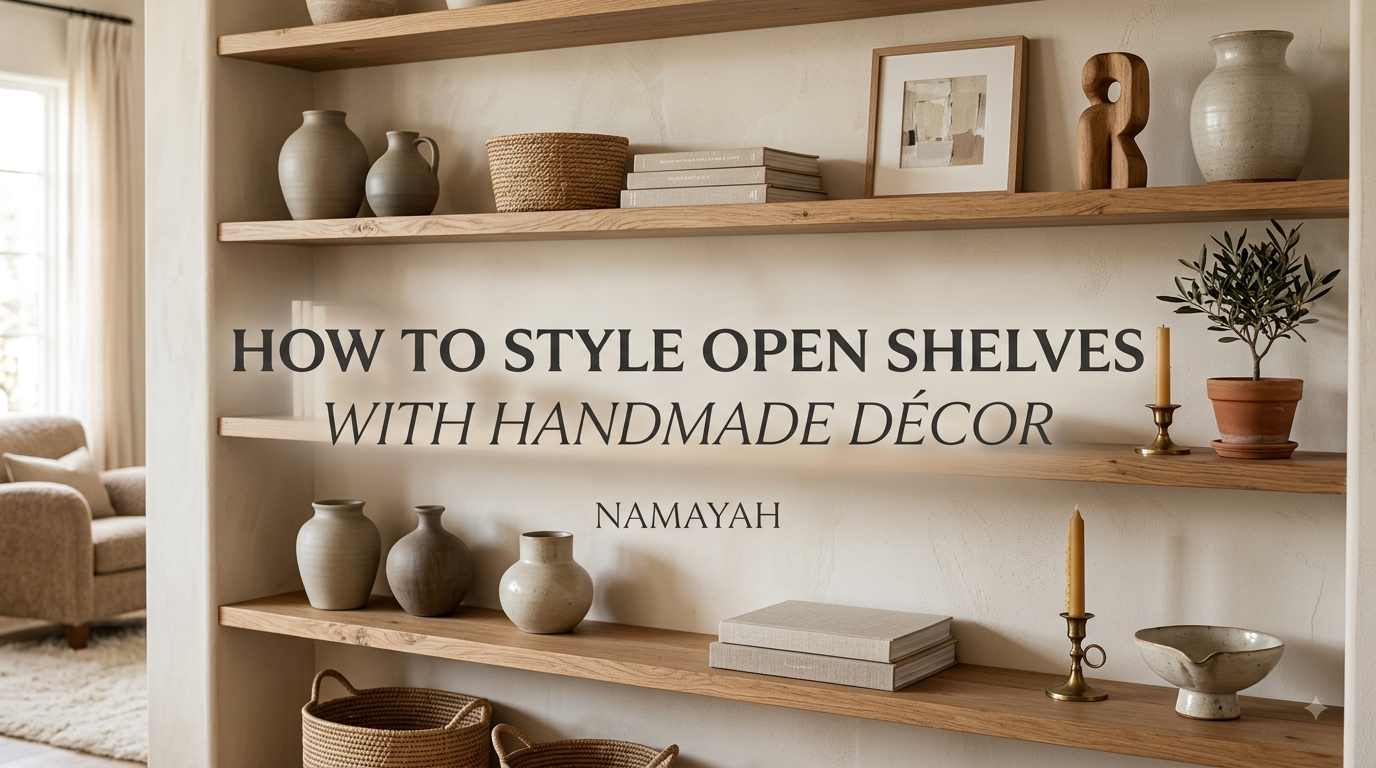
Open shelves can turn an ordinary wall into a personal display, but styling them well requires more than placing attractive objects side by side. The best approach is to combine handmade décor with functional pieces, vary heights and textures, repeat a few colors, and leave enough empty space for the arrangement to breathe.
Handmade décor is particularly useful because small variations in shape, texture, and finish give shelves a collected rather than mass-produced appearance. From hand-thrown pottery and woven baskets to carved objects and small artworks, these pieces can make open shelving feel warm, intentional, and uniquely yours.
Start with a Simple Styling Plan
Before placing anything on your shelves, decide what you want the overall display to communicate.
Do you want the shelves to feel:
- Warm and rustic?
- Minimal and contemporary?
- Colorful and eclectic?
- Natural and earthy?
- Traditional and collected?
Once you choose a direction, select pieces that support it.
A useful starting point is to divide your décor into three groups:
- Functional pieces: Mugs, bowls, storage baskets, jars, or serving pieces.
- Decorative pieces: Pottery, sculptures, vases, candleholders, or handmade ornaments.
- Personal pieces: Books, photographs, artwork, travel finds, or meaningful objects.
This prevents the shelves from becoming either purely decorative or overly practical.
Choose a Cohesive Color Palette
You do not need every item to match. In fact, handmade décor often looks more interesting when individual pieces have subtle differences.
Instead, create a loose color palette.
For example, a neutral shelf could combine:
- Cream ceramic pieces
- Warm wood
- Natural woven fibers
- Soft green plants
- A small amount of black or dark brown
For a more colorful arrangement, choose two or three dominant colors and repeat them throughout the shelves.
Repeating a color helps visually connect different handmade pieces, even when their shapes and materials are different.
Mix Handmade Pieces with Everyday Objects
One of the easiest ways to make open shelving feel natural is to avoid treating every object as precious décor.
Pair a handmade ceramic vase with everyday books. Place a woven basket beside useful kitchenware. Display a handcrafted bowl near glasses or mugs.
This combination creates a sense that the shelves are genuinely part of the home rather than a showroom display.
The key is to mix function, personality, and visual interest.
Create Layers and Vary Heights
A shelf can look flat when everything is positioned at the same height.
Create visual movement by combining tall, medium, and short objects.
For example:
- Place a tall handmade vase toward one side.
- Add a stack of books nearby.
- Put a small bowl or decorative object on top of the books.
- Lean a small artwork behind the arrangement.
- Leave some open space beside the grouping.
You can also place a smaller object slightly in front of a larger one. This creates depth without requiring a large number of accessories.
Avoid making every shelf equally dense. Empty space is part of the design.
Use Handmade Ceramics and Pottery
Handmade ceramics are particularly effective for open-shelf styling because their imperfect details add texture and character.
Consider displaying:
- Hand-thrown vases
- Ceramic bowls
- Handmade mugs
- Sculptural vessels
- Decorative plates
- Small pottery objects
Instead of grouping all your ceramics together, distribute them across the shelving unit.
A large ceramic piece can serve as an anchor, while smaller pieces can fill gaps elsewhere.
Add Baskets for Texture and Storage
Woven baskets are useful when you want open shelves to look attractive while hiding smaller items.
Use baskets for:
- Throws
- Small household items
- Kitchen accessories
- Extra linens
- Cables and chargers
- Magazines
Natural materials such as woven fibers can soften shelves made from painted wood, metal, or glass.
Choose baskets that complement the other textures in the room rather than introducing too many unrelated materials.
Bring in Books and Artwork
Books can make an arrangement feel lived-in while also providing useful height.
Try stacking a few books horizontally and placing a small handmade object on top. You can also stand books vertically and use a decorative piece as a visual bookend.
Artwork can be displayed differently from traditional wall art. Rather than hanging every piece, lean a small framed print or handmade artwork against the back of a shelf.
This creates a relaxed layered effect and makes it easier to change the arrangement later.
Add Plants and Natural Elements
Plants can provide a useful contrast to ceramic, wood, and woven materials.
Depending on the available light, consider incorporating:
- Small potted plants
- Trailing plants
- Dried branches
- Dried flowers
- Small natural wood objects
A trailing plant can soften the edge of a shelf, while a small upright plant can fill an empty corner.
Do not add greenery simply to fill every available space. One well-positioned plant can have more impact than several crowded pots.
Style Shelves by Room
Living Room
Living-room shelves are a good place to combine decorative and personal objects.
Try pairing handmade pottery with books, framed artwork, plants, and a few meaningful objects.
A balanced arrangement might include one larger decorative anchor, several smaller pieces, and a few open areas between groupings.
Kitchen
Kitchen shelving should usually prioritize function.
Display attractive everyday items such as handmade mugs, bowls, plates, jars, and serving pieces. Add a small plant, wooden utensil, or decorative ceramic to introduce warmth.
Keep frequently used objects within easy reach and reserve less practical pieces for higher shelves.
Bedroom
Bedroom shelves can benefit from a quieter palette and softer textures.
Combine handmade ceramics with books, small artwork, woven boxes, and subtle natural elements.
Avoid overcrowding the shelves, particularly in a small bedroom. A restrained arrangement can create a calmer visual atmosphere.
Common Open-Shelf Styling Mistakes
Even beautiful handmade objects can look messy when the overall arrangement lacks balance.
1. Filling Every Gap
Empty space helps individual objects stand out. Do not feel obligated to decorate every inch.
2. Using Too Many Similar Objects
A shelf filled entirely with vases, for example, can become visually repetitive. Mix shapes, materials, and functions.
3. Ignoring Scale
Tiny objects can disappear on a large shelf, while oversized pieces may overwhelm a narrow one. Use a mixture of sizes.
4. Making Every Shelf Look Identical
Repetition is useful, but perfect symmetry can make the display feel rigid. Vary the arrangements while repeating a few colors or materials.
5. Choosing Style Over Practicality
Especially in kitchens and entryways, shelves should remain useful. Keep everyday objects accessible instead of turning functional storage into a purely decorative display.
How to Refresh Your Shelves Seasonally
You do not need to redesign your shelves every season.
Instead, keep a few core pieces and rotate smaller accents.
For example, you might switch:
- Textiles
- Small artwork
- Seasonal ceramics
- Plants or dried botanicals
- Decorative objects
Store unused accessories together so you can easily rotate them when you want a different look.
This approach also gives handmade pieces more attention throughout the year instead of displaying everything at once.
FAQs
How many items should I put on an open shelf?
There is no universal number. Start with fewer pieces than you think you need and add only when an area feels visually empty. The size of the shelf and objects matters more than the item count.
How do you make open shelves look less cluttered?
Use a limited color palette, group objects instead of spreading them randomly, vary heights, and maintain intentional empty space. Baskets can also hide smaller items that would otherwise create visual clutter.
What handmade décor works best on open shelves?
Ceramics, pottery, woven baskets, carved wood pieces, handmade artwork, textiles, and small sculptures can all work well. Choose pieces that complement the room’s existing materials and colors.
Should open shelves be symmetrical?
Not necessarily. Balanced arrangements often look more natural than perfectly symmetrical ones. You can create balance through color, height, texture, and visual weight.
How do I style open shelves without buying lots of décor?
Start with objects you already own. Books, dishes, plants, baskets, photographs, and meaningful souvenirs can all become part of the arrangement. Rearranging existing pieces can dramatically change the appearance of a shelf.
How can I combine modern shelves with rustic handmade décor?
Use contrast intentionally. Clean-lined shelving can provide a simple backdrop for handmade ceramics, woven pieces, natural wood, and textured textiles. Repeat one or two materials elsewhere in the room to connect the styles.
Should every shelf have handmade décor?
No. Handmade pieces are most effective when they are mixed with books, functional objects, plants, and personal items. Leaving some shelves simpler can also make special pieces more noticeable.
How often should I restyle open shelves?
Restyle them whenever the arrangement no longer feels functional or visually balanced. Small seasonal changes can be enough; a complete redesign is rarely necessary.
Conclusion
Styling open shelves with handmade décor is less about following a strict formula and more about creating balance. Combine handmade pieces with useful objects, vary heights and textures, repeat complementary colors, and leave enough negative space to keep the display from feeling crowded.
Most importantly, let the shelves reflect the people who live in the space. A handmade bowl collected on a trip, a favorite book, a woven basket, or a piece of pottery made by an independent artist can give open shelving a sense of character that perfectly matched accessories often cannot.