
How to Style a Luxury Dining Table with Handmade Accessories
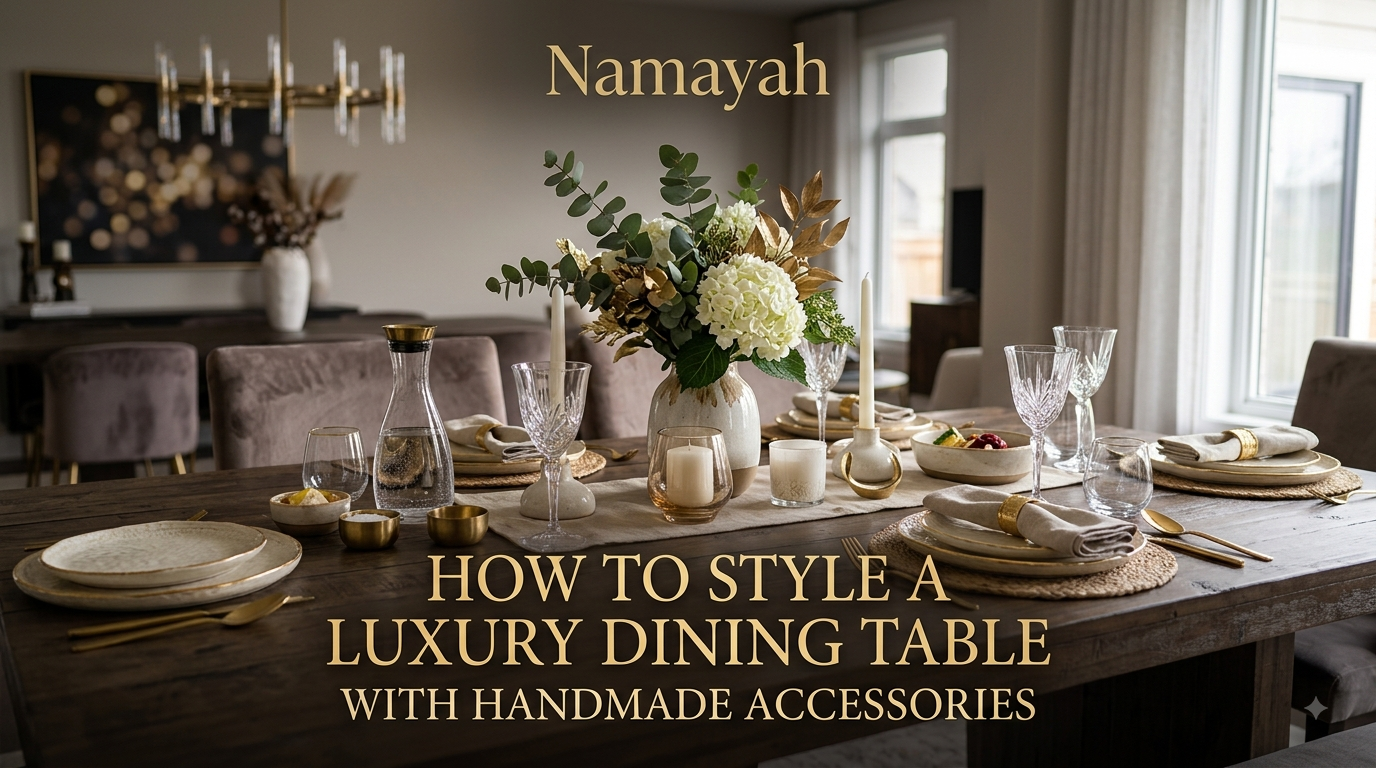
A luxury dining table does not need to look overly formal or filled with expensive décor. The most elegant tables often combine a refined foundation with a few distinctive handmade accessories. Artisanal ceramics, woven linens, hand-blown glassware, natural materials, candles, and carefully chosen centerpieces can give your dining room warmth, character, and a sophisticated finish.
The key is intentional layering. Instead of matching every item perfectly, combine complementary textures, shapes, and tones while leaving enough visual space for the table to breathe.
What Makes a Dining Table Look Luxurious?
Luxury dining-table styling is less about quantity and more about quality, proportion, and cohesion.
A sophisticated tablescape typically combines:
- A well-proportioned dining table
- High-quality or artisanal tableware
- Natural or tactile textiles
- Handmade decorative objects
- Carefully selected glassware
- A restrained color palette
- Layered lighting
- A simple but striking centerpiece
Handmade accessories are particularly useful because small variations in shape, texture, and finish can make a setting feel personal rather than mass-produced.
Start with the Right Dining Table Foundation
Before adding accessories, consider the dining table itself. Its material, color, shape, and proportions should guide the rest of the styling.
A solid wood table can provide a warm foundation for handmade ceramics and woven textiles. A stone or marble table may work beautifully with understated linen, sculptural objects, and delicate glassware. A darker table can create a dramatic backdrop for lighter tableware and metallic accents.
Avoid covering a beautiful tabletop completely. If the surface has distinctive grain, veining, or craftsmanship, allow some of it to remain visible.
The goal is to make the accessories enhance the table rather than hide it.
Choose Handmade Tableware with Character
Tableware is one of the easiest ways to introduce handmade craftsmanship into a luxury tablescape.
Rather than choosing pieces that are perfectly identical, consider subtle variations in glaze, shape, or texture. These details can create depth while maintaining an elegant appearance.
Handmade Plates and Bowls
Handmade ceramic plates and bowls can become both functional tableware and decorative elements.
Look for pieces with:
- Subtle glaze variations
- Organic or gently irregular edges
- Matte or softly textured finishes
- Neutral, earthy, or sophisticated tones
- Shapes that complement your dining table
For a polished result, keep the overall palette consistent. For example, different ceramic pieces can still work together when they share similar undertones.
You do not need every plate to be handmade. A few artisanal pieces can provide a focal point while simpler tableware keeps the setting balanced.
Artisanal Glassware
Glassware adds another layer of texture and light.
Hand-blown or artisan-inspired glasses can introduce delicate variations that catch candlelight and create visual interest. Clear glass keeps the table light and contemporary, while subtly tinted or textured glass can create a more distinctive look.
When using statement glassware, avoid competing with it through too many other decorative objects.
Layer Luxury with Table Linens
Textiles soften the hard surfaces of a dining table and make the setting feel more inviting.
Start with one main textile element, such as:
- A linen tablecloth
- A table runner
- Individual placemats
- Cloth napkins
You can layer two or three elements, but they should serve different purposes.
For example, a natural linen runner can define the center of the table while individual fabric napkins add softness to each place setting.
For a luxury appearance, focus on texture rather than excessive decoration. Crisp linen, woven cotton, or subtly textured fabric can look more sophisticated than heavily embellished textiles.
Create a Handmade Centerpiece
The centerpiece should establish a visual focal point without preventing guests from seeing across the table.
Instead of using one oversized decoration, consider arranging several smaller handmade objects.
A refined centerpiece could include:
- A handmade ceramic vessel
- Seasonal branches or flowers
- Two or three candles
- A small sculptural object
- A low decorative bowl
Natural asymmetry can make the arrangement feel relaxed and collected.
If your dining table is long, repeat a visual element along its length rather than placing everything in one central cluster.
Use Natural Materials
Natural materials can prevent a luxury dining room from feeling too polished or impersonal.
Consider incorporating:
- Wood
- Linen
- Stone
- Ceramic
- Glass
- Woven fibers
- Dried or fresh botanical elements
- Natural metals
The most effective approach is to combine contrasting textures. Smooth glass can sit beside rough ceramic. Soft linen can balance polished stone. A wooden serving board can add warmth to a more formal setting.
This contrast creates visual richness without requiring a large number of accessories.
Add Candlelight and Ambient Lighting
Lighting can completely change the mood of a dining table.
Candles are particularly effective because they add warmth and movement to the setting. Handmade ceramic candleholders, sculptural holders, or simple glass vessels can complement an artisanal tablescape.
For a balanced arrangement, distribute candles across the table instead of concentrating them in a single area.
Keep candle heights varied but controlled. The arrangement should create atmosphere without becoming a barrier between diners.
If your dining room already has a statement pendant or chandelier, let it remain part of the composition. The table accessories should complement the room’s existing lighting rather than compete with it.
Mix Textures Without Creating Clutter
One of the most important principles of luxury styling is restraint.
It can be tempting to combine handmade ceramics, decorative bowls, flowers, candles, sculptures, serving pieces, and textiles all at once. The result, however, can quickly become visually crowded.
Instead, choose a few contrasting textures.
For example:
Ceramic + linen + glass + wood
This combination offers enough variation to feel layered while maintaining a cohesive appearance.
Use repetition to create unity. If you introduce a particular ceramic finish, repeat a related tone or texture elsewhere on the table.
Choose a Refined Color Palette
A restrained palette can make handmade accessories look more intentional.
Popular approaches include:
- Warm white, beige, and natural wood
- Cream, taupe, and soft brown
- Charcoal, ivory, and natural stone
- Deep green, cream, and wood
- Soft gray, white, and muted metallics
You can also use one stronger accent color.
For instance, a neutral table can be elevated with deep green glassware or rich-colored napkins. The accent should appear in several places so it feels deliberate rather than random.
Style Each Place Setting
Once the center of the table is complete, turn your attention to individual place settings.
A simple luxury place setting might include:
- A placemat or charger
- A dinner plate
- A smaller plate or bowl
- A folded cloth napkin
- Appropriate cutlery
- A drinking glass
- A small handmade detail
That final detail could be a ceramic name holder, a small botanical sprig, or a handmade napkin ring.
Keep the arrangement consistent from one place to the next. Small variations in handmade accessories are welcome, but the overall structure should remain organized.
How to Avoid Over-Decorating
A luxury table should feel considered, not crowded.
Avoid these common styling mistakes:
- Using too many colors
- Mixing unrelated decorative styles
- Blocking the view between guests
- Covering the entire tabletop
- Combining too many statement pieces
- Using oversized centerpieces
- Matching every accessory too closely
- Ignoring the proportions of the dining table
A useful rule is to remove one item after completing the table. If the arrangement still feels complete, the edit may have improved it.
Luxury Dining Table Styling Ideas
1. Warm Organic Luxury
Pair a natural wood table with cream ceramics, linen napkins, clear glassware, and handmade wooden or ceramic accessories.
This approach works particularly well when you want the dining room to feel elegant but relaxed.
2. Contemporary Artisanal
Use a simple table as the foundation for sculptural ceramics, minimalist glassware, textured linens, and a restrained centerpiece.
Keep the palette neutral and let unusual shapes provide the visual interest.
3. Earthy and Rustic Luxury
Combine natural wood, handmade stoneware, woven textiles, seasonal foliage, and warm candlelight.
The result can feel sophisticated without appearing overly formal.
4. Dramatic Evening Table
For evening entertaining, introduce darker ceramics, elegant glassware, candles, and deeper textile tones.
Keep the centerpiece low and let the lighting create the drama.
How to Style Your Table for Different Occasions
Your basic tablescape does not need to change completely for every occasion.
For everyday dining, reduce the number of decorative elements and prioritize practicality.
For a dinner party, introduce layered linens, statement glassware, candles, and a more deliberate centerpiece.
For a holiday gathering, add seasonal foliage or handmade decorative objects while maintaining the existing color palette.
For a formal dinner, focus on symmetry, precise place settings, refined textiles, and restrained decoration.
The most successful tablescapes retain a consistent design language while adapting small details to the occasion.
FAQs About Luxury Dining Table Styling
How do I make my dining table look luxurious?
Use a restrained color palette, quality tableware, tactile linens, thoughtful lighting, and a few distinctive handmade accessories. Focus on proportion and layering rather than filling every available space.
Are handmade accessories suitable for a formal dining table?
Yes. Handmade accessories can work beautifully in formal settings when their colors, proportions, and finishes complement the rest of the table.
What handmade accessories work best on a dining table?
Ceramic vessels, handmade plates, candleholders, bowls, napkin rings, glassware, serving boards, and small sculptural objects are versatile choices.
Should all dining-table accessories match?
No. A coordinated palette is generally more important than exact matching. Related materials, colors, and shapes can create a cohesive result while allowing individual handmade pieces to stand out.
How many accessories should I put on a luxury dining table?
There is no fixed number. Start with the essential tableware, then add a centerpiece and a few complementary decorative elements. Leave enough open space for comfortable dining.
What colors work best for luxury table styling?
Neutral shades such as ivory, cream, beige, taupe, gray, and natural wood are versatile choices. Deeper accent colors can add contrast when used selectively.
How can I style a small dining table?
Keep the centerpiece compact and prioritize vertical space carefully. Use fewer accessories, multifunctional serving pieces, and visually light glassware to avoid making the table feel crowded.
How do I combine different handmade pieces?
Choose a connecting element such as color, material, shape, or finish. For example, ceramics with different forms can work together when they share similar neutral tones.
Conclusion
Styling a luxury dining table with handmade accessories is ultimately about creating balance between craftsmanship, functionality, and atmosphere. Start with the dining table as your foundation, then layer in artisanal tableware, tactile linens, natural materials, carefully arranged centerpieces, and warm lighting.
You do not need dozens of decorative pieces to create an impressive setting. A handful of thoughtfully selected handmade accessories can give the table individuality while preserving a sense of elegance.
The best tablescape is one that feels beautiful enough for a special occasion but welcoming enough for people to actually gather around it.