
How to Create an Elegant Indian-Inspired Interior
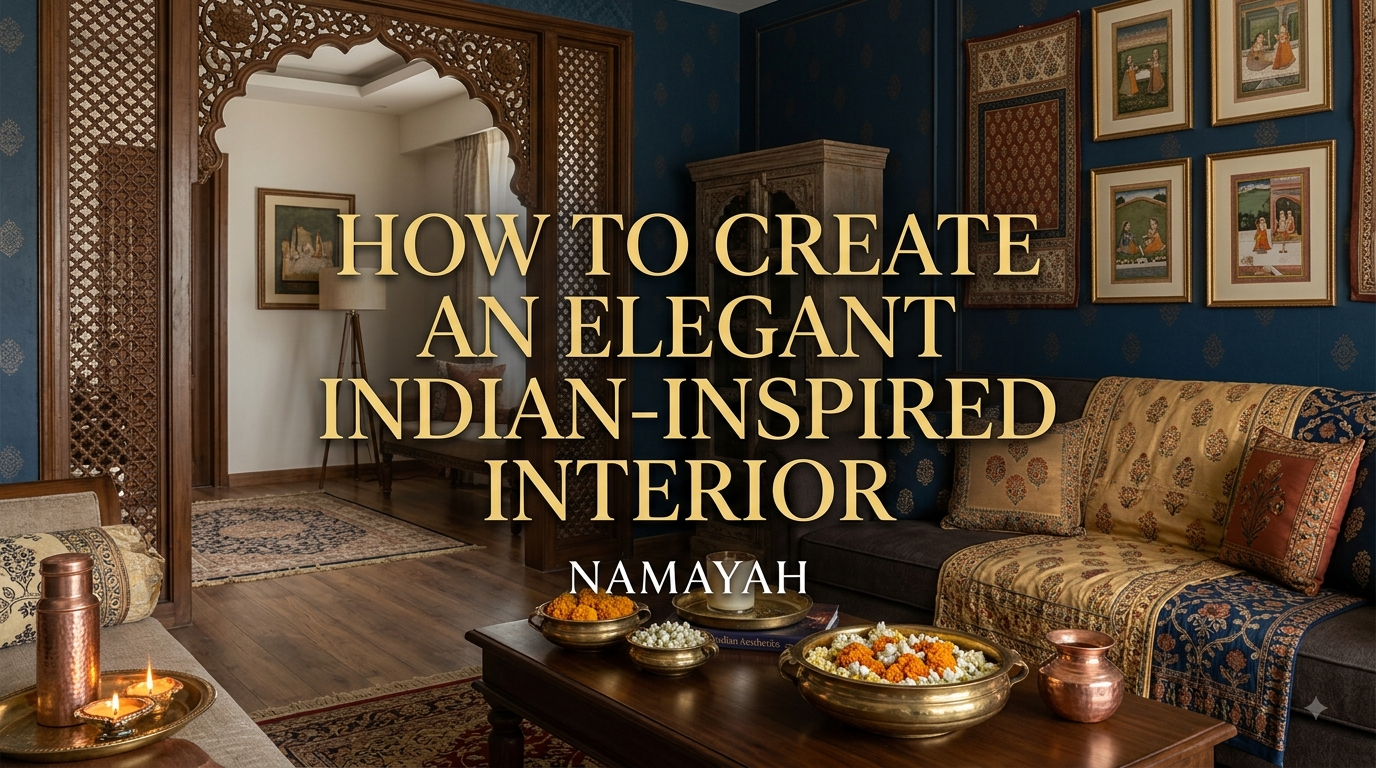
An elegant Indian-inspired interior combines Indian craftsmanship, warm colours, natural materials, rich textiles, and meaningful decorative details with contemporary simplicity. Instead of filling every room with ornate furniture and bright patterns, choose a restrained palette, invest in a few handcrafted statement pieces, layer textures, and leave enough visual space for each element to stand out.
Indian-inspired design is not one fixed style. It can draw from Rajasthani, South Indian, Bengali, Gujarati, Kashmiri, Mughal, colonial, or contemporary Indian influences. The most successful interiors interpret these traditions rather than attempting to reproduce an entire historical setting.
Modern Indian interiors increasingly balance heritage with simplicity, functionality, and personal expression. Architectural Digest India describes Indian modernism as a fusion of traditional influences, contemporary design, art, colour, and indigenous materials.
What Defines an Elegant Indian-Inspired Interior?
The key to elegance is curation.
Traditional Indian interiors are often associated with carved wood, brass, colourful textiles, intricate patterns, stone, and decorative craftsmanship. These elements can create a luxurious atmosphere, but using too many of them at once can make a room feel crowded.
A more sophisticated approach is to establish a calm foundation and introduce Indian character through selected details.
Consider these five principles:
- Use a warm, controlled colour palette.
- Prioritize natural and tactile materials.
- Choose a few high-quality handcrafted pieces.
- Layer textiles instead of covering every surface with patterns.
- Combine traditional details with contemporary furniture and lighting.
This approach allows cultural elements to become focal points rather than visual clutter.
Indian handicrafts can also work effectively in contemporary and minimalist interiors because they introduce texture, colour, and cultural character without requiring an entirely traditional room.
Start With a Refined Colour Palette
Colour is one of the easiest ways to establish an Indian-inspired atmosphere.
Instead of using several strong colours throughout the room, choose a neutral foundation with carefully selected Indian-inspired accents.
Warm neutrals
Use shades such as:
- Ivory
- Cream
- Sand
- Beige
- Warm white
- Taupe
- Natural wood brown
These colours create a quiet background for richer accents.
Earthy Indian tones
For greater depth, consider:
- Terracotta
- Ochre
- Rust
- Clay
- Olive
- Saffron
- Deep brown
Jewel tones
Use stronger colours sparingly:
- Indigo
- Emerald
- Deep teal
- Maroon
- Plum
- Mustard
A practical formula is to keep large surfaces relatively restrained and introduce stronger colours through cushions, artwork, rugs, curtains, ceramics, or a single accent chair.
The goal is not to eliminate colour. It is to give colour room to breathe.
Choose Natural and Handcrafted Materials
Materials can communicate Indian character without relying on obvious decorative motifs.
Wood
Wood is particularly effective for an Indian-inspired interior. Consider solid-wood dining tables, carved consoles, wooden stools, cabinets, beds, or a traditional swing.
Choose one prominent piece rather than filling the room with matching carved furniture.
Brass
Brass can introduce warmth and an unmistakably Indian visual reference through:
- Lamps
- Diyas
- Bowls
- Urli vessels
- Hardware
- Sculptural objects
- Candle holders
Brass works particularly well against neutral walls and natural wood.
Stone and terracotta
Natural stone, terracotta pottery, and stone accessories can add an earthy quality. Depending on the architecture, materials such as marble, sandstone, Kota stone, or terracotta can complement an Indian-inspired palette.
Woven materials
Cane, rattan, jute, cotton, and other woven materials can soften a room dominated by wood and hard surfaces.
The broader principle is simple: let materials look and feel authentic rather than trying to imitate them with decorative finishes.
Invest in Statement Furniture
Elegant Indian-inspired design does not require every piece of furniture to be traditional.
In fact, pairing one heritage-inspired piece with simpler contemporary furniture often produces a more sophisticated result.
For example, you could combine:
- A modern neutral sofa with a carved wooden coffee table
- A contemporary dining table with traditional wooden chairs
- A minimalist bed with a handcrafted bench
- A clean-lined console with an antique-style mirror
- A modern armchair with a block-print cushion
Traditional Indian furniture often incorporates carving, curved forms, inlay, or detailed craftsmanship. Using such furniture selectively can give a room personality without overwhelming it.
Choose one hero piece
A statement piece could be:
- A carved wooden swing
- A jharokha-inspired mirror
- A handcrafted chest
- An antique cabinet
- A carved headboard
- A traditional low seating arrangement
Build the room around this item rather than competing with it.
Layer Indian Textiles and Patterns
Textiles are one of the easiest ways to introduce Indian influence because they can be changed without major renovation.
Look for textiles inspired by:
- Block printing
- Ikat
- Kantha
- Handwoven cotton
- Silk
- Brocade
- Embroidery
- Dhurries
The trick is to control repetition.
If you choose a patterned rug, use quieter upholstery. If the curtains have a strong print, keep cushions more restrained.
You can also combine patterns through scale. A large geometric textile can work with a smaller floral or traditional motif when both share one or two colours.
Textiles also provide practical warmth and softness, helping balance the visual weight of wood, stone, and metal.
Add Brass and Metal Accents Carefully
Brass is an effective accent because it catches and reflects warm light.
However, elegance comes from repetition with restraint.
Instead of placing brass objects everywhere, create a small visual connection:
brass lamp + brass tray + one decorative object
or
brass hardware + wall light + small sculptural accent
This creates cohesion without making the room feel like a display of accessories.
Copper and aged metal can also work well when they complement the overall material palette.
Use Lighting to Create Warmth
Lighting can transform an Indian-inspired interior, particularly when the room contains wood, textiles, brass, and earthy colours.
Use several layers rather than relying on a single ceiling fixture.
Ambient lighting
This provides general illumination through ceiling fixtures, recessed lights, or larger pendants.
Task lighting
Use focused light for reading, dining, working, or other activities.
Accent lighting
Wall lights, table lamps, floor lamps, and concealed lighting can highlight artwork, architectural features, or decorative objects.
Warm lighting generally complements the rich materials associated with Indian-inspired interiors.
Traditional lamps and diyas can also serve as decorative accents, while contemporary fixtures keep the room connected to modern design.
Bring in Traditional Indian Art and Craft
Art is often more effective than excessive decoration.
Choose pieces that have personal meaning or represent a craft tradition you genuinely appreciate.
Options include:
- Indian paintings
- Textile art
- Handcrafted wall panels
- Ceramic pieces
- Metal sculpture
- Traditional prints
- Contemporary Indian artwork
- Handwoven baskets
- Carved wooden objects
Avoid turning every wall into a gallery of unrelated motifs.
One large artwork above a console can have more impact than ten small decorative pieces scattered throughout the room.
Create an Elegant Indian-Inspired Living Room
The living room is often the best place to establish the style.
Start with a comfortable contemporary sofa in cream, beige, taupe, or another warm neutral.
Then add Indian character through:
- A carved wooden coffee table
- Block-print or ikat cushions
- A dhurrie or textured rug
- A brass floor lamp
- Handcrafted ceramics
- One large artwork
- Indoor plants
- A traditional swing, where space allows
Keep the main furniture arrangement functional for conversation.
Contemporary Indian living spaces are increasingly moving away from visual excess toward smaller, purposeful furniture, multifunctional pieces, and more curated decoration.
That makes restraint an important part of a contemporary interpretation of Indian design.
Design a Sophisticated Indian-Inspired Bedroom
Bedrooms benefit from a quieter interpretation of the style.
Choose a warm neutral wall colour and introduce character through the bed, textiles, lighting, and artwork.
A refined combination could include:
- Upholstered or wooden bed
- Cotton or linen bedding
- Two or three patterned cushions
- A textured throw
- Wooden bedside tables
- Brass or ceramic lamps
- A handcrafted bench
- Subtle Indian artwork
Avoid excessive pattern in the bedroom. The space should feel restful rather than theatrical.
If you want a stronger statement, use a carved wooden headboard or a textile feature behind the bed instead of decorating every wall.
Create a Modern Indian-Inspired Dining Area
The dining room offers an opportunity to introduce craftsmanship through furniture and tableware.
A solid-wood dining table can become the centrepiece. Pair it with relatively simple chairs and add character through:
- Brass lighting
- Handcrafted ceramics
- Indian table linens
- A large artwork
- Wooden serving pieces
- Terracotta vessels
For a more traditional influence, consider a carved sideboard or a handcrafted cabinet for storage.
The result should feel useful as well as decorative. Indian-inspired design works particularly well when beautiful objects remain connected to everyday life.
Balance Tradition With Contemporary Design
The most important design decision is deciding how much tradition your room actually needs.
A common mistake is trying to combine every recognizable Indian feature:
carved furniture + colourful walls + patterned rugs + brass everywhere + ornate mirrors + multiple statues + heavy curtains
Individually, these elements can be beautiful. Together, they may compete for attention.
Instead, use a 70/30 approach:
- Approximately 70% calm contemporary foundation
- Approximately 30% Indian-inspired character
The ratio does not need to be exact. The principle is simply to create contrast.
A clean modern sofa can make a carved table look more special. A plain wall can make a traditional artwork more noticeable. Contemporary lighting can make an antique object feel intentional rather than dated.
This old-and-new combination is central to Indian modernism.
Common Mistakes to Avoid
1. Using too many colours
Indian design offers an enormous colour vocabulary, but you do not need to use all of it.
Choose a base palette and two or three accent colours.
2. Making everything ornate
If every item is heavily carved or decorated, nothing becomes a focal point.
Mix detailed pieces with simple forms.
3. Buying decorative items without a plan
A collection of unrelated accessories can quickly make a room look cluttered.
Choose objects based on colour, material, scale, and personal meaning.
4. Ignoring functionality
Beautiful furniture still needs to work for everyday life.
Think about storage, circulation, cleaning, comfort, and durability before choosing decorative pieces.
5. Creating a themed room
An Indian-inspired interior should feel like a home, not a stage set.
Use cultural references naturally rather than attempting to reproduce a palace, haveli, or specific historical period.
6. Neglecting lighting
Even a beautifully designed room can feel flat or overly dark with poor lighting.
Use multiple light sources and illuminate the features you want people to notice.
A Simple Step-by-Step Design Plan
If you are starting from an empty room, follow this sequence.
Step 1: Select your inspiration
Choose a regional or broader Indian influence that appeals to you.
You might prefer Rajasthani colour, South Indian woodwork, Bengali textiles, contemporary Indian art, or a more neutral modern interpretation.
Step 2: Establish the base
Select your wall colour, flooring, major furniture, and large textiles.
Keep these relatively calm.
Step 3: Choose one statement piece
Add a carved console, traditional mirror, wooden swing, handcrafted cabinet, or another meaningful focal point.
Step 4: Introduce textiles
Add cushions, rugs, curtains, throws, or table linens with Indian-inspired patterns and textures.
Step 5: Add metal accents
Introduce brass, copper, or another complementary metal through a small number of coordinated objects.
Step 6: Layer the lighting
Combine overhead, task, and accent lighting.
Step 7: Add art and personal objects
Finish the room with artwork, books, plants, ceramics, photographs, and objects that tell your story.
Step 8: Remove something
This final step is often overlooked.
Stand back and remove anything that feels unnecessary. Elegant design depends as much on what you leave out as what you add.
FAQs About Indian-Inspired Interiors
What is an Indian-inspired interior?
An Indian-inspired interior incorporates elements associated with Indian craftsmanship, materials, colours, textiles, art, and decorative traditions. A contemporary interpretation combines these features with modern furniture, practical layouts, and restrained styling.
How can I make Indian decor look modern?
Use traditional elements selectively. Pair carved wood, brass, Indian textiles, or traditional artwork with contemporary furniture, neutral walls, clean lines, and modern lighting.
What colours are best for an Indian-inspired home?
Warm neutrals, terracotta, ochre, mustard, rust, deep blue, emerald, maroon, and other earthy or jewel tones can work well. Use stronger colours primarily as accents if you want an understated look.
What furniture works best in Indian-inspired interiors?
Solid-wood furniture, handcrafted consoles, carved cabinets, traditional benches, swings, low seating, and contemporary upholstered pieces can all work. The most elegant approach usually combines traditional and modern furniture.
How can I decorate a small apartment with Indian style?
Start with a neutral foundation and use a few high-impact elements, such as a patterned rug, handcrafted mirror, brass lamp, wooden console, or colourful cushions. Avoid oversized furniture and excessive accessories.
Is brass suitable for modern interiors?
Yes. Brass can bridge traditional and contemporary design particularly well. Use it through lighting, hardware, trays, lamps, or a few decorative objects rather than covering the room in metallic accents.
How do I use Indian patterns without making a room look busy?
Choose one dominant pattern and support it with smaller or quieter patterns. Keep the walls and major furniture relatively simple so patterned textiles have visual space.
Can Indian-inspired interiors be minimalist?
Absolutely. Minimalist Indian interiors can focus on natural materials, handcrafted objects, warm neutrals, traditional art, and one or two strong cultural references rather than abundant decoration.
Conclusion
Creating an elegant Indian-inspired interior is less about reproducing traditional decor and more about interpreting Indian craftsmanship for contemporary living.
Start with a calm foundation, then introduce warmth through natural wood, brass, textiles, artwork, handcrafted objects, and carefully selected colour. Give statement pieces enough space to stand out, balance ornate details with simple furniture, and prioritize comfort and functionality.
The result should feel unmistakably Indian without feeling overly themed—a home where heritage, craftsmanship, modern simplicity, and personal taste work together.