
Eco-Friendly Kitchen Accessories Worth Buying
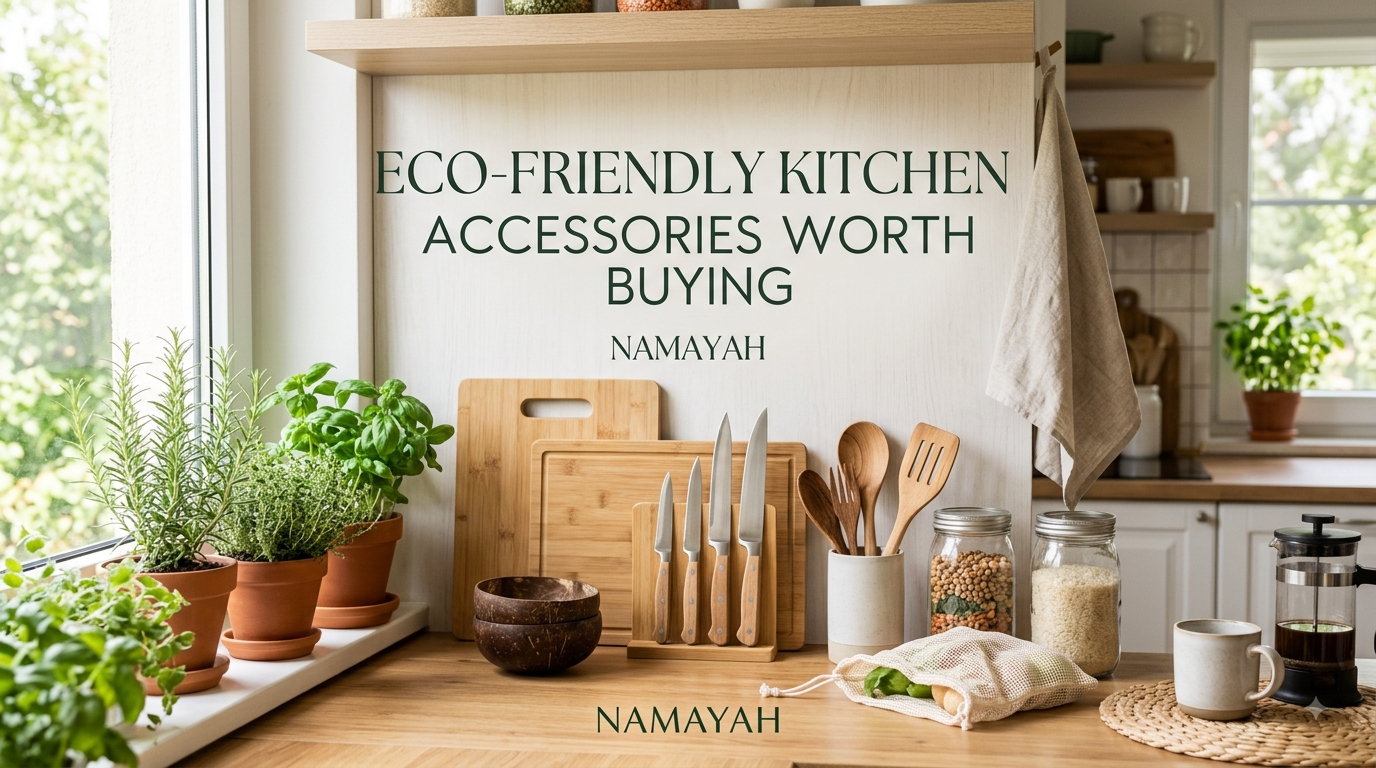
Creating a more sustainable kitchen does not mean replacing everything you own. In many cases, the smarter approach is to buy fewer, better-made accessories that can be reused for a long time. Eco-friendly kitchen accessories worth buying include durable food containers, reusable storage bags, washable kitchen cloths, wooden utensils, stainless steel tools, compost caddies, and reusable food covers.
The best choices depend on how often you will use them, how long they are likely to last, how easy they are to clean, and what happens when they eventually reach the end of their useful life. A product made from a renewable material is not automatically the most sustainable option, so it is important to consider the entire use cycle.
What Makes a Kitchen Accessory Eco-Friendly?
An eco-friendly kitchen accessory should offer a practical environmental advantage without creating unnecessary waste elsewhere.
Look for products that:
- Can be used repeatedly rather than discarded after one use
- Are durable enough to justify their material and manufacturing footprint
- Replace frequently purchased disposable products
- Are easy to maintain and clean
- Use clearly identified materials
- Have realistic recycling, composting, repair, or disposal options
- Do not rely only on vague claims such as “green” or “natural”
The U.S. Federal Trade Commission advises consumers to look closely at environmental marketing claims. Broad claims such as “eco-friendly” can be difficult to substantiate, while specific claims should explain the actual environmental benefit.
That makes durability and repeated use two of the most useful starting points when comparing kitchen accessories.
1. Reusable Food Storage Containers
Reusable food containers are among the easiest sustainable kitchen upgrades because they can serve several purposes: storing leftovers, preparing meals, organizing ingredients, and transporting food.
Good options include:
- Glass containers with durable lids
- Stainless steel food containers
- Long-lasting reusable plastic containers when replacing them is unnecessary
- Stackable containers that make efficient use of refrigerator and cupboard space
Glass is particularly useful when you want a container that can move between food storage and serving. Stainless steel is another durable choice, especially for packed lunches and dry foods.
The key is not to replace perfectly usable containers simply because another material is marketed as greener. Using what you already own is often the better first step.
2. Silicone Reusable Storage Bags
Reusable silicone bags can replace some disposable food-storage bags for lunches, snacks, leftovers, and freezer storage.
They are especially useful when you need a flexible container that takes up less space than a rigid box. Look for thick, food-grade silicone and a closure that is easy to operate and clean.
Before buying a large set, purchase one or two and test whether you will actually use them. A reusable product that stays unused in a cupboard provides little practical benefit.
3. Beeswax or Plant-Wax Food Wraps
Reusable waxed food wraps are designed as an alternative to some single-use food wraps. They can be useful for covering certain foods, wrapping snacks, or covering bowls.
Beeswax wraps are not ideal for every food-storage situation. They generally are not a replacement for airtight containers when you need to store liquids or foods requiring a more secure seal.
If you prefer a plant-based option, some manufacturers offer wraps using plant-derived waxes instead of beeswax.
The important consideration is whether the wrap fits your routine. If you regularly pack sandwiches or cover bread and produce, a reusable wrap may be worthwhile. If you mainly store liquid leftovers, reusable containers may be a better investment.
4. Wooden or Bamboo Cooking Utensils
Wooden and bamboo spoons, spatulas, turners, and serving utensils can be durable additions to a kitchen.
They are particularly useful for cookware where you want a utensil that is less likely to scratch the cooking surface than a hard metal edge.
When shopping, pay attention to:
- Material construction
- Finish and food-contact suitability
- Handle strength
- Ease of cleaning
- Whether replacement parts are available
- Expected lifespan
Do not assume that every bamboo product is automatically sustainable. Material sourcing, manufacturing, adhesives, finishes, packaging, and product longevity all matter.
5. Durable Wooden Cutting Boards
A well-made wooden cutting board can become a long-term kitchen tool rather than a frequently replaced accessory.
Choose a board that is appropriately sized for your preparation habits and can be maintained according to the manufacturer’s instructions. A durable board that remains useful for years may make more sense than repeatedly replacing inexpensive boards.
Wood is also a visually appealing choice for many kitchens, which can make it easier to keep one good board rather than accumulating multiple inexpensive alternatives.
For food safety, always follow appropriate cleaning and care instructions and use separate boards when recommended for different food-preparation tasks.
6. Reusable Kitchen Cloths
Washable kitchen cloths can replace some disposable paper towels and cleaning wipes.
Consider buying a small collection of durable cloths rather than a large pack. Keep separate cloths for different cleaning jobs if that makes your kitchen routine easier to manage.
A reusable cloth only provides a practical waste-reduction advantage if it is actually washed and reused. Choose fabric that dries reasonably quickly and is easy to clean.
This is one of the lowest-cost changes for people who want to reduce their dependence on disposable kitchen products.
7. Compost Bin or Food-Scrap Caddy
A countertop compost caddy can make collecting food scraps more convenient.
A caddy is especially useful if you already have access to:
- A home compost system
- A community composting program
- Municipal food-scrap collection
- Another appropriate organic-waste collection service
The U.S. Environmental Protection Agency identifies composting as a way to recycle organic materials and notes that food waste sent to landfills has environmental consequences.
The accessory itself is only part of the solution. Before purchasing one, check what your local composting system accepts and how frequently you can empty the container.
8. Stainless Steel Kitchen Accessories
Stainless steel is a useful material for kitchen accessories because many stainless steel tools are designed for repeated use.
Potential choices include:
- Measuring spoons
- Measuring cups
- Strainers
- Peelers
- Tongs
- Mixing bowls
- Reusable lunch containers
- Storage canisters
When comparing products, prioritize construction and usability rather than simply choosing the item with the strongest sustainability marketing.
A sturdy tool that remains functional for years is generally more useful than a cheaply made alternative that needs frequent replacement.
9. Reusable Produce and Shopping Bags
Reusable produce bags can reduce the need for disposable bags during grocery shopping.
Choose lightweight bags that can be washed or cleaned easily. Mesh versions can be convenient for fruits and vegetables, while stronger reusable bags are useful for transporting groceries.
The best bag is usually the one you remember to carry and use repeatedly.
Keep a few in a location that makes them easy to grab before shopping rather than buying many more bags than you need.
10. Refillable Dishwashing Accessories
Dishwashing products can generate recurring packaging waste, so refillable systems can be worth considering.
Examples include:
- Refillable soap dispensers
- Concentrated cleaning products
- Solid dishwashing products
- Reusable dish brushes with replaceable heads
- Durable scrub brushes
Before buying, check whether refills are genuinely available and whether the system fits your local purchasing options.
A refill system is most useful when you can conveniently continue using it instead of returning to disposable bottles.
11. Silicone Bowl Covers and Stretch Lids
Reusable bowl covers can be convenient when you regularly have half-used ingredients, leftovers, or open bowls that need covering.
They can be particularly useful when they fit several bowl sizes and are easy to wash.
Compared with single-use food covers, their main appeal is repeated use. However, do not buy a collection of sizes that you rarely need. Start with the sizes that match your everyday kitchenware.
12. Reusable Water Bottles and Coffee Cups
Reusable drinkware is another practical category because these products can be used repeatedly outside the kitchen as well.
A good reusable bottle or cup should be:
- Comfortable to carry
- Easy to clean
- Durable
- Appropriate for your daily routine
- Large enough for your typical needs without being unnecessarily bulky
Stainless steel and glass are common options, while some reusable products use other durable materials.
As with other kitchen accessories, replacing a perfectly functional bottle simply to purchase a newer “eco” version is not necessarily the most sustainable choice.
How to Choose Eco-Friendly Kitchen Accessories
Instead of asking only, “Is this product eco-friendly?”, ask five more useful questions:
1. Will I use it frequently?
A product used several times a week has a better chance of becoming a meaningful replacement for disposable alternatives.
2. Will it last?
Look for strong construction, replaceable components where practical, and materials suited to the job.
3. What does it replace?
A reusable food container that replaces frequent disposable containers has a clearer role than an accessory that simply adds another item to your kitchen.
4. How difficult is it to maintain?
If an accessory is difficult to clean, dry, store, or repair, you may stop using it.
5. What happens at the end of its life?
Check whether the manufacturer provides disposal instructions and whether the material can actually be recycled or composted through an available system.
What to Avoid When Shopping
Be cautious of products marketed with vague environmental language.
Terms such as “eco-friendly,” “green,” “natural,” or “biodegradable” do not tell you enough by themselves. The FTC recommends that environmental claims be specific and supported rather than relying on broad, unqualified statements.
Be especially careful with claims about compostability. The appropriate disposal method can depend on whether a product is suitable for home composting or requires a specific commercial facility.
Also avoid eco-upgrading for its own sake. If your existing kitchen tools work well, keeping and using them can be more sensible than replacing them immediately.
Best Eco-Friendly Kitchen Accessories by Need
| Your Goal | Accessories to Consider |
|---|---|
| Reduce disposable food wrap | Reusable wax wraps, silicone covers |
| Store leftovers | Glass or stainless steel containers |
| Reduce disposable food bags | Reusable silicone bags |
| Reduce paper towel use | Washable kitchen cloths |
| Handle food scraps | Compost caddy |
| Replace worn cooking tools | Wooden or bamboo utensils |
| Buy long-lasting tools | Stainless steel accessories |
| Reduce disposable shopping bags | Reusable produce and grocery bags |
| Reduce cleaning-product packaging | Refillable dispensers and replaceable brush heads |
| Make packed lunches easier | Reusable containers and drinkware |
FAQs About Eco-Friendly Kitchen Accessories
What are the best eco-friendly kitchen accessories to buy first?
Start with products that replace something you regularly throw away. Reusable food containers, washable kitchen cloths, reusable bags, and food covers are practical starting points because they can become part of everyday routines.
Are glass containers more eco-friendly than plastic containers?
Not automatically. The better choice depends on factors such as manufacturing, durability, weight, use frequency, cleaning, and end-of-life options. If you already own functional plastic containers, continuing to use them may be preferable to replacing them immediately.
Are bamboo kitchen utensils actually sustainable?
Bamboo is a rapidly renewable material, but the sustainability of a finished product depends on more than the raw material. Manufacturing, adhesives, finishes, sourcing, packaging, durability, and disposal should also be considered.
Are beeswax wraps better than plastic wrap?
Reusable beeswax wraps can reduce the need for some single-use food wraps when they fit your storage needs. They are not suitable for every situation, so reusable containers may be more practical for liquids, leftovers, or foods that need a secure seal.
Is silicone an eco-friendly kitchen material?
Silicone products can be useful because many are designed for repeated use, but “silicone” alone does not prove that a product has a lower overall environmental impact. Consider durability, frequency of reuse, manufacturing, and end-of-life options.
What is the most sustainable kitchen accessory?
There is no single accessory that is best for every household. In general, a durable product that you use frequently and keep for a long time is more compelling than an accessory purchased mainly because it has an environmental label.
How can I make my kitchen more sustainable without spending much?
Start by using what you already own. Then replace frequently discarded products as they wear out. Washable cloths, reusable shopping bags, a simple food-scrap container, and durable utensils can be relatively accessible changes.
Should I buy a compost bin if I do not have a composting system?
Not necessarily. First determine whether your area has a home, community, or municipal composting option. A countertop caddy is most useful when you have a practical destination for collected food scraps.
Conclusion
The best eco-friendly kitchen accessories worth buying are not necessarily the products with the most impressive sustainability claims. They are the products that solve a real problem, get used frequently, last as long as possible, and reduce the need for repeated disposable purchases.
For most kitchens, a practical starting set could include reusable food containers, washable kitchen cloths, reusable food covers, durable cooking utensils, a compost caddy if local composting is available, and a few high-quality stainless steel tools.
Most importantly, sustainable shopping starts with buying less and using what you already have well. When something eventually needs replacing, choose a durable alternative that genuinely fits your routine rather than purchasing a product solely because it is marketed as “green.”