
Sustainable Decorating Tips
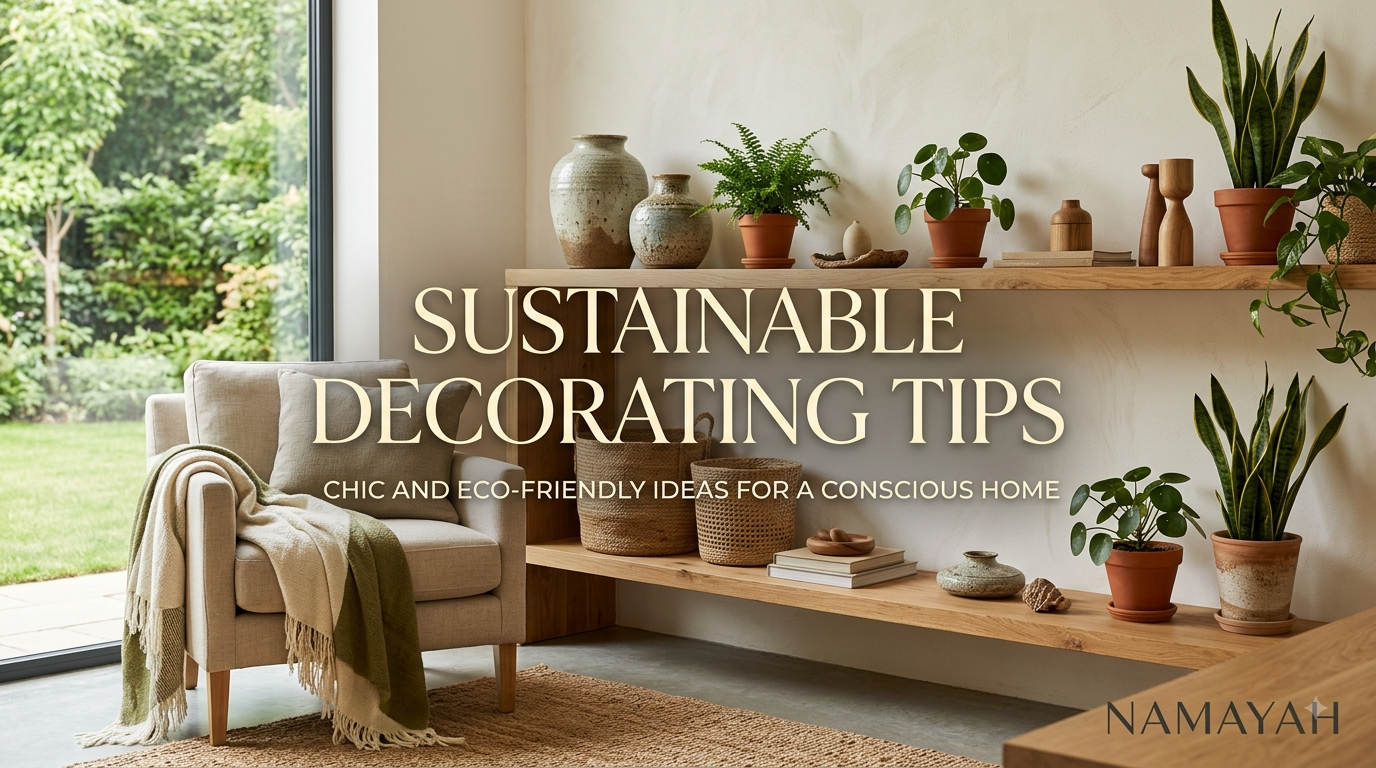
Sustainable decorating does not mean giving up style or turning your home into a showcase of expensive eco-products. It means making more thoughtful choices about what you buy, what you keep, what you reuse, and what happens to items when you no longer need them.
The most effective sustainable decorating tips often start with simple actions: reuse furniture, buy secondhand, choose durable materials, avoid unnecessary replacements, and look for credible certifications when sourcing products. You can also consider lower-emission paints and finishes, natural or durable textiles, and energy-efficient lighting.
The goal is not to create a perfect zero-impact home. It is to create a comfortable space while making choices that can reduce unnecessary consumption and waste.
What Is Sustainable Decorating?
Sustainable decorating is an approach to interior styling that considers the environmental impact of furniture, materials, finishes, textiles, lighting, and decorative objects.
Instead of decorating around short-lived trends, sustainable design emphasizes reuse, longevity, responsible sourcing, repair, and mindful purchasing.
This can mean restoring an old wooden table rather than replacing it, choosing a secondhand cabinet, buying fewer decorative objects, or selecting responsibly sourced wood for a new piece.
A useful principle is simple:
Use what you have first, buy what you need second, and choose things that can last.
That approach can also make a home feel more personal because older, handmade, repaired, and secondhand pieces often add character that matching mass-produced decor cannot easily replicate.
Start With What You Already Own
Before buying anything, walk through your home and look at your existing furniture and accessories differently.
A chair in the wrong room might work perfectly somewhere else. A large vase could become a floor planter. Old picture frames can be painted and reused. A side table may only need refinishing rather than replacement.
Try these low-waste decorating changes:
- Rearrange furniture between rooms.
- Rotate artwork and accessories seasonally.
- Refinish tired wooden furniture.
- Replace lampshades instead of entire lamps.
- Re-cover cushions instead of buying new ones.
- Turn unused containers into planters or storage.
- Display existing collections instead of purchasing more objects.
This approach has another advantage: it makes decorating less dependent on constant shopping.
Choose Secondhand Furniture and Decor
Secondhand shopping is one of the simplest ways to make decorating more circular. Instead of buying a newly manufactured item, you can give an existing product another useful life.
Look at:
- Thrift stores
- Antique shops
- Furniture resale stores
- Local marketplaces
- Estate sales
- Community exchanges
- Vintage stores
- Online secondhand platforms
Look beyond cosmetic imperfections. Scratches, faded finishes, and dated colors can often be addressed with cleaning, sanding, painting, or reupholstery.
However, inspect secondhand furniture carefully. Check for structural damage, moisture problems, pests, odors, and materials that may be difficult to repair.
The best secondhand purchase is not necessarily the cheapest one. Choose something that is functional, repairable, and suitable for long-term use.
Prioritize Quality and Durability
Buying a sustainable product does not help much if it breaks quickly and needs to be replaced.
When comparing furniture and decor, consider:
- Construction: Does the item appear well made?
- Repairability: Can individual parts be repaired or replaced?
- Material: Is the material appropriate for the item’s intended use?
- Timelessness: Will you still want it after the current trend fades?
- Maintenance: Can you realistically care for it?
- Versatility: Can you use it in different rooms or homes later?
A durable neutral sofa, for example, may be more useful over time than a highly trend-specific piece that quickly becomes undesirable.
Sustainable decorating is therefore not simply about choosing a material with an “eco” label. Longevity is part of the equation.
Choose Responsible Wood and Natural Materials
Wood can be a strong choice for furniture and decorative pieces when it is sourced responsibly and used for durable products.
The Forest Stewardship Council (FSC) says FSC-certified wood supports responsible forest management and offers certified options across furniture, homeware, and DIY products.
When shopping for wooden furniture, look for credible sourcing information rather than relying only on vague descriptions such as “green,” “natural,” or “eco-friendly.”
Other materials you may consider include:
- Bamboo
- Cork
- Jute
- Rattan
- Cane
- Linen
- Cotton
- Wool
- Recycled or reclaimed materials
No material is automatically sustainable in every situation. Consider where it comes from, how durable it is, how it was manufactured, how far it traveled, and whether it can be reused or recycled at the end of its useful life.
Use Low-VOC Paint and Finishes Carefully
Painting is one of the easiest ways to transform a room, but paint and finishes can also affect indoor air quality.
The U.S. Environmental Protection Agency notes that VOCs are emitted by certain solids and liquids and that products such as paints, varnishes, and waxes can release organic compounds. EPA recommends ventilation and following product-label precautions when using products that emit VOCs.
Do not assume that a “low-VOC” or “no-VOC” label automatically means a product is harmless. EPA specifically notes that total VOC levels do not necessarily tell you about the toxicity of individual chemicals.
For a more thoughtful decorating approach:
- Read the product label.
- Follow ventilation instructions.
- Use only the quantity you need.
- Avoid storing unnecessary opened paint.
- Choose products with appropriate certifications where available.
- Allow freshly painted spaces to ventilate properly.
For larger renovation projects or specific health concerns, consult qualified professionals and follow local product and safety guidance.
Decorate With Natural and Durable Textiles
Textiles can change the appearance and comfort of a room without requiring major renovations.
For curtains, cushions, throws, rugs, and upholstery, consider durable fabrics such as linen, cotton, wool, or other materials appropriate to the intended use.
The important question is not simply whether a fabric is “natural.” Consider:
- How long it is expected to last
- How frequently it needs washing
- Whether it can be repaired
- Whether it can be reused
- How it was produced
- Whether the supplier provides meaningful sourcing information
Buy textiles for the space you actually have rather than purchasing multiple seasonal sets that spend most of the year in storage.
Upcycle Before You Replace
Upcycling turns an existing object into something useful or attractive instead of sending it directly into the waste stream.
Some easy projects include:
- Paint an old wooden stool.
- Turn glass jars into decorative storage.
- Make cushion covers from suitable leftover fabric.
- Convert an old ladder into shelving.
- Frame unused fabric or wallpaper as artwork.
- Turn a vintage suitcase into a side table.
- Repurpose wooden crates for storage.
- Transform old containers into plant pots.
Upcycling works particularly well when you preserve the character of the original object rather than trying to make everything look brand new.
The result can be more distinctive than buying another mass-produced decorative item.
Make Lighting More Sustainable
Lighting affects both the atmosphere of a room and its energy use.
Start by making better use of daylight. Keep windows clear where practical, use light-colored surfaces to distribute daylight, and position mirrors thoughtfully.
For artificial lighting, LEDs can be a practical energy-efficient option. Choose fixtures that can be maintained or repaired where possible rather than replacing an entire fixture because one component fails.
You can also reduce unnecessary lighting by using:
- Task lighting where needed
- Timers or controls
- Dimmers where compatible
- Motion sensors in appropriate areas
- Layered lighting rather than illuminating an entire room at maximum brightness
Good lighting design can improve a room without requiring a large collection of decorative objects.
Bring Nature Indoors Thoughtfully
Plants, flowers, branches, stones, and other natural elements can add texture and visual interest without requiring large quantities of manufactured decor.
Try a few meaningful elements instead of filling every surface.
For example, one large indoor plant can become a focal point. A simple arrangement of branches can add height to a room. A handmade ceramic planter can combine function and decoration.
If you purchase plants, choose varieties that suit your home’s available light, temperature, and maintenance conditions. A plant that survives for years is more useful than one that repeatedly needs to be replaced.
Shop More Mindfully
Before purchasing a decorative object, ask five questions:
Do I need it?
If the room already has several similar pieces, another one may not add much value.
Will I use it for a long time?
Think beyond the current trend.
Can I repair it?
Repairable products can remain useful longer.
Where did it come from?
Look for meaningful information about materials and sourcing.
What happens when I no longer want it?
Consider whether it can be sold, donated, reused, repaired, or recycled.
This short checklist can prevent impulse purchases and make sustainable decorating more practical.
Sustainable Decorating on a Budget
Sustainable decorating does not have to mean buying premium products.
Some of the most affordable approaches are also among the most resource-conscious:
- Shop secondhand.
- Repair existing furniture.
- Swap decor with friends or family.
- Buy fewer but more versatile items.
- Use paint to refresh existing pieces.
- Shop local resale markets.
- Repurpose objects you already own.
- Borrow specialized tools instead of buying them for one project.
- Decorate gradually rather than furnishing an entire room at once.
A slower approach can also help you avoid buying something simply because you feel pressure to finish a room immediately.
Common Sustainable Decorating Mistakes
Buying too much “eco-friendly” decor
Sustainable products still require resources to manufacture and transport. Buying unnecessary products simply because they have an environmental marketing message can undermine the purpose of mindful decorating.
Replacing usable furniture unnecessarily
A perfectly functional sofa or table does not automatically become unsustainable because it is not made from the latest material.
Use it, repair it, or update its appearance where practical.
Trusting vague green claims
Terms such as “natural,” “green,” “earth-friendly,” or “eco” can be difficult to evaluate without supporting information.
Look for specific material details, certifications, sourcing information, durability claims, and transparent product information.
Decorating around every trend
Fast-changing trends can encourage frequent replacement. Instead, choose a base style you genuinely enjoy and update smaller elements only when necessary.
Ignoring durability
A product that looks environmentally responsible but fails quickly may create more replacement demand than a durable alternative.
FAQs About Sustainable Decorating
What is the easiest way to start sustainable decorating?
Start by using what you already own. Rearrange furniture, repair damaged pieces, rotate accessories, and repurpose unused objects before purchasing new decor.
Is secondhand furniture more sustainable?
Secondhand furniture can extend the useful life of an existing product and reduce the need to purchase a newly manufactured replacement. Its condition, durability, materials, and transportation still matter.
What materials are good for sustainable home decor?
There is no single best material for every application. Durable wood from responsible sources, reclaimed materials, and appropriately selected natural or recycled materials can all be options. Consider durability, sourcing, maintenance, and end-of-life reuse.
Is sustainable decorating expensive?
It does not have to be. Reusing, repairing, shopping secondhand, swapping items, and decorating gradually can reduce spending while limiting unnecessary consumption.
How can I make my living room more sustainable?
Start with existing furniture. Repair or reupholster usable pieces, buy secondhand when something is genuinely needed, choose durable textiles, use efficient lighting, and avoid frequently replacing decorative items.
Are low-VOC paints always safer?
Not necessarily. EPA notes that “low VOC” or “no VOC” labels do not automatically indicate that every chemical in a product is harmless. Follow product instructions, provide ventilation, and evaluate the specific product rather than relying on one label alone.
How can I decorate sustainably without buying anything?
Rearrange furniture, rotate artwork, repurpose containers, create new arrangements from existing accessories, repair damaged items, and remove clutter. Often, editing a room can have as much visual impact as adding something new.
What should I look for when buying wooden furniture?
Look for durable construction and credible sourcing information. FSC-certified products are one option to consider because FSC certification is designed to support responsible forest management.
Conclusion
Sustainable decorating is less about following a perfect set of rules and more about making better decisions over time.
Start with what you already own. Repair before replacing. Choose secondhand when practical. Prioritize durable furniture and materials, investigate sourcing claims, and avoid buying decorative objects simply because they are fashionable.
When you do need something new, consider its materials, durability, sourcing, maintenance, and eventual reuse or disposal.
A sustainable home can still be colorful, comfortable, personal, and stylish. In many cases, the most sustainable decorating choice is also the simplest: buy less, use what you have, and choose well when you do buy.