
How Artisan Products Reduce Environmental Impact
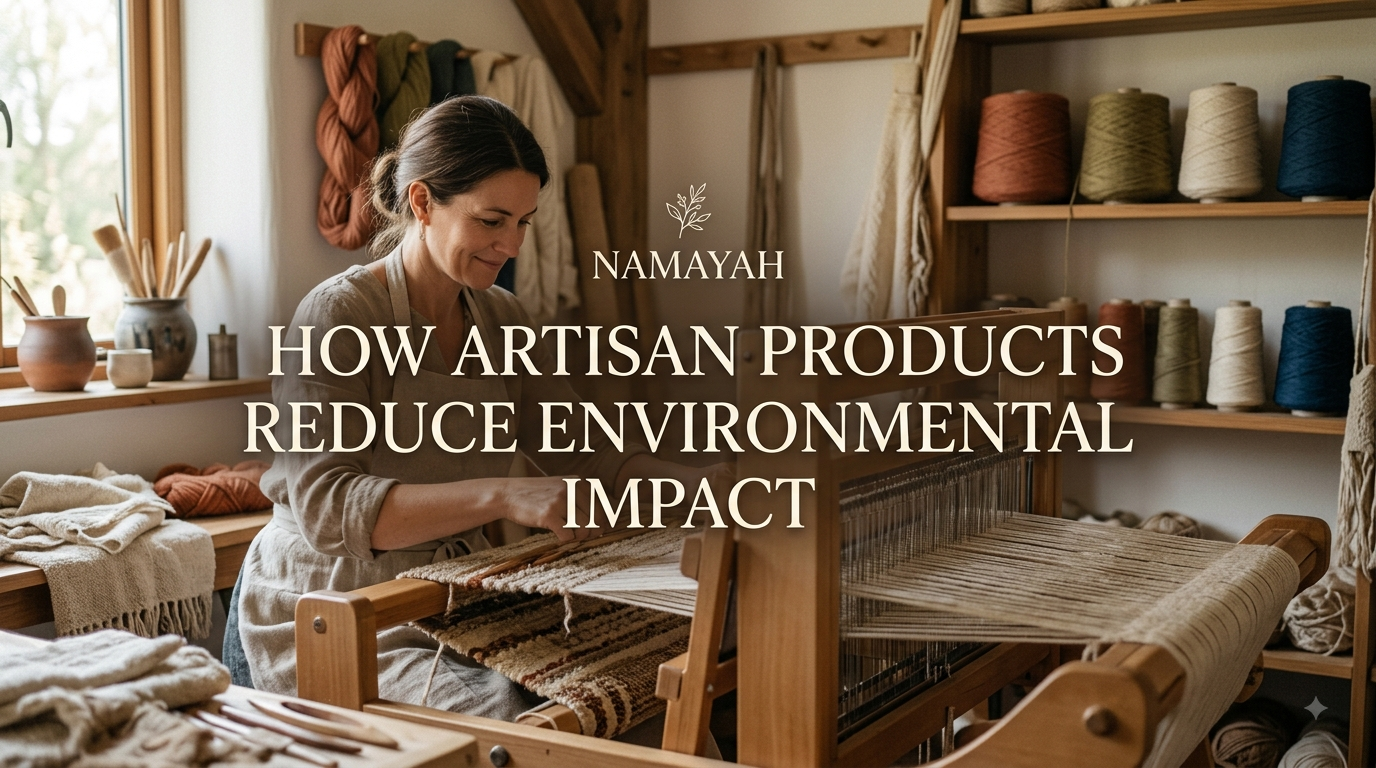
Artisan products can reduce environmental impact when they are made with responsible materials, produced with little waste, designed to last, and kept in use for longer. Handmade production can also support reuse, repair, local sourcing, and small-batch manufacturing. However, being handmade does not automatically make a product sustainable. Its overall environmental impact depends on its entire life cycle, from raw materials and production to transportation, use, packaging, and disposal.
The United Nations Environment Programme (UNEP) recommends looking at products through their full life cycle because environmental pressures can occur during resource extraction, manufacturing, distribution, use, reuse, and disposal.
What Are Artisan Products?
Artisan products are goods made by skilled craftspeople, often using traditional techniques, specialized skills, or hands-on production methods. Examples include handmade furniture, pottery, woven baskets, textiles, ceramics, jewelry, wood products, leather goods, and home décor.
Unlike highly standardized mass-produced goods, artisan products are frequently made in smaller quantities. Depending on the craft, this can give makers greater control over material selection, production methods, product quality, and waste.
However, artisan production varies considerably. A handmade product made from environmentally intensive materials and shipped long distances may have a larger footprint than a mass-produced alternative made efficiently from recycled or responsibly sourced materials.
For this reason, consumers should evaluate the whole product life cycle, rather than assuming that “handmade” automatically means “green.”
How Artisan Products Can Reduce Environmental Impact
1. Lower-Waste Production
One potential advantage of artisan production is the ability to work with materials carefully and produce items in smaller quantities.
Large-scale manufacturing can involve standardized production systems designed for high volumes. Artisan makers may instead cut, shape, weave, carve, or assemble materials individually. This can make it easier to use offcuts, leftovers, or irregular pieces that might otherwise be discarded.
For example, a woodworker may incorporate smaller pieces of timber into accessories, while a textile artisan may turn fabric remnants into smaller household products.
The environmental benefit depends on the actual production process. Simply producing something by hand does not guarantee less waste. What matters is how efficiently the maker uses materials and manages production leftovers.
2. Longer-Lasting Products
Durability is one of the most important factors when considering a product’s environmental impact.
A product that remains useful for many years may avoid the need for repeated replacement. This can reduce the demand for additional materials and manufacturing.
Artisan products are sometimes designed with durability and craftsmanship in mind. Furniture, pottery, baskets, clothing, tools, and other handmade goods may be created for continued use rather than short-term consumption.
The U.S. Environmental Protection Agency recommends considering durability, sustainability, and recyclability when purchasing products. It also recommends repairing products rather than disposing of them when repair is practical.
This means a well-made artisan product can offer an environmental advantage when its longer useful life genuinely reduces replacement purchases.
3. Greater Potential for Repair
Repairability can extend the useful life of products.
A handmade item may sometimes be easier to repair because its construction is relatively simple or because the maker can provide replacement parts or repair services. An artisan may also be able to modify a product rather than requiring the customer to replace it entirely.
For example, a craftsperson might repair a wooden chair, replace a component of a woven item, restore a piece of furniture, or alter a garment.
Repair supports a more circular approach to consumption. UNEP identifies designing products for repair and reuse over a long period as one pathway toward reducing waste.
4. Use of Local Materials
Some artisans source materials locally or regionally. When responsible local sourcing is available, it can potentially shorten parts of the supply chain and create closer relationships between makers and suppliers.
Local sourcing may also help consumers understand where materials originate.
However, local does not automatically mean lower impact. Transportation is only one part of a product’s environmental footprint. The environmental effects of extracting, growing, processing, or manufacturing the material may be much more significant.
A better approach is to consider both the material and its supply chain.
5. Reclaimed and Recycled Materials
Artisans can give discarded materials a new purpose.
Reclaimed wood, leftover fabric, recycled glass, reused metal, surplus materials, and other recovered inputs can become useful products rather than waste.
This approach aligns with circular-economy principles, which aim to keep products and materials in use for as long as possible while minimizing waste.
For consumers, products made from genuine reclaimed or recycled materials can be particularly interesting because they combine functional use with material recovery.
Still, buyers should look for clear information about the source and proportion of recycled or reclaimed content instead of relying only on vague sustainability language.
6. Small-Batch Production Can Limit Overproduction
Artisans commonly produce products in small batches or make items after receiving an order.
This production model can help reduce the risk of manufacturing large quantities of products that remain unsold.
Reducing unnecessary production matters because environmental impacts can occur before a product reaches the consumer. UNEP emphasizes life-cycle thinking, which considers resource extraction, manufacturing, distribution, consumption, reuse, and disposal rather than looking at only one stage.
Small-batch production is not automatically more efficient, but producing closer to actual demand can be one useful strategy for avoiding unnecessary inventory and material use.
Artisan Products and the Circular Economy
The circular economy focuses on keeping products and materials useful for as long as possible.
Instead of a linear model of take, make, use, and discard, circular approaches emphasize strategies such as:
- Reducing unnecessary consumption
- Reusing products
- Repairing damaged goods
- Refurbishing older products
- Using recycled materials
- Designing for longer product life
- Recovering useful materials at the end of a product’s life
UNEP describes circularity as an approach that can reduce waste and pollution, keep products and materials in use, and support more sustainable production and consumption.
Artisan businesses can contribute to these principles when they make durable products, repair existing goods, reuse materials, or create products from recovered resources.
Are All Artisan Products Eco-Friendly?
No. Handmade and environmentally friendly are not synonymous.
An artisan product can still have a significant environmental impact if it uses resource-intensive materials, toxic substances, excessive packaging, energy-intensive processes, or long-distance transportation.
For example, a handmade product may be less sustainable if it is frequently replaced, difficult to repair, packaged excessively, or made from materials with high environmental impacts.
The U.S. EPA also warns consumers to evaluate environmental claims carefully and look for credible standards or labels where relevant.
The better question is not:
“Is this product handmade?”
Instead, ask:
“How was this product made, what is it made from, how long will it last, and what happens when I no longer need it?”
That approach provides a more meaningful assessment.
How to Choose More Sustainable Artisan Products
Consumers can make better purchasing decisions by examining several characteristics.
Choose durable products
Look for strong construction, quality materials, and products intended for repeated use.
Ask about materials
Find out whether materials are recycled, reclaimed, renewable, responsibly sourced, or locally obtained.
Consider repairability
Ask whether the artisan offers repairs, replacement parts, restoration, or alterations.
Avoid unnecessary packaging
Packaging can add material use and waste. Choose sellers that use appropriate, minimal, or reusable packaging where practical.
Buy products you will actually use
One of the most effective ways to reduce environmental impact is to avoid unnecessary consumption. The EPA recommends considering whether you need an item, whether you will use it, and whether you can borrow, share, reuse, or repair instead.
Look beyond marketing claims
Words such as “natural,” “green,” “eco,” or “sustainable” do not by themselves prove that a product has a lower environmental impact.
Ask for specific information about materials, manufacturing, packaging, durability, and end-of-life options.
Examples of Potentially Lower-Impact Artisan Products
The environmental benefits of any specific product depend on how it is made, but some categories can support lower-impact consumption when responsibly produced.
| Artisan Product | Potential Environmental Advantage |
|---|---|
| Reclaimed-wood furniture | Gives existing material another use |
| Upcycled textile products | Can divert fabric remnants from disposal |
| Reusable woven baskets | May replace disposable storage or shopping products |
| Repairable handmade clothing | Can extend garment life |
| Recycled-material accessories | Can reduce demand for some virgin materials |
| Durable handmade pottery | Can serve repeated-use purposes |
| Restored furniture | Keeps existing products in use |
| Handmade refillable containers | May support reuse over single-use alternatives |
These are potential advantages, not guarantees. The material, production method, transportation, packaging, and product lifespan still matter.
Challenges and Trade-Offs
Artisan products also have limitations.
Material sourcing: Natural materials can still require land, water, energy, or other resources.
Transportation: A handmade product shipped internationally may have transportation impacts that offset some benefits associated with local or small-scale production.
Energy use: Some crafts, such as ceramics, metalwork, and glassmaking, can require substantial heat or electricity.
Scale: Handmade production may be slower and more resource-intensive per unit in some cases.
Durability: Craftsmanship alone does not guarantee a long product life.
Greenwashing: Sustainability claims may be difficult to evaluate without specific evidence.
For these reasons, environmental performance should be assessed based on measurable or clearly described practices rather than the “artisan” label alone.
How Consumers Can Reduce Their Environmental Impact
Buying artisan products can be part of a more sustainable consumption strategy, but it works best alongside other behaviors.
A practical approach is to:
- Buy less but buy intentionally.
- Choose products designed for long-term use.
- Prefer repairable goods.
- Look for recycled or reclaimed materials when appropriate.
- Avoid unnecessary packaging.
- Reuse products instead of replacing them quickly.
- Research sustainability claims before purchasing.
- Consider the full life cycle of the product.
UNEP’s sustainable consumption framework similarly emphasizes using fewer resources and reducing waste and pollution throughout a product’s life cycle.
Frequently Asked Questions
1. How do artisan products reduce environmental impact?
Artisan products can reduce environmental impact through durable construction, small-batch production, material reuse, repairability, and responsible material choices. Their actual impact varies by product and production method.
2. Are handmade products better for the environment?
Not necessarily. Handmade products can have environmental advantages, but being handmade does not automatically make a product sustainable. Materials, energy use, transportation, packaging, durability, and disposal all matter.
3. Why are durable artisan products more sustainable?
Durable products can remain useful longer and may require fewer replacements. This can reduce demand for additional materials and manufacturing over time.
4. Can artisans help reduce waste?
Yes. Artisans can reduce waste by producing in small quantities, using material offcuts, upcycling discarded materials, and repairing or refurbishing existing products.
5. Do local artisan products have a lower carbon footprint?
Not always. Local production can reduce some transportation requirements, but the environmental impact of materials and manufacturing may be more significant than transportation distance alone.
6. What materials make artisan products more sustainable?
There is no single material that is always the most sustainable. Reclaimed, recycled, responsibly sourced, and appropriately renewable materials can offer advantages depending on their production and life cycle.
7. How can I tell whether an artisan product is sustainable?
Ask about the materials, production process, durability, repair options, packaging, sourcing, and end-of-life options. Look for specific evidence rather than relying solely on general environmental claims.
8. Can buying artisan products support the circular economy?
Yes. Artisan businesses can support circular principles when they reuse materials, repair products, refurbish goods, create durable items, or keep materials in use for longer.
Conclusion
Artisan products can reduce environmental impact when they combine responsible materials, efficient production, durability, repairability, reuse, and thoughtful consumption. Their smaller-scale nature can create opportunities for material recovery and production based more closely on demand.
But the artisan label should not be treated as proof of sustainability. The strongest environmental choices come from looking at the entire product life cycle—from raw material extraction and manufacturing to transportation, use, repair, reuse, and disposal.
For consumers, the most useful principle is simple: choose products that you genuinely need, can use for a long time, and can repair, reuse, or responsibly dispose of when their useful life ends.