
Traditional Indian Art Forms Used in Home Décor
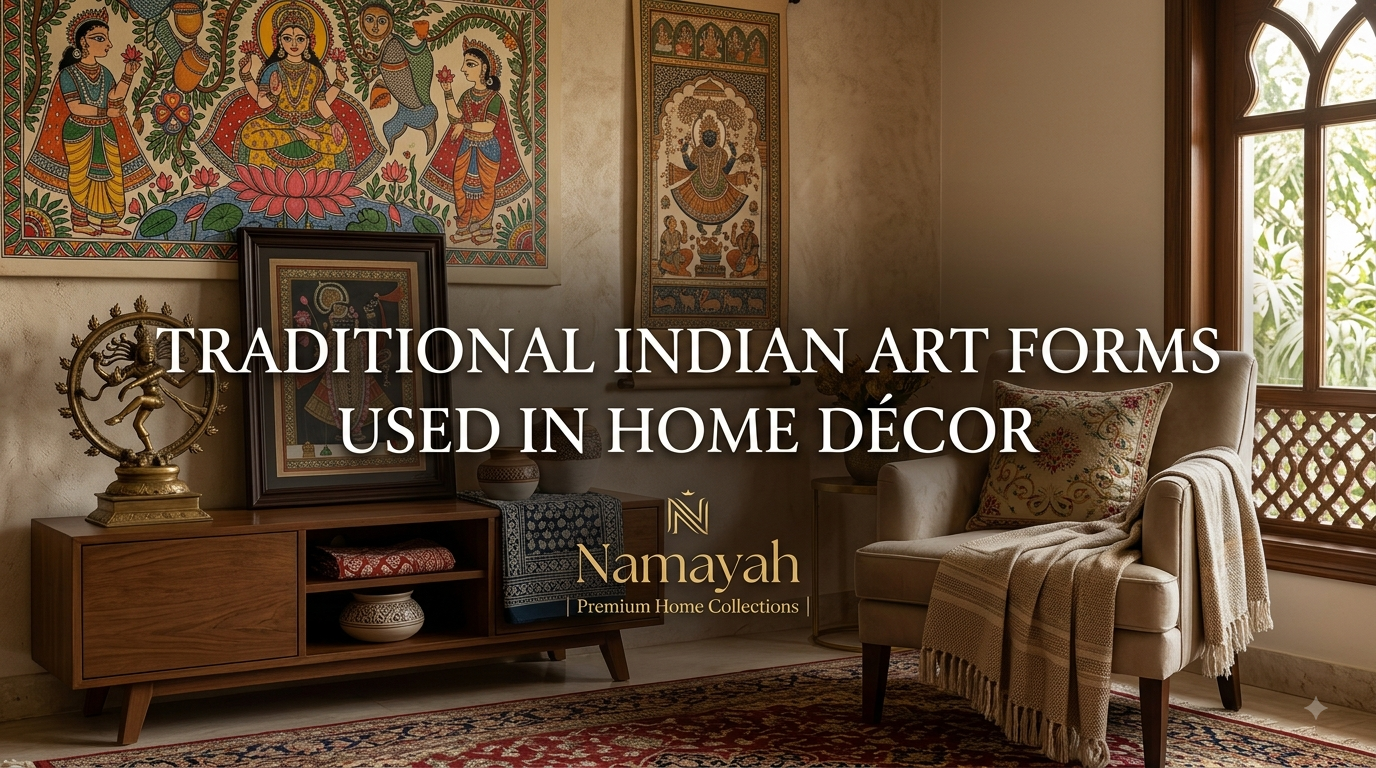
Traditional Indian art forms can bring colour, craftsmanship, history, and storytelling into contemporary interiors. From the intricate patterns of Madhubani to the metallic details of Lippan art, these styles offer different ways to add personality to walls, furniture, textiles, and decorative corners.
India’s official handicrafts resources list numerous folk and traditional painting styles, including Madhubani, Pattachitra, Warli, Gond, Pichwai, Tanjore, Kalamkari, Phad, Rogan and many others. These traditions are connected to different regions, communities, stories, rituals, and techniques.
The best part is that traditional Indian art does not have to make a home look old-fashioned. When carefully selected and paired with contemporary furniture, neutral walls, natural materials, or minimalist accessories, traditional artwork can become a sophisticated focal point.
Why Traditional Indian Art Works in Modern Homes
Traditional Indian art can add visual interest without requiring major changes to an interior. A single painting can become the focal point of a living room, while smaller artworks can bring character to a hallway, bedroom, dining area, or study.
These art forms also offer considerable variety. Some are highly colourful, while others rely on earthy tones, monochrome patterns, metallic details, or intricate line work.
Many Indian folk painting traditions also function as visual storytelling. Government handicrafts information describes folk paintings as reflections of cultural heritage and everyday life, with themes that can include mythology, festivals, rituals, and community life.
Here are 10 traditional Indian art forms that can work beautifully in home décor.
1. Madhubani Art
Madhubani, also called Mithila art, comes from the Mithila region of Bihar. It is recognised for strong outlines, vivid colours, geometric patterns, and subjects drawn from nature and mythology.
The Government of Bihar notes that Madhubani painting was traditionally created on walls and later adapted to materials such as paper, cloth, and canvas. Common themes include Hindu deities, animals, birds, plants, wedding scenes, social events, and nature.
How to use Madhubani at home
- Hang a framed Madhubani painting above a console.
- Use a large piece as a living-room focal point.
- Add smaller artworks to a gallery wall.
- Choose Madhubani-inspired textiles for cushions or table runners.
- Use a colourful painting to brighten a neutral room.
Because Madhubani can be visually detailed, it often works best when surrounding décor is relatively simple.
2. Warli Art
Warli painting is associated with tribal communities of Maharashtra. Its distinctive visual language commonly features simplified human figures, animals, trees, houses, farming, dancing, and other scenes from community life.
Warli is particularly useful for minimalist interiors because its graphic quality can create visual impact without relying on a large range of colours. India’s handicrafts portal identifies Warli as one of the country’s recognised folk painting traditions.
How to use Warli décor
Try a Warli artwork in:
- A reading corner
- A home office
- A hallway
- A bedroom
- A minimalist living room
White-on-earthy-background Warli designs can pair especially well with wood, cane, rattan, terracotta, and other natural materials.
3. Pattachitra
Pattachitra is a traditional painting style strongly associated with Odisha. The art is known for detailed compositions, decorative borders, strong outlines, and subjects rooted in mythology and religious storytelling.
The Government of India’s handicrafts resources list Odisha Pattachitra among India’s major folk painting traditions.
How to use Pattachitra in home décor
Pattachitra can work particularly well as:
- A framed statement painting
- A feature-wall artwork
- A decorative panel
- Part of a curated art collection
- A traditional accent in a dining or living room
Because the artwork can contain considerable detail, give it enough wall space to be appreciated rather than placing it among too many competing decorations.
4. Kalamkari
Kalamkari is associated with traditional painted and printed textile traditions of southern India. Its visual language often includes elaborate floral patterns, mythological themes, natural motifs, and detailed line work.
Kalamkari can be particularly versatile in interiors because it can appear not only as framed artwork but also through textiles.
Kalamkari home décor ideas
Use Kalamkari for:
- Cushion covers
- Curtains
- Wall hangings
- Upholstery accents
- Table runners
- Framed textile art
For a contemporary look, combine one detailed Kalamkari element with plain upholstery and understated furniture.
5. Gond Art
Gond art comes from the Gond communities of central India and is recognised for colourful compositions and distinctive patterns. Animals, birds, plants, and scenes from the natural world are common visual subjects.
Its intricate dots, lines, textures, and patterns make Gond artwork particularly attractive for contemporary interiors.
Where to display Gond art
A Gond painting can become a statement piece in:
- Living rooms
- Children’s rooms
- Creative studios
- Home offices
- Entryways
A nature-inspired Gond artwork can also complement indoor plants and natural wood furniture.
6. Pichwai Art
Pichwai paintings are traditionally associated with devotional imagery, particularly the worship of Shrinathji. They are known for rich colours, elaborate compositions, decorative details, and recurring motifs such as lotus flowers, cows, and festive scenes.
Pichwai has also become a popular source of inspiration for contemporary interior styling. Recent home décor coverage has highlighted Pichwai alongside Madhubani, Warli, Kalamkari, Gond, Tanjore, and other Indian art traditions as options for bringing cultural character into modern spaces.
Pichwai décor ideas
Consider using Pichwai as:
- A large living-room artwork
- A dining-room focal point
- A bedroom statement piece
- A decorative panel
- Part of a traditional Indian gallery wall
If the artwork is highly detailed, use complementary colours elsewhere rather than introducing too many unrelated patterns.
7. Tanjore Painting
Tanjore, or Thanjavur, painting is known for rich colours, ornamental details, and raised or embellished elements, often including gold-toned decoration. The Government of India’s handicrafts portal includes Thanjavur painting among India’s recognised folk and traditional painting forms.
Tanjore paintings can work particularly well when a room needs a formal or luxurious focal point.
Best places for Tanjore paintings
- Puja rooms
- Living rooms
- Formal dining areas
- Traditional interiors
- Entry spaces
A single substantial Tanjore painting can often provide enough visual richness without needing several additional statement pieces.
8. Lippan Art
Lippan art, traditionally associated with the Kutch region of Gujarat, is recognised for its decorative mud-and-mirror work. The combination of textured surfaces and reflective elements can create an eye-catching wall feature.
India’s official handicrafts listings include Mud & Mirror Work (Lippon Painting) among its folk painting and craft traditions.
Lippan décor ideas
Lippan-inspired pieces can be used on:
- Accent walls
- Entryway walls
- Bedroom walls
- Niches
- Decorative corners
Its reflective details can be especially effective where there is good natural or ambient light.
9. Phad Painting
Phad is a traditional narrative painting tradition from Rajasthan. Its storytelling approach makes it different from purely decorative patterns: a Phad artwork can invite viewers to look closely at characters, scenes, and visual details.
The Indian handicrafts portal includes Phad among the country’s recognised painting traditions.
How to style Phad paintings
Use a Phad artwork where guests can spend time viewing it, such as:
- A living-room feature wall
- A library
- A study
- A long hallway
- A cultural or heritage-themed room
A long-format artwork can also work well above a sofa or console, depending on its dimensions.
10. Rogan Art
Rogan art is a traditional textile painting technique associated with Gujarat. It is known for creating intricate designs on fabric using a distinctive paint medium.
The Indian handicrafts portal lists Kutch Rogan Craft among India’s recognised traditional craft forms.
Rogan-inspired textiles or framed pieces can add an unusual handmade element to an interior.
Ways to use Rogan-inspired décor
Consider:
- Framing a textile panel
- Displaying it in a bedroom
- Using it as a decorative accent
- Pairing it with plain fabrics
- Creating a small traditional-art display
Its detailed appearance makes it suitable for interiors where craftsmanship is the main focus.
How to Choose Indian Art for Your Home
Choosing traditional Indian art is easier when you consider the room before the artwork.
1. Start with the colour palette
If your room already contains strong colours, choose artwork that shares one or two existing tones. For neutral interiors, a colourful Madhubani, Gond, or Pichwai piece can become the main accent.
2. Consider the wall size
Large walls can accommodate substantial paintings or grouped artworks. Smaller walls may look better with one carefully framed piece rather than several small decorations.
3. Match the visual character
A minimalist room may benefit from the graphic simplicity of Warli. A more layered or traditional interior may suit Pichwai, Tanjore, or Pattachitra.
4. Think about the story
Traditional art is not simply a colour or pattern. Researching the artwork’s region, subject, technique, and cultural background can make your décor choice more meaningful.
5. Prioritise authentic craftsmanship
When buying traditional Indian art, look for information about the artist, region, technique, materials, and provenance where available. This helps distinguish a handmade artwork from a generic decorative print.
How to Mix Traditional Indian Art With Modern Décor
Traditional art and modern interiors can complement each other when the contrast is intentional.
Use one statement piece: Instead of filling every wall with traditional artwork, choose one major piece and allow it to stand out.
Keep furniture simple: Clean-lined sofas, contemporary lighting, and understated furniture can create a useful contrast with intricate Indian artwork.
Repeat one colour: If a painting contains red, blue, or yellow, repeat a small amount of that colour in a cushion, vase, rug, or other accessory.
Mix textures: Combine painted artwork with wood, brass, cane, linen, terracotta, or stone for a layered interior.
Create an art wall: A curated collection of smaller Indian artworks can work well in a hallway or stairway, provided the pieces share a visual connection.
The goal is not to make every item in the room traditional. Instead, let Indian artwork provide a cultural focal point within the broader design.
Traditional Indian Art Forms for Different Rooms
| Room | Suitable Art Forms | Décor Idea |
| Living room | Madhubani, Gond, Pichwai, Tanjore | Statement artwork above sofa or console |
| Bedroom | Madhubani, Warli, Rogan | Smaller artwork or textile accent |
| Dining room | Pattachitra, Kalamkari, Pichwai | Feature artwork or textile wall panel |
| Home office | Warli, Gond, Phad | Framed artwork for a creative atmosphere |
| Entryway | Lippan, Madhubani, Pattachitra | Decorative focal wall |
| Puja room | Tanjore, Pichwai | Traditional devotional artwork |
FAQs About Traditional Indian Art in Home Décor
What are the best traditional Indian art forms for home décor?
Madhubani, Warli, Pattachitra, Kalamkari, Gond, Pichwai, Tanjore, Lippan, Phad, and Rogan are among the traditional Indian art and craft styles that can be incorporated into home interiors. The best choice depends on the room, colour palette, available wall space, and desired aesthetic.
Which Indian painting is best for a living room?
There is no single best option. Madhubani and Gond can add colour and energy, while Pichwai and Tanjore can create a richer focal point. Warli may suit a minimalist living room.
How can I make traditional Indian art look modern?
Use traditional artwork with contemporary furniture, neutral walls, simple frames, clean lighting, and limited accessories. One large traditional painting can look especially modern when surrounded by uncluttered décor.
Is Madhubani art suitable for modern interiors?
Yes. Madhubani’s strong outlines, patterns, and vibrant colours can work with both traditional and contemporary interiors. A framed Madhubani artwork can add a cultural focal point to an otherwise neutral room.
Which Indian art form is suitable for minimalist décor?
Warli can be a strong choice because of its graphic figures and relatively simple visual language. A carefully selected monochromatic or restrained Warli piece can complement minimalist furniture and neutral interiors.
How do I display Indian paintings at home?
Display paintings at a comfortable viewing height and give detailed artwork enough surrounding space. Large paintings can work above sofas, consoles, or dining furniture, while smaller works can be grouped into a curated gallery wall.
How can Indian art make a home feel more personal?
Traditional artwork can introduce regional stories, handmade techniques, cultural references, and distinctive visual patterns. Selecting pieces connected to a family’s heritage, travels, interests, or aesthetic preferences can make the décor feel more personal.
Should traditional Indian artwork be mixed with other art styles?
Yes. Traditional Indian artwork can be combined with contemporary, abstract, photographic, or minimalist pieces. A consistent frame style, colour connection, or theme can help the collection feel intentional.
Conclusion
Traditional Indian art forms offer more than decorative beauty. Madhubani, Warli, Pattachitra, Kalamkari, Gond, Pichwai, Tanjore, Lippan, Phad, and Rogan each bring distinctive techniques, regional connections, patterns, colours, and stories into the home.
The key to using them successfully is balance. Choose artwork that suits the scale and colour palette of the room, give detailed pieces enough space, and combine traditional craftsmanship with contemporary furniture and materials when you want a modern look.
Whether you choose a vibrant Madhubani painting for the living room, a graphic Warli artwork for the study, or a textured Lippan piece for the entryway, traditional Indian art can give a home a stronger sense of character and cultural identity.