
Elegant Home Decoration Ideas for Indian Homes
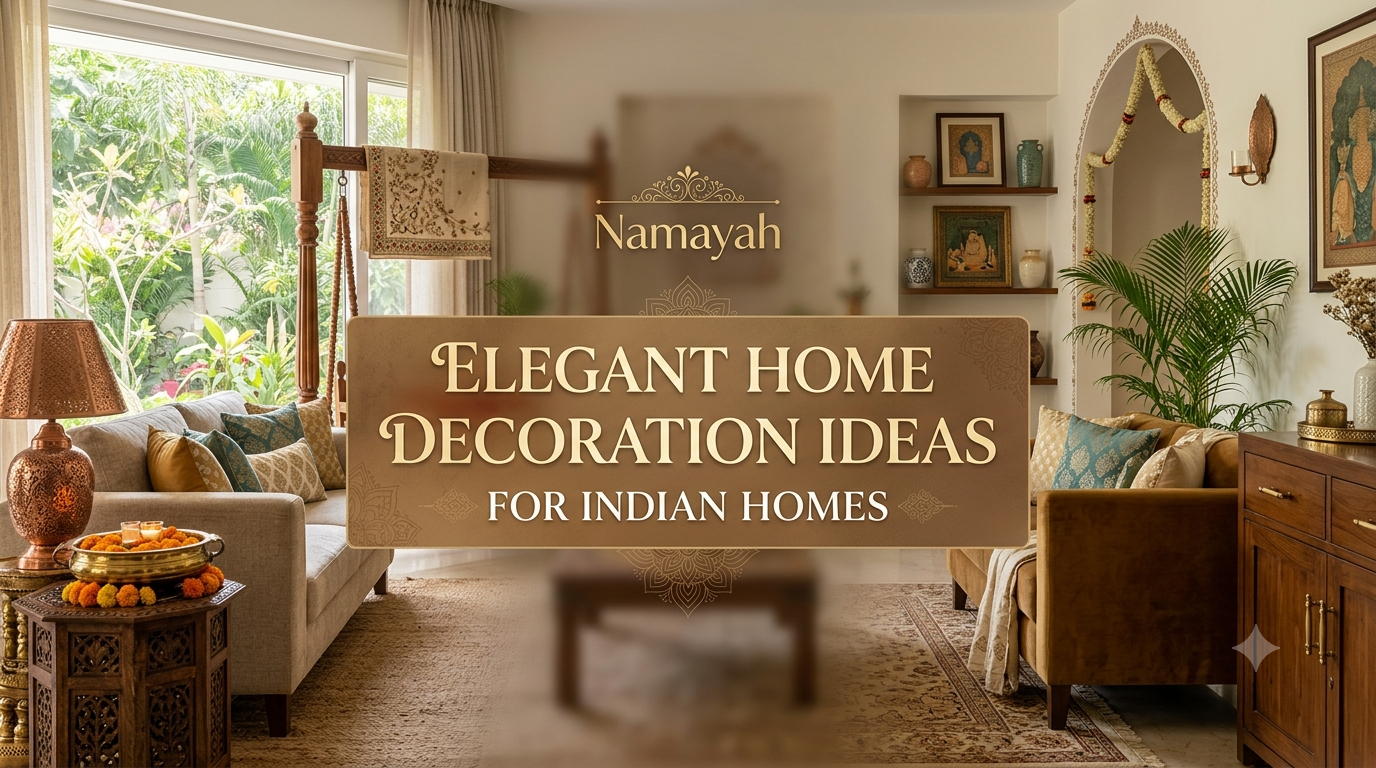
Creating an elegant home does not require filling every room with expensive furniture, marble, or luxury accessories. Some of the most effective elegant home decoration ideas for Indian homes come from thoughtful colour choices, balanced furniture, warm lighting, handcrafted details, and careful use of the space you already have.
For an Indian home, elegance can also mean finding the right balance between contemporary living and cultural character. A streamlined sofa can sit beside a carved wooden table. Neutral walls can provide a backdrop for Madhubani, Gond, or other Indian artwork. Brass accents can complement modern lighting rather than making a room feel overly traditional.
That mix is especially relevant today. Recent Indian design coverage points toward warmer, more personal interiors rather than rigid, showroom-like spaces.
The goal is simple: choose fewer elements carefully and make each room feel comfortable, cohesive, and personal.
What Makes an Indian Home Look Elegant?
An elegant interior usually has visual balance.
Instead of decorating every available wall, shelf, and corner, allow important pieces to stand out. Coordinate colours without making everything match exactly. Combine practical furniture with a few decorative focal points and repeat materials or colours subtly throughout the room.
For Indian homes, an elegant decorating formula can be:
Warm base + natural materials + functional furniture + Indian craftsmanship + layered lighting + restrained accessories.
This approach works across modern apartments, traditional family homes, villas, and compact urban flats.
1. Start With a Refined Colour Palette
Colour establishes the mood before furniture or accessories are noticed.
Warm neutrals such as ivory, cream, beige, taupe, soft brown, muted terracotta, and warm grey can provide a sophisticated foundation. Current Indian design coverage also highlights warm neutrals and earthy finishes as part of the move toward softer interiors.
Then introduce richer Indian-inspired colours as accents.
Consider:
- Deep emerald green
- Rust or terracotta
- Mustard
- Indigo
- Burgundy
- Muted saffron
- Teal
- Deep blue
The key is restraint. You do not need five bold colours in one room.
For example, an ivory living room with walnut-toned furniture, olive cushions, brass accents, and one colourful Indian artwork can feel more refined than a room where every element competes for attention.
2. Blend Modern Design With Indian Elements
One of the easiest ways to create an elegant Indian interior is to avoid choosing between “modern” and “traditional.”
Use both.
Indian traditional design remains a recognized interior style, while contemporary Indian homes increasingly combine cultural elements with other design approaches.
A modern living room could include a clean-lined sofa, simple curtains, and a minimal coffee table alongside a carved wooden chest or handmade pottery.
Other combinations include:
- Contemporary furniture with a traditional rug
- Minimal walls with one Indian folk-art piece
- Modern dining chairs around a solid-wood table
- Neutral interiors with brass décor
- A simple bedroom with block-printed cushions
- Modern shelving displaying a few handcrafted objects
The traditional feature becomes more noticeable when it has space around it.
3. Choose Furniture That Fits the Space
Oversized furniture can make even expensive interiors feel cramped.
Before purchasing a sofa, dining table, bed, or storage unit, consider the room’s proportions and how people move through it. This is particularly important in compact homes where dense furniture arrangements can restrict movement. Research into mobility in Indian households has specifically noted narrow spaces and dense furniture as practical challenges for some residents.
For smaller apartments, consider furniture with:
- Built-in storage
- Slim profiles
- Raised legs
- Nesting tables
- Foldable features
- Multiple functions
In larger homes, avoid filling space simply because it exists. A few well-proportioned pieces can look more sophisticated than several smaller pieces crowded together.
Natural-looking wood is particularly easy to combine with Indian décor because it works with both contemporary and traditional elements.
4. Use Lighting to Create a Luxurious Mood
Lighting can dramatically change how a room feels.
Instead of depending entirely on one bright ceiling light, use several sources at different heights.
A well-layered room may combine:
- Ambient lighting for general illumination
- Task lighting for reading, cooking, or working
- Accent lighting for artwork, niches, textures, or architectural details
- Decorative lighting such as pendants or statement lamps
Warm lighting generally creates a softer atmosphere in living rooms and bedrooms, while work areas may need clearer task illumination.
Decorative lamps can also function as visual focal points. Sculptural and statement lighting continue to appear in current Indian décor trend coverage.
For an Indian touch, consider brass lamps, lantern-inspired fixtures, woven shades, or contemporary fixtures influenced by traditional forms.
5. Add Elegant Indian Textiles
Textiles are among the simplest ways to introduce colour and Indian craftsmanship without renovating a room.
Consider block prints, handloom fabrics, embroidered cushions, woven rugs, cotton throws, linen curtains, or traditional patterns used in moderation.
Indian handicrafts and ethnic fabrics have long been recommended as ways to add traditional character to Indian interiors.
For an elegant result, avoid using every pattern simultaneously.
If your rug is visually strong, choose simpler curtains. If your curtains have a detailed print, use solid or lightly textured cushions.
A useful approach is:
one dominant pattern + one subtle pattern + solid supporting colours.
This creates richness without visual clutter.
6. Make One Wall the Focal Point
Every wall does not need decoration.
Choose one area that naturally attracts attention and make it memorable.
A focal wall could feature:
- One oversized artwork
- A curated gallery arrangement
- Textured paint
- Wood detailing
- A large mirror
- Traditional Indian artwork
- A decorative wall panel
Large artwork and handmade Indian crafts are among the elements appearing in 2026 Indian décor coverage.
If you create a gallery wall, establish a visual connection between the pieces through similar frames, colours, themes, or spacing.
Negative space is equally important. Leaving part of the wall undecorated allows the focal feature to breathe.
7. Decorate With Indian Handicrafts
India offers an enormous variety of regional craft traditions, making handcrafted décor a natural way to give a home identity.
Depending on your taste, you might incorporate pottery, brass objects, carved wood, baskets, handwoven textiles, folk paintings, or artisan-made accessories.
Traditional Indian décor guidance frequently highlights crafts, sculptures, fabrics, antique accents, and wooden furniture as ways to introduce cultural character.
The important word is curate.
Instead of displaying ten unrelated decorative objects on a console, select two or three pieces with complementary proportions.
A handcrafted object is often most effective when it has enough empty space around it to be appreciated.
8. Bring Nature Indoors
Indoor plants can soften straight architectural lines, add natural texture, and make neutral interiors more visually interesting.
Current Indian interior-design coverage includes biophilic design among styles relevant to contemporary homes.
Plants can work particularly well:
- Near windows
- Beside a sofa
- On balcony edges
- On selected shelves
- In an entrance area
- In an empty living-room corner
Choose plants according to the actual light and environmental conditions in your home rather than appearance alone.
Planters matter too. Terracotta, ceramic, stone-look, woven, or restrained contemporary planters can become part of the décor.
9. Make Small Indian Homes Feel Elegant
Small homes benefit from editing more than adding.
Begin by removing objects that do not contribute to the room’s function or appearance. Then select furniture according to scale.
Useful strategies include using mirrors to reflect light, choosing curtains that emphasize vertical height, keeping major furniture visually consistent, and using closed storage to reduce clutter.
Multi-purpose rooms remain relevant in current Indian interior trends, reflecting the need for spaces to perform more than one role.
In a compact apartment, for example, a window-side bench can provide seating and storage. An attractive console can function as a work desk. An ottoman can offer seating while hiding everyday items.
Elegance in a small home comes from making the available space feel intentional.
10. Create an Elegant Entrance
The entrance establishes the first impression of your home.
You do not need a large foyer. Even a narrow entrance can feel considered with a few carefully selected elements.
Try a slim console or shoe cabinet paired with a mirror, small artwork, plant, or decorative bowl.
For a distinctly Indian touch, you might add a tasteful toran, brass accent, handcrafted object, traditional artwork, or decorative floor detail where appropriate.
Keep practical necessities organized. Shoes, keys, delivery packages, bags, and cables can quickly overwhelm a beautiful entryway if they do not have designated storage.
11. Keep the Bedroom Calm and Sophisticated
An elegant bedroom should first feel restful.
Begin with a restrained palette. Cream, beige, muted green, dusty blue, warm grey, soft brown, or gentle earthy shades work well as starting points.
Then build texture through:
- Layered bedding
- A fabric or wooden headboard
- Bedside lamps
- Curtains
- A rug
- One or two cushions
- Minimal wall art
Avoid covering every surface with accessories.
Symmetry can create a calm, polished look, but perfect matching is unnecessary. Two complementary bedside lamps or similar visual weights on each side of the bed may be enough.
Keep frequently used items accessible but give clutter a hidden home.
12. Avoid Over-Decorating Your Home
One of the easiest decorating mistakes is assuming that elegance comes from adding more.
It usually comes from editing.
Current design discussion increasingly favors individuality over matching showroom sets, while designers also recommend mixing rather than over-coordinating furniture and décor.
Before adding an accessory, ask whether the room actually needs it.
Try to avoid:
- Too many small decorative objects
- Several competing patterns
- Furniture that blocks movement
- Matching every item exactly
- Excessively bright lighting everywhere
- Filling every wall
- Choosing trends without considering practicality
- Ignoring storage
Instead, identify the strongest feature in each room and allow supporting elements to complement it.
A beautiful wooden dining table does not need an elaborate backdrop, dramatic chandelier, colourful rug, gallery wall, and multiple centrepieces competing for attention at the same time.
Elegance needs breathing room.
Elegant Home Decoration Ideas by Room
| Room | Elegant Décor Idea | Indian Touch |
| Living room | Neutral base with statement artwork | Brass, carved wood, or folk art |
| Bedroom | Layered soft textiles | Block-printed cushions or handloom throw |
| Dining room | Warm pendant lighting | Solid-wood furniture or handcrafted centrepiece |
| Entrance | Mirror and slim console | Brass accent or Indian artwork |
| Balcony | Plants and comfortable seating | Terracotta planters |
| Kitchen | Clean counters and practical storage | Handmade pottery displayed selectively |
| Study | Minimal desk and task lighting | Handcrafted desk accessory |
The objective is not to make every room obviously “Indian.” A few authentic details can establish character while keeping the overall design contemporary.
FAQs About Elegant Home Decoration Ideas for Indian Homes
1. How can I make my Indian home look elegant?
Start with a cohesive colour palette, appropriately scaled furniture, warm layered lighting, and uncluttered surfaces. Add personality through a few Indian textiles, artworks, handicrafts, or wooden pieces instead of filling every room with decorative accessories.
2. Which colours make an Indian home look luxurious?
Cream, ivory, beige, taupe, earthy brown, muted green, and warm grey can create a sophisticated base. Deeper shades such as emerald, burgundy, indigo, teal, or rust can be introduced as controlled accents.
3. How can I decorate an Indian home on a budget?
Focus on high-impact changes such as paint, cushion covers, curtains, lighting, plants, rearranging furniture, and a single piece of wall art. Reusing existing wooden furniture and changing its surrounding décor can also refresh a room without replacing everything.
4. How can I mix traditional and modern Indian décor?
Choose a contemporary base and introduce traditional elements selectively. For example, pair a modern sofa with an Indian rug, minimalist shelves with handmade pottery, or neutral walls with a traditional painting.
5. How do I make a small Indian flat look luxurious?
Reduce visual clutter, select furniture proportional to the room, use concealed or multifunctional storage, improve lighting, and maintain a consistent palette. Mirrors and well-positioned curtains can also help create a greater sense of openness.
6. What Indian décor items work in modern homes?
Handcrafted pottery, brass accents, wooden furniture, woven baskets, Indian artwork, block-printed textiles, handloom fabrics, and terracotta can complement contemporary interiors when used selectively.
7. Are indoor plants suitable for elegant Indian interiors?
Yes. Plants can add natural colour and texture to contemporary and traditional spaces. Select varieties according to your home’s actual sunlight, humidity, maintenance needs, and available space.
8. How can I make my living room look elegant without spending too much?
Simplify the room first. Rearrange furniture, remove unnecessary accessories, improve lighting, coordinate cushion covers, add a plant, and create one strong focal point. A well-edited room can look more sophisticated without requiring expensive new furniture.
Conclusion
The best elegant home decoration ideas for Indian homes combine beauty with practicality and personality. You do not need to follow every design trend or replace all your existing furniture.
Start with a harmonious colour palette. Choose furniture that fits the room. Layer your lighting. Introduce Indian craftsmanship through textiles, artwork, wood, pottery, or brass, and leave enough visual space for those pieces to stand out.
Most importantly, design for the people who actually live in the home. A successful Indian interior should not merely photograph well—it should make everyday living comfortable, organized, and enjoyable.