
Handmade vs Machine-Made Home Décor: Which Is Better?
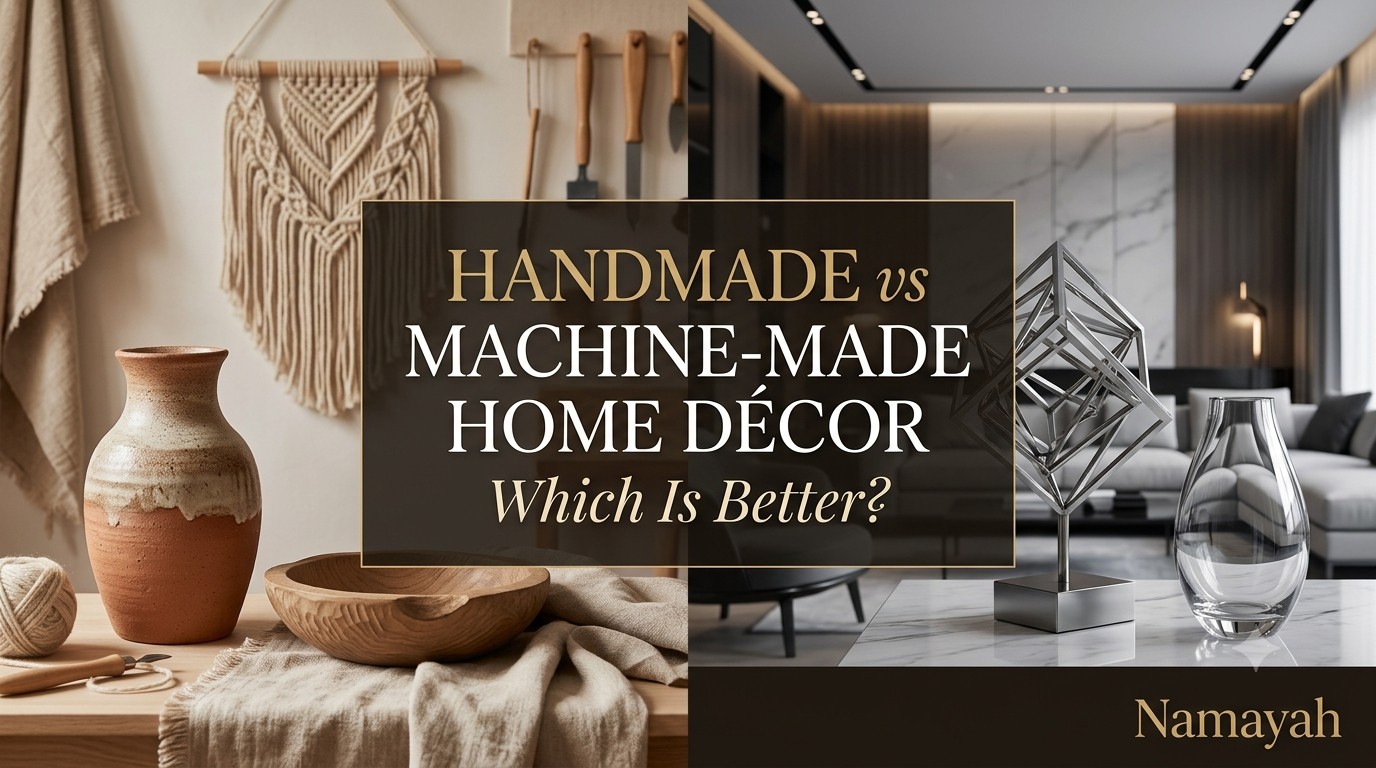
Home décor plays a major role in creating a comfortable and attractive living space. Whether you’re decorating a new home or refreshing an existing room, one important decision is choosing between handmade and machine-made home décor.
Both options have unique advantages. Handmade pieces often showcase craftsmanship and individuality, while machine-made products offer affordability and consistency. Understanding their differences can help you choose décor that matches your budget, lifestyle, and design preferences.
What Is Handmade Home Décor?
Handmade home décor refers to decorative items created primarily by skilled artisans using traditional techniques or hand tools. Examples include:
- Handwoven rugs
- Hand-painted wall art
- Ceramic pottery
- Wooden carvings
- Handmade cushions
- Macramé wall hangings
- Woven baskets
- Handmade candles
Each piece is unique because no two handcrafted items are exactly alike.
Benefits of Handmade Décor
- Unique designs
- High attention to detail
- Supports local artisans
- Often uses natural materials
- Adds personality to interiors
What Is Machine-Made Home Décor?
Machine-made home décor is produced using industrial manufacturing processes. Modern machinery allows manufacturers to create large quantities of identical products quickly and efficiently.
Examples include:
- Factory-produced wall clocks
- Printed canvas art
- Mass-produced furniture
- Decorative lamps
- Plastic organizers
- Artificial plants
- Metal shelving
These products are widely available and often cost less than handmade alternatives.
Benefits of Machine-Made Décor
- Affordable pricing
- Consistent quality
- Large variety
- Easy availability
- Faster production
Key Differences at a Glance
| Feature | Handmade Home Décor | Machine-Made Home Décor |
|---|---|---|
| Uniqueness | Every piece is different | Identical products |
| Price | Usually higher | Generally more affordable |
| Craftsmanship | High artisan involvement | Automated production |
| Production Time | Longer | Faster |
| Customization | Often available | Limited |
| Availability | Limited quantities | Mass-produced |
| Sustainability | Often uses natural materials | Depends on manufacturer |
Quality and Craftsmanship
One of the biggest differences between handmade and machine-made décor is craftsmanship.
Handmade products often receive individual attention throughout the creation process. Skilled artisans carefully shape, paint, weave, or assemble each item, resulting in distinctive finishes and character.
Machine-made products are manufactured with precision and consistency. While they may lack handcrafted details, they often meet standardized quality requirements and can perform well for everyday use.
If you appreciate artistry and fine details, handmade décor may be the better choice.
Design and Uniqueness
Homeowners looking for one-of-a-kind interiors often prefer handmade décor.
Artisans frequently experiment with colors, textures, and materials, making each item unique. Handmade décor can become a conversation piece and reflect personal taste.
Machine-made décor, on the other hand, follows standardized designs. Although manufacturers release many attractive collections, identical products may appear in multiple homes.
Price Comparison
Budget is often a deciding factor.
Handmade Décor
Higher prices usually reflect:
- Skilled labor
- Time-intensive production
- Premium materials
- Limited production
Machine-Made Décor
Lower prices result from:
- Mass production
- Automated manufacturing
- Lower production costs
- Economies of scale
For homeowners decorating an entire house on a budget, machine-made décor may offer better value.
Sustainability and Environmental Impact
Sustainability depends on materials, manufacturing methods, packaging, and transportation rather than whether an item is handmade or machine-made.
Many handmade products use renewable materials such as wood, cotton, bamboo, clay, or natural fibers. Some artisans also produce locally, which may reduce transportation impacts.
Machine-made products can also be environmentally responsible when manufacturers use recycled materials, energy-efficient production methods, and sustainable sourcing.
Before purchasing, consider:
- Material origin
- Product durability
- Recyclability
- Packaging
- Manufacturer sustainability practices
Best Uses for Handmade Home Décor
Handmade décor works especially well for:
- Living room statement pieces
- Entryway decorations
- Dining table centerpieces
- Personalized gifts
- Accent walls
- Seasonal decorations
- Artisan pottery displays
These pieces add warmth and character to your home.
Best Uses for Machine-Made Home Décor
Machine-made décor is often ideal for:
- Large decorating projects
- Rental properties
- Office spaces
- Budget renovations
- Storage solutions
- Functional accessories
- Matching furniture collections
Its affordability makes it practical when decorating multiple rooms.
How to Choose the Right Home Décor
Choosing between handmade and machine-made décor depends on your priorities.
Consider these questions:
- What is your budget?
- Do you value uniqueness?
- Are you decorating one room or an entire home?
- Is customization important?
- How often do you redecorate?
- Do you prefer artisan craftsmanship or standardized designs?
Many homeowners combine both options. For example, they may choose machine-made furniture for practicality while adding handmade artwork or pottery to create visual interest.
Frequently Asked Questions
Is handmade home décor more durable?
Durability depends on the materials, construction quality, and intended use. Many handmade products are built with careful craftsmanship, but well-made machine-produced items can also provide long-lasting performance.
Why is handmade décor usually more expensive?
Handmade products require skilled labor, more production time, and are often made in smaller quantities, which generally increases costs.
Is machine-made décor lower quality?
Not necessarily. Many machine-made products offer reliable quality, consistency, and durability. Quality varies by manufacturer and materials used.
Which is better for modern interiors?
Both can work well. Machine-made décor often complements minimalist and contemporary styles, while handmade accents can add warmth and texture.
Can I mix handmade and machine-made décor?
Yes. Combining both styles creates balance by blending practicality with unique decorative elements.
Which option offers more customization?
Handmade décor typically provides greater opportunities for customization because artisans may create pieces based on specific colors, dimensions, or design preferences.
Conclusion
When comparing handmade vs machine-made home décor, there is no single answer that fits every homeowner.
Handmade décor stands out for its individuality, craftsmanship, and artistic appeal. Machine-made décor offers affordability, consistency, and accessibility, making it a practical choice for many decorating projects.
For many homes, the best approach is to combine both styles. Use machine-made items for everyday functionality and add carefully selected handmade pieces to introduce personality and visual interest. This balanced approach can help create a home that is both practical and uniquely yours.