
The Role of Copper in Indian Craft Traditions
Introduction
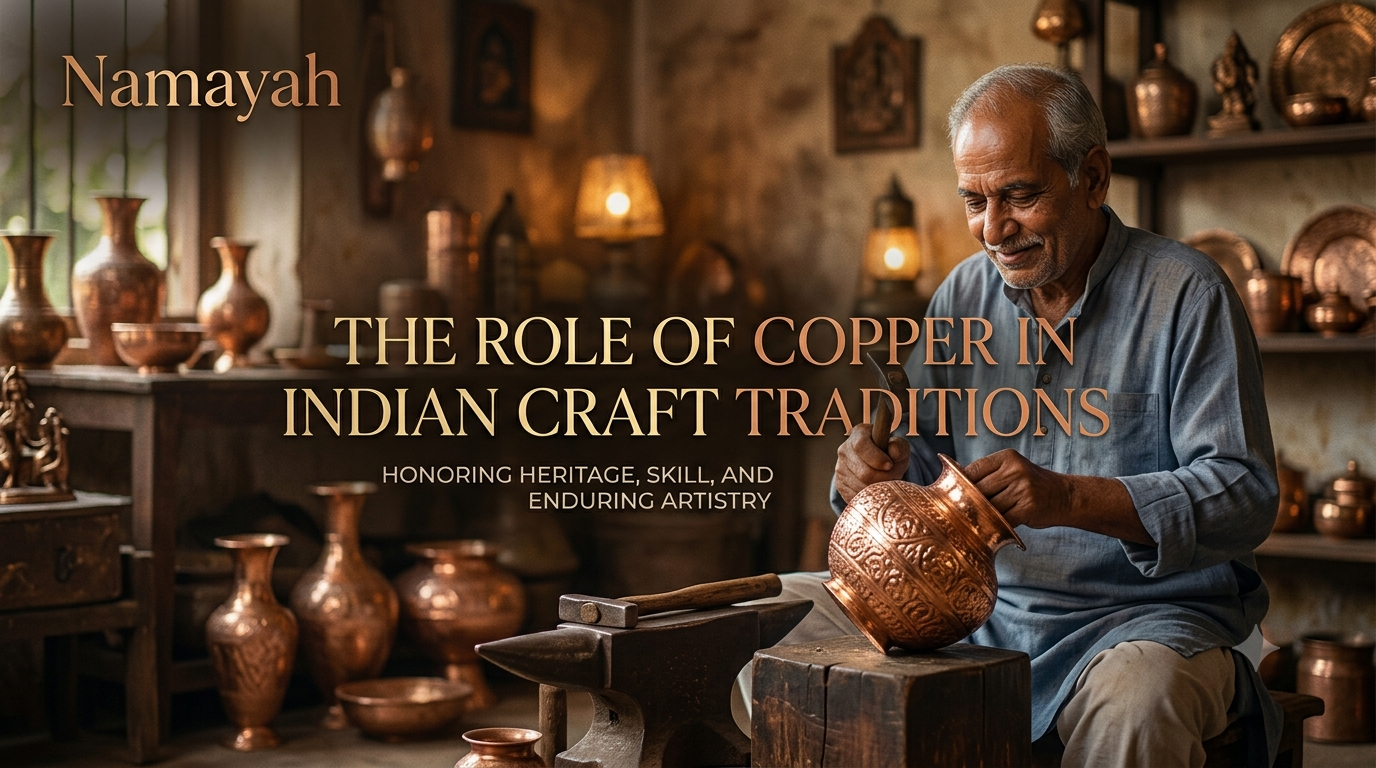
The Role of Copper in Indian Craft Traditions extends far beyond the creation of beautiful objects. For thousands of years, copper has served as one of India’s most treasured metals, connecting artisans, communities, and cultural practices across generations. From sacred temple vessels and handcrafted utensils to elaborate sculptures and decorative artifacts, copper has remained deeply woven into India’s artistic identity.
Indian artisans have mastered the art of shaping copper through techniques passed down within families for centuries. These skills reflect not only remarkable craftsmanship but also the social, religious, and economic importance of metalworking throughout Indian history. Even today, copper handicrafts continue to attract collectors, interior designers, museums, and tourists who value their timeless appeal.
This article explores the historical evolution, artistic methods, regional specialties, cultural significance, modern challenges, and future prospects of copper craftsmanship in India.
The Historical Journey of Copper in India
Copper has played a vital role in India’s development since prehistoric times. Archaeological discoveries indicate that Indian communities were among the earliest users of copper in South Asia.
Early Evidence of Copper Usage
Excavations across Rajasthan, Madhya Pradesh, and Uttar Pradesh have uncovered copper tools, ornaments, and weapons dating back several thousand years. These findings demonstrate that early societies understood how to extract, refine, and shape copper long before the widespread use of iron.
Copper became essential because it was easier to shape than stone while offering greater durability for everyday tasks.
Copper During the Indus Valley Civilization
The Indus Valley Civilization (around 2600–1900 BCE) showcased sophisticated copper craftsmanship. Archaeologists have discovered copper mirrors, figurines, tools, vessels, and jewelry from sites such as Harappa and Mohenjo-daro.
These artifacts reveal that metalworkers possessed advanced knowledge of smelting, alloying, and casting techniques. Their innovations laid the foundation for centuries of Indian metal craftsmanship.
Why Copper Became a Preferred Craft Material
Copper’s popularity stems from its practical qualities as well as its aesthetic beauty.
Physical Properties of Copper
Copper offers numerous advantages for artisans:
- Highly malleable
- Excellent conductivity
- Corrosion resistant
- Attractive reddish-golden appearance
- Easy to engrave
- Durable with proper care
- Develops a unique natural patina over time
These characteristics make copper suitable for decorative, religious, and functional objects alike.
Economic Importance
Historically, copper was more affordable than gold or silver while still conveying prestige. This balance enabled royal patrons, temples, merchants, and households to commission intricate copper works without the expense associated with precious metals.
The widespread availability of copper also supported thriving artisan communities across India.
Traditional Copper Crafting Techniques
Indian metalworkers employ several specialized techniques that require years of training and exceptional precision.
Hammering and Beating
One of the oldest methods involves repeatedly hammering sheets of copper into desired forms. This process creates:
- Water pots
- Plates
- Bowls
- Decorative lamps
- Storage containers
Hammer marks often become part of the finished aesthetic, highlighting the handmade nature of each piece.
Casting Methods
Molten copper is poured into carefully prepared molds to produce sculptures, bells, statues, and ritual objects. Lost-wax casting, also known as cire perdue, remains a celebrated technique in many parts of India.
Engraving and Etching
Skilled artisans carve intricate floral, geometric, mythological, or calligraphic designs onto copper surfaces using specialized tools.
Each engraved line reflects steady craftsmanship developed over decades of experience.
Repoussé and Chasing
Repoussé involves hammering designs from the reverse side of a metal sheet, while chasing refines details from the front. Together, these methods produce raised decorative patterns frequently seen on temple doors, ceremonial objects, and religious panels.
Regional Copper Craft Traditions in India
India’s diverse regions have developed distinctive copper-working styles shaped by local history, culture, and artistic influences.
Rajasthan
Rajasthan is renowned for handcrafted copper utensils, decorative vessels, engraved trays, and ornate home décor. Cities such as Jaipur and Udaipur have long-standing traditions of metal craftsmanship, often blending Mughal and Rajput artistic styles.
Uttar Pradesh
Artisans in Moradabad and surrounding areas produce engraved copperware, lamps, bowls, and decorative pieces. Their work is known for intricate floral motifs and fine detailing, making the region a significant center for metal handicrafts.
Tamil Nadu
Tamil Nadu is famous for bronze and copper temple sculptures created using the ancient lost-wax casting method. These sculptures depict Hindu deities with remarkable anatomical precision and spiritual symbolism.
Kerala
Kerala’s artisans craft traditional temple lamps, ritual vessels, and ceremonial objects that continue to play an important role in religious ceremonies and festivals.
Kashmir
Kashmiri copperware often features elaborate hand engraving inspired by Persian and Central Asian artistic traditions. Decorative samovars, bowls, trays, and vases remain highly prized for their elegance and craftsmanship.
Copper in Religious and Spiritual Practices
Copper occupies a sacred place in many Indian religious traditions. It is widely believed to symbolize purity, prosperity, and positive energy.
Common religious copper items include:
- Kalash vessels
- Temple bells
- Prayer plates
- Oil lamps
- Sacred water containers
- Ritual spoons
- Temple decorations
Copper is also frequently used during Hindu ceremonies because it is traditionally considered suitable for storing holy water and offering rituals.
Many temples feature elaborate copper coverings on domes, doors, and ceremonial structures that reflect both artistic excellence and devotional significance.
Copper in Household Utensils
Long before modern cookware, Indian households relied on copper utensils for cooking, storing water, and serving meals.
Popular traditional items include:
| Copper Item | Traditional Use |
|---|---|
| Lota | Water storage |
| Handi | Cooking |
| Thali | Serving meals |
| Glass | Drinking water |
| Pot | Food preparation |
| Bowl | Serving dishes |
Many families continue using copper vessels due to cultural traditions and the metal’s durability. Proper tin lining (kalai) is often applied to cookware to make it suitable for preparing food.
Copper Architecture and Temple Art
Copper has also enhanced India’s architectural heritage.
Its applications include:
- Temple domes
- Decorative roofs
- Door panels
- Sacred finials
- Sculptural panels
- Ornamental ceilings
Copper sheets protect structures from weather while adding visual grandeur. Over time, their natural patina creates an appearance admired by historians, architects, and conservationists.
Challenges Facing Copper Artisans
Despite their exceptional skills, many copper artisans face significant challenges.
These include:
- Rising raw material costs
- Competition from machine-made products
- Declining apprenticeship among younger generations
- Limited access to global markets
- Reduced demand for handcrafted household items
- Economic uncertainty in rural craft communities
Without sustained support, some traditional techniques risk disappearing.
Government and NGO Support
Various initiatives seek to preserve India’s copper craft heritage through:
- Artisan training programs
- Skill development workshops
- Craft fairs and exhibitions
- Financial assistance
- Geographical Indication (GI) protection for eligible crafts
- Digital marketing support
- Export promotion initiatives
Organizations also collaborate with designers to develop contemporary products while preserving traditional craftsmanship.
Sustainability and the Future of Copper Crafts
Copper is a highly recyclable material, making it well suited to sustainable production.
Future opportunities include:
- Eco-friendly home décor
- Heritage tourism
- Luxury handcrafted products
- Designer collaborations
- Online marketplaces
- Museum exhibitions
- International exports
Consumers increasingly value handmade products with authentic cultural stories, creating renewed opportunities for Indian artisans.
Tips for Buying Authentic Copper Handicrafts
When purchasing copper products, consider the following:
- Buy from reputable artisan cooperatives or certified handicraft stores.
- Examine the craftsmanship for fine detailing and hand-finished surfaces.
- Ask about the production method and artisan community.
- Look for signs of genuine copper rather than plated alternatives.
- Request care instructions to preserve the item’s appearance.
- Support fair-trade organizations whenever possible.
Authentic handcrafted copper pieces often display slight variations that reflect the artisan’s individual skill.
For more information about Indian handicrafts, visit the official Development Commissioner (Handicrafts) website: https://handicrafts.nic.in
Frequently Asked Questions
1. Why is copper important in Indian craft traditions?
Copper has been used for thousands of years to create utensils, sculptures, religious objects, and decorative items that reflect India’s artistic and cultural heritage.
2. Which Indian states are famous for copper crafts?
Rajasthan, Uttar Pradesh, Tamil Nadu, Kerala, and Kashmir are among the regions celebrated for distinctive copper craftsmanship.
3. What techniques are commonly used in copper handicrafts?
Traditional methods include hammering, casting, engraving, repoussé, chasing, and etching.
4. Why is copper used in religious ceremonies?
Copper is traditionally associated with purity and is widely used for ritual vessels, lamps, temple decorations, and sacred offerings.
5. Is copper environmentally friendly?
Yes. Copper is highly recyclable and can be reused repeatedly without significant loss of quality, making it a sustainable material for crafts.
6. How can I identify authentic handcrafted copper products?
Look for detailed hand-finishing, slight natural variations, reputable sellers, artisan certifications where available, and clear information about the item’s origin.
Conclusion
The Role of Copper in Indian Craft Traditions reflects an extraordinary legacy of creativity, technical mastery, and cultural continuity. Across centuries, Indian artisans have transformed copper into objects that serve practical needs while expressing spiritual beliefs and artistic excellence. From the ancient workshops of the Indus Valley Civilization to contemporary craft centers across Rajasthan, Kashmir, Tamil Nadu, Kerala, and Uttar Pradesh, copper remains a symbol of enduring craftsmanship.
Preserving these traditions requires continued support for artisans, greater appreciation for handmade products, and sustainable practices that honor both heritage and innovation. By choosing authentic copper handicrafts, consumers help sustain generations of skilled craftspeople while celebrating one of India’s most remarkable artistic traditions.