
The History of Wooden Craftsmanship in India
Introduction
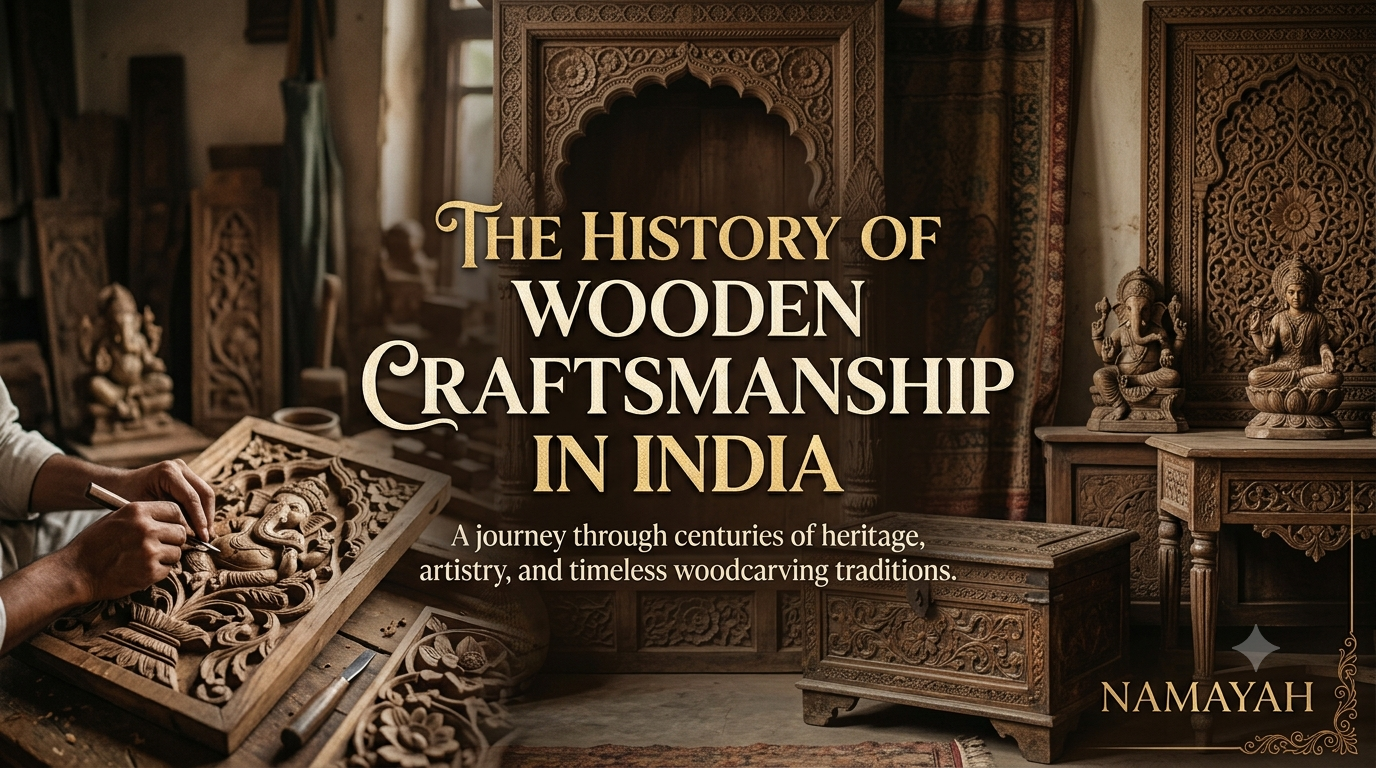
The History of Wooden Craftsmanship in India is a fascinating journey that stretches back thousands of years. From intricately carved temple doors to elegant furniture, handcrafted toys, and architectural masterpieces, wood has played a significant role in India’s artistic and cultural heritage.
Although wood is a biodegradable material and many ancient artifacts have not survived the test of time, historical records, temple architecture, literary references, and surviving masterpieces demonstrate the extraordinary skills of Indian craftsmen. Their artistry continues to inspire architects, interior designers, collectors, and artisans across the globe.
Today, Indian wooden craftsmanship represents a blend of tradition, creativity, and sustainability, preserving techniques that have been handed down through generations.
Origins of Wooden Craftsmanship in India
The roots of Indian woodworking date back to prehistoric communities that relied on wood for shelter, hunting tools, agricultural implements, and transportation. As civilization evolved, woodworking transformed from a necessity into an artistic expression.
Early Human Settlements and Woodworking
The earliest inhabitants of the Indian subcontinent used locally available timber to construct homes, carts, farming equipment, boats, and household utensils. Simple tools made from stone gradually evolved into bronze and iron implements, enabling finer craftsmanship.
Wood became an indispensable resource because it was abundant, versatile, and relatively easy to shape.
Archaeological Evidence
Although wooden objects rarely survive in humid climates, archaeological excavations at sites associated with the Indus Valley Civilization suggest sophisticated carpentry techniques. Impressions of wooden beams, structural remains, and ancient tools indicate that timber played an important role in urban planning and construction.
Ancient texts such as the Arthashastra and Manasara also describe carpentry methods, building techniques, and standards for construction, highlighting the importance of woodworking in early Indian society.
Wood in Ancient Indian Civilization
Wood held both practical and spiritual importance throughout ancient India.
Religious and Cultural Importance
Many Hindu rituals incorporated wooden objects, including ceremonial chariots, sacred platforms, temple doors, and idols crafted from specific types of timber.
Different woods were believed to possess unique spiritual qualities, making their selection an important aspect of religious traditions.
Wood in Architecture
Before stone architecture became widespread, many temples, palaces, and public buildings were constructed primarily from timber.
Although most early wooden structures have disappeared, historians believe they influenced later stone architecture. Many carved stone temples imitate wooden beams, brackets, and joinery, preserving the appearance of earlier timber buildings.
Medieval Indian Woodworking Traditions
The medieval period marked the golden age of Indian woodcraft.
Royal courts, wealthy merchants, and religious institutions became major patrons of woodworking, encouraging artisans to develop increasingly elaborate carving styles.
Royal Patronage
Kings commissioned luxurious palaces featuring carved pillars, decorative ceilings, ornate doors, royal furniture, and ceremonial chariots.
Skilled craftsmen enjoyed prestigious positions within royal workshops where techniques were refined and passed down through apprenticeships.
Temple Carvings
Some of India’s finest wooden carvings can still be admired in temples across southern and western India.
Temple entrances, pillars, ceilings, and sanctuaries display extraordinary attention to detail, depicting gods, dancers, floral motifs, mythical creatures, and scenes from epics like the Ramayana and Mahabharata.
Regional Wooden Craft Traditions
India’s diversity has given rise to distinct regional woodworking styles.
Kashmir
Kashmir is celebrated for walnut wood carving. Artisans create beautifully carved furniture, decorative panels, jewelry boxes, and home décor featuring floral and geometric patterns inspired by Persian influences.
Gujarat
Gujarati woodcraft is known for intricately carved doors, window frames, pillars, and traditional havelis. Local artisans combine floral motifs with religious symbolism and geometric precision.
Rajasthan
In Rajasthan, handcrafted wooden furniture often features vibrant painted finishes alongside detailed carving. Chests, cabinets, swings, and folding screens showcase the state’s rich artistic traditions.
Kerala
Kerala’s abundant teak and rosewood forests have supported centuries of exceptional woodworking. Traditional homes and temples feature carved ceilings, columns, and doors designed to withstand the tropical climate.
Karnataka
Karnataka is renowned for sandalwood carving, producing delicate sculptures, decorative boxes, and religious artifacts. The fine grain and fragrance of sandalwood make it highly prized for intricate work.
Tools and Techniques
Traditional Indian woodworkers rely on tools that have changed little over centuries, including chisels, mallets, saws, hand drills, gouges, planes, and carving knives.
Master craftsmen employ techniques such as:
- Relief carving
- Deep carving
- Lattice work
- Joinery without nails
- Inlay work
- Polishing with natural oils
- Lac finishing
- Wood turning
Many artisans continue to favor hand tools, allowing for precision and preserving the handcrafted character of each piece.
Types of Wood Used
The choice of wood depends on the intended purpose, durability, and regional availability.
| Wood Type | Common Uses |
|---|---|
| Teak | Furniture, doors, architecture |
| Rosewood | Luxury furniture |
| Sandalwood | Sculptures, religious items |
| Walnut | Decorative carvings |
| Sheesham | Cabinets, tables, chairs |
| Mango Wood | Home décor |
| Jackwood | Temple architecture |
| Sal | Structural construction |
Each species offers unique grain patterns, textures, and durability, influencing the final appearance of the finished work.
Colonial Influence
The arrival of European colonial powers introduced new woodworking techniques, furniture designs, and manufacturing methods.
British, Portuguese, and French influences blended with Indian craftsmanship, giving rise to distinctive Indo-European furniture styles characterized by carved legs, cane work, and ornamental detailing.
During this period, Indian artisans also began producing furniture for export, expanding the global appreciation of their skills.
Wooden Furniture Through the Ages
Indian furniture evolved from simple functional pieces into elaborate works of art.
Traditional items include:
- Four-poster beds
- Swing seats (jhulas)
- Storage chests
- Temple cabinets
- Dining tables
- Folding screens
- Carved chairs
- Bookshelves
Today, handcrafted wooden furniture remains highly valued for its durability, timeless aesthetics, and artisanal quality.
Wooden Toys and Decorative Crafts
India has a long history of producing handcrafted wooden toys, dolls, puppets, masks, and decorative objects.
These crafts often use natural dyes and eco-friendly finishes, making them attractive alternatives to plastic products.
Many toy-making traditions continue to support rural artisan communities while preserving regional artistic identities.
Challenges Facing Traditional Artisans
Despite its rich heritage, Indian woodcraft faces several challenges:
- Competition from mass-produced furniture
- Rising cost of quality timber
- Declining interest among younger generations
- Limited access to international markets
- Environmental regulations affecting timber availability
- Changing consumer preferences
These issues threaten the continuity of many traditional woodworking communities.
Government Support and Revival
Government agencies, craft organizations, and non-governmental initiatives are working to preserve India’s woodworking heritage through:
- Artisan training programs
- Skill development workshops
- Craft fairs and exhibitions
- Export promotion
- Financial assistance
- Digital marketplaces
- Geographic Indication (GI) recognition for select crafts
These efforts help artisans reach broader markets while safeguarding traditional techniques.
Sustainability in Modern Woodcraft
Sustainability has become central to the future of Indian woodworking.
Many artisans now use responsibly sourced timber, reclaimed wood, and eco-friendly finishes to reduce environmental impact. Consumers increasingly appreciate handcrafted products that combine traditional skills with sustainable practices.
Certification programs and responsible forestry also contribute to the long-term availability of quality timber.
Future of Wooden Craftsmanship
The future of Indian woodcraft lies in balancing tradition with innovation.
Modern designers are collaborating with master artisans to create contemporary furniture and décor while preserving age-old carving techniques. Online platforms, international exhibitions, and cultural tourism have opened new opportunities for artisans to showcase their work globally.
As appreciation for handmade, sustainable products grows, India’s woodworking traditions are well positioned to thrive in the years ahead.
For additional information on Indian handicrafts, visit the Development Commissioner (Handicrafts) website: https://handicrafts.nic.in/
Frequently Asked Questions
1. Why is wooden craftsmanship important in India?
It reflects India’s cultural heritage, artistic traditions, architectural history, and the exceptional skills of generations of artisans.
2. Which wood is most commonly used in Indian furniture?
Teak, sheesham, rosewood, and mango wood are among the most widely used due to their durability and attractive grain.
3. Which Indian state is famous for wooden carving?
Several states are renowned for woodcraft, including Kashmir (walnut carving), Karnataka (sandalwood carving), Kerala (temple architecture), Gujarat (ornate architectural woodwork), and Rajasthan (painted and carved furniture).
4. Are traditional woodworking techniques still used today?
Yes. Many artisans continue to use hand tools and traditional carving, joinery, and finishing methods while incorporating modern designs.
5. How has modernization affected Indian woodcraft?
Modernization has increased competition from machine-made products but has also created new opportunities through e-commerce, global exports, and collaborations with contemporary designers.
6. Is Indian wooden craftsmanship environmentally sustainable?
Increasingly, yes. Many artisans use sustainably sourced timber, reclaimed wood, and environmentally friendly finishes, supported by responsible forestry initiatives.
Conclusion
The History of Wooden Craftsmanship in India is a story of creativity, resilience, and cultural continuity. From the earliest settlements to contemporary design studios, Indian woodworkers have transformed timber into objects of beauty, utility, and spiritual significance. Their work has adorned temples, palaces, homes, and public spaces while reflecting the country’s immense regional diversity.
Although traditional artisans face modern challenges, renewed interest in handmade products, sustainable materials, and heritage preservation offers hope for the future. By supporting Indian woodcraft, consumers and institutions alike help preserve centuries-old knowledge and ensure that this remarkable artistic legacy continues to inspire generations to come.