
The Heritage of Copper Craftsmanship in India
Introduction
The Heritage of Copper Craftsmanship in India represents one of the country’s oldest and most admired artistic traditions. For thousands of years, Indian artisans have transformed raw copper into exquisite utensils, sculptures, decorative objects, and religious artifacts that continue to captivate people worldwide.
Copper craftsmanship is more than a skilled trade—it reflects India’s rich cultural identity, regional diversity, and artistic innovation. Passed down through generations, these techniques preserve ancient knowledge while adapting to modern tastes and sustainable living practices.
Historical Origins of Copper Craftsmanship
India has a remarkable history of copper usage dating back more than 5,000 years.
Copper in the Indus Valley Civilization
Archaeological excavations at Harappa and Mohenjo-Daro have uncovered copper tools, ornaments, and vessels that demonstrate advanced metallurgical knowledge. These discoveries reveal that ancient Indian craftsmen possessed exceptional skills in mining, smelting, and shaping copper.
Copper During the Vedic Period
The Vedic texts frequently mention copper as a valuable metal used in rituals, household utensils, and weapons. Over time, copper became deeply integrated into Indian social and religious life.
Cultural Importance of Copper in India
Copper occupies a special place in Indian traditions.
Religious and Spiritual Significance
Copper vessels are widely used in temples and religious ceremonies because they symbolize purity and positive energy. Many sacred offerings and rituals continue to rely on handcrafted copper items.
Copper in Traditional Indian Households
For centuries, Indian families have stored drinking water in copper vessels. Traditional practices also include using copper cookware and serving utensils during festivals and family celebrations.
Traditional Copper Crafting Techniques
Creating handcrafted copper products requires patience, precision, and years of experience.
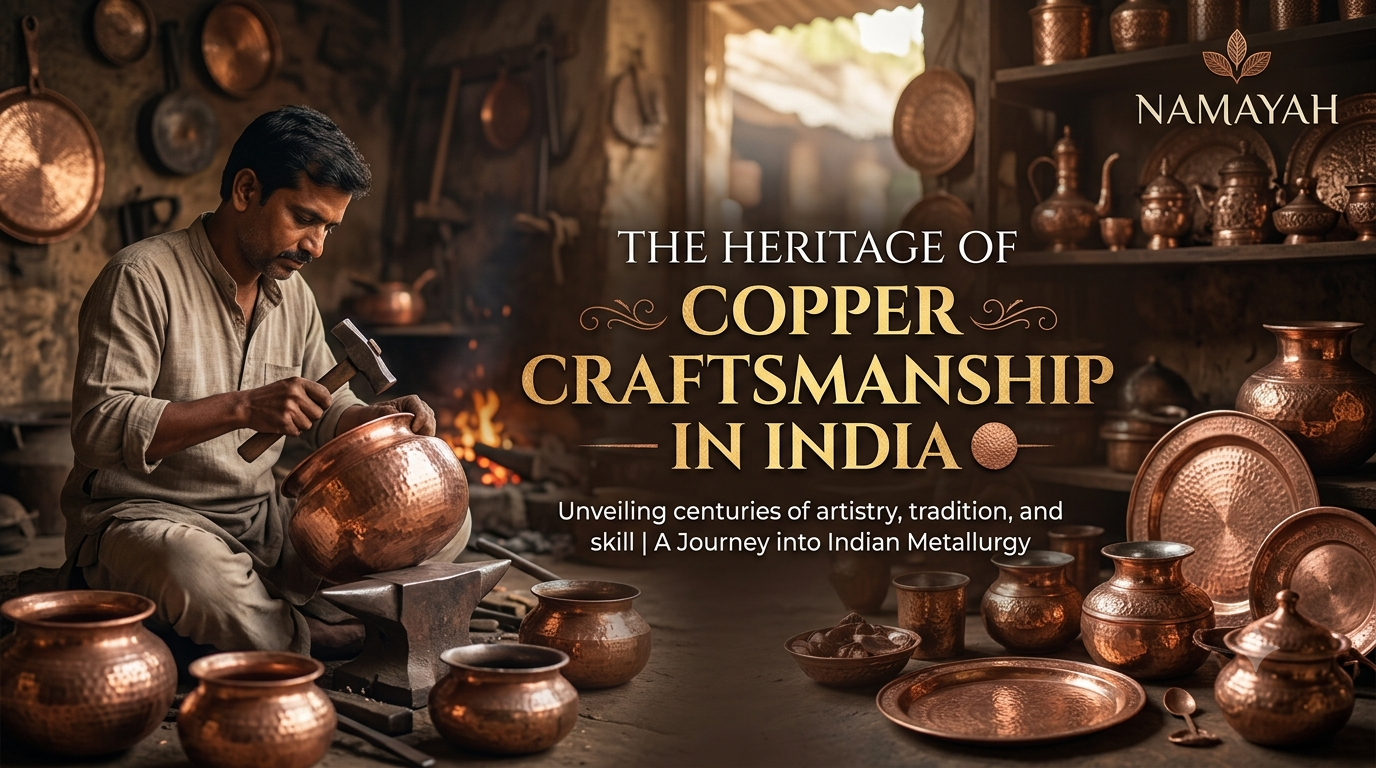
Hammering
Artisans repeatedly hammer sheets of copper to achieve the desired shape while strengthening the metal.
Casting
Molten copper is poured into molds to create statues, lamps, and decorative objects with intricate details.
Engraving and Embossing
Skilled craftsmen carve elaborate floral, geometric, and mythological patterns onto copper surfaces using specialized tools.
These techniques often require multiple stages of heating, shaping, polishing, and finishing before a piece is complete.
Regional Centers of Copper Craftsmanship
Several regions have become renowned for their distinctive copper traditions.
Rajasthan
Known for beautifully engraved utensils, decorative plates, and ornamental pieces inspired by royal heritage.
Uttar Pradesh
Produces finely crafted religious artifacts, temple accessories, and traditional household vessels.
Maharashtra
Home to artisans who create elegant copper cookware and handcrafted decorative items using age-old methods.
Tamil Nadu
Celebrated for temple-inspired copper sculptures, lamps, and ritual objects reflecting South India’s artistic traditions.
Each region contributes unique designs, motifs, and techniques that enrich India’s diverse copper heritage.
Famous Copper Artifacts
Indian copper craftsmanship includes:
- Decorative bowls
- Water pots
- Traditional lotas
- Temple bells
- Oil lamps
- Sculptures
- Wall hangings
- Engraved trays
- Kitchen utensils
- Ritual accessories
These handcrafted pieces combine functionality with artistic excellence.
Economic Importance of Copper Crafts
Copper handicrafts support thousands of artisan families across India. Local workshops contribute to rural employment, tourism, exports, and the preservation of traditional skills.
Growing international appreciation for handmade products has expanded market opportunities for Indian copper artisans through exhibitions, online marketplaces, and craft fairs.
Sustainability and Eco-Friendly Benefits
Copper is highly recyclable, making it an environmentally responsible material.
Its durability allows products to last for decades, reducing waste and promoting sustainable consumption. Handmade copper products also require less industrial processing compared to mass-produced alternatives.
As consumers increasingly value eco-friendly living, handcrafted copper products have gained renewed popularity.
Challenges Facing Copper Artisans
Despite their remarkable skills, artisans face several obstacles:
- Rising raw material costs
- Competition from factory-made products
- Declining interest among younger generations
- Limited access to global markets
- Inconsistent incomes
- Lack of modern marketing resources
Addressing these challenges is essential for preserving this centuries-old tradition.
Government and NGO Support
Various initiatives aim to strengthen India’s handicraft sector by providing:
- Skill development programs
- Financial assistance
- Design innovation workshops
- Digital marketing training
- International exhibition opportunities
- Artisan welfare schemes
These efforts help traditional craftsmen remain competitive while protecting cultural heritage.
Modern Innovations in Copper Craftsmanship
Today’s artisans successfully blend tradition with contemporary design.
Modern copper products now include:
- Designer home décor
- Luxury tableware
- Contemporary lighting
- Personalized gifts
- Architectural installations
- Boutique kitchenware
This fusion of heritage and innovation appeals to younger consumers and international buyers alike.
How to Identify Authentic Copper Handicrafts
When purchasing handcrafted copper items, consider the following:
- Look for slight handmade variations.
- Examine the quality of engraving.
- Verify the weight and thickness.
- Purchase from reputable artisans or certified craft organizations.
- Check for traditional finishing techniques rather than machine-perfect surfaces.
Authentic handcrafted pieces often display subtle imperfections that reflect genuine artisan work.
Tips for Caring for Copper Products
Proper maintenance extends the life of copper items.
- Clean regularly with natural lemon and salt or vinegar solutions.
- Dry immediately after washing.
- Store in a dry place.
- Avoid abrasive cleaning materials.
- Polish occasionally to maintain shine while preserving handcrafted details.
Frequently Asked Questions
1. Why is copper craftsmanship important in India?
It preserves centuries-old artistic traditions while supporting artisan communities and reflecting India’s cultural heritage.
2. Which Indian states are famous for copper handicrafts?
Rajasthan, Uttar Pradesh, Maharashtra, and Tamil Nadu are among the leading centers of traditional copper craftsmanship.
3. Is copper environmentally friendly?
Yes. Copper is fully recyclable, durable, and supports sustainable production practices.
4. How can I tell if a copper product is handmade?
Handmade items typically feature slight variations, detailed engravings, and craftsmanship that differs from machine-made products.
5. Are copper utensils still used today?
Yes. Many households continue to use copper utensils for cooking, serving, and storing water, while decorative copper products remain highly popular.
6. How can consumers support traditional copper artisans?
Buying directly from artisans, visiting handicraft fairs, choosing certified handmade products, and promoting traditional crafts all help sustain these communities.
Conclusion
The Heritage of Copper Craftsmanship in India is a remarkable testament to the country’s artistic ingenuity, cultural richness, and enduring traditions. From the earliest civilizations to modern design studios, copper has remained an integral part of India’s identity. By supporting skilled artisans and appreciating handcrafted creations, we help preserve an invaluable legacy for future generations while celebrating the timeless beauty of Indian craftsmanship.
For more information about Indian handicrafts and artisan development, visit the official Development Commissioner (Handicrafts) website: https://handicrafts.nic.in/.